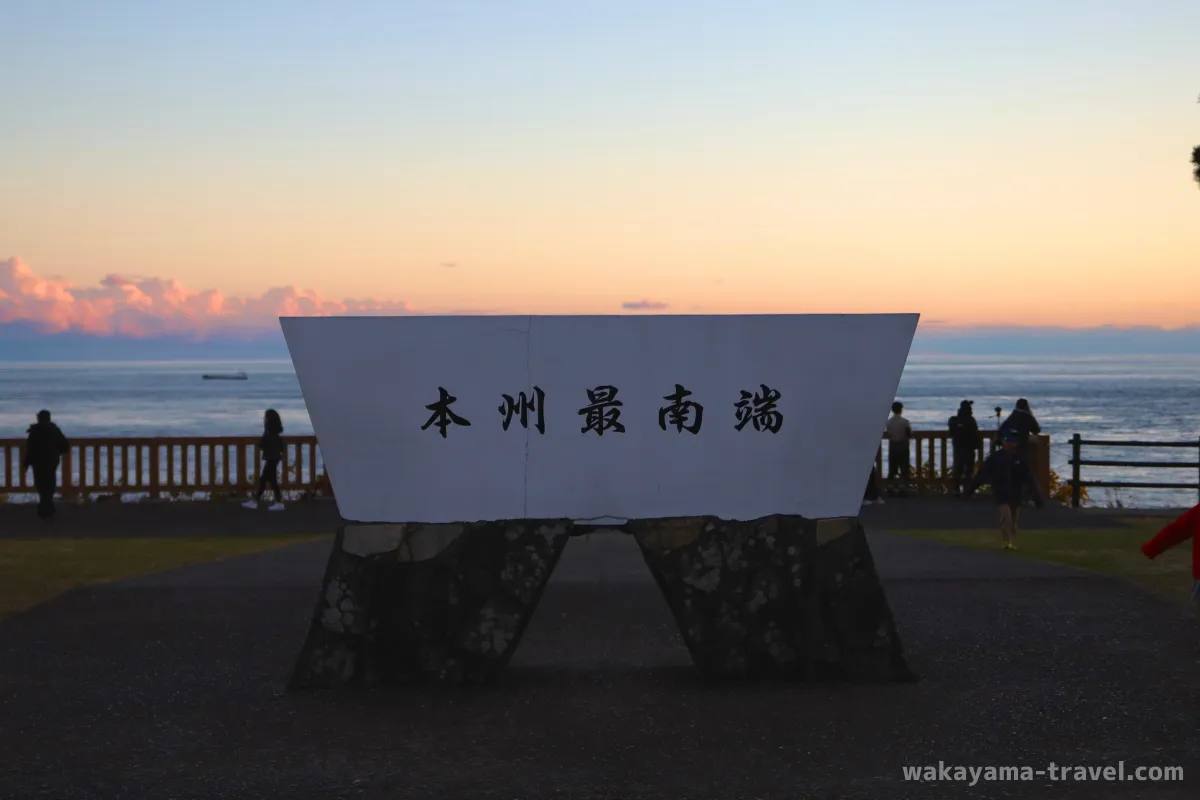

“I want to visit Wakayama, but it’s so big — I have no idea where to even start…”
If that sounds familiar, you’re definitely not alone.
Wakayama Prefecture stretches about 170km from north to south. With two UNESCO World Heritage Sites, hot spring resorts, stunning scenery, and Japan’s finest brand-name fruits, the highlights are spread all across the prefecture.
But don’t worry — once you break Wakayama down into three regions, planning your trip becomes a whole lot easier.
In this guide, we’ll walk you through each area — Kihoku (North), Kichu (Central), and Kinan (South) — covering the key features and top spots in each. Whether you’re still deciding where to go or trying to make the most of limited time, keep reading to find your perfect Wakayama trip.
Start Here: Think of Wakayama in 3 Regions
The key to a great Wakayama trip is getting a feel for the overall layout before you dive in.
The prefecture is divided into three main areas — Kihoku, Kichu, and Kinan — each with its own distinct vibe and things to do. Here’s a quick overview of what each region is all about.
Kihoku (North): History, Temples & the Fruit Kingdom
Kihoku covers the northern part of Wakayama Prefecture, centered around the prefectural capital, Wakayama City. It also includes Iwade, Kinokawa, and Hashimoto.
What makes this region stand out is its deep history and rich spiritual heritage. It’s home to a remarkable concentration of prestigious shrines and temples, including Koyasan, Negoro-ji, Kokawa-dera, Niutsuhime Shrine, Nichizen-gu, and Kimii-dera. The region is also famous as a top producer of peaches, persimmons, strawberries, hassaku citrus, and more — earning it the nickname “Fruit Kingdom.”
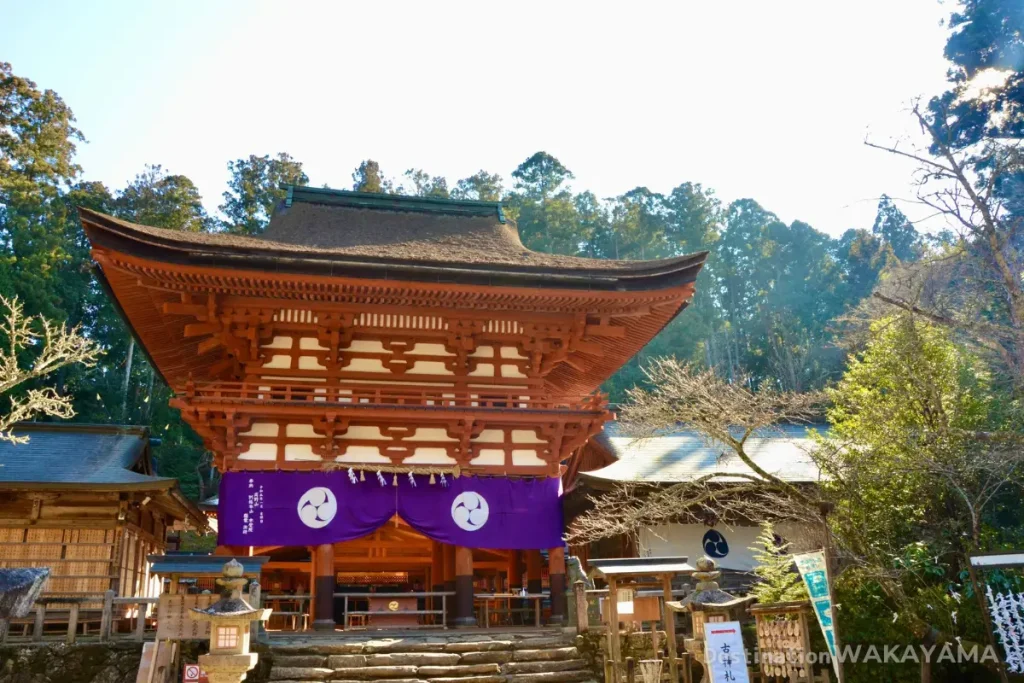
This is the perfect region if you’re into history, cultural experiences, and fruit picking in a beautiful natural setting.
Kichu (Central): Japan’s Finest Brand Fruits & Photogenic Scenery
Kichu sits in the middle of Wakayama Prefecture and includes Arida, Gobo, and the Hidaka area.
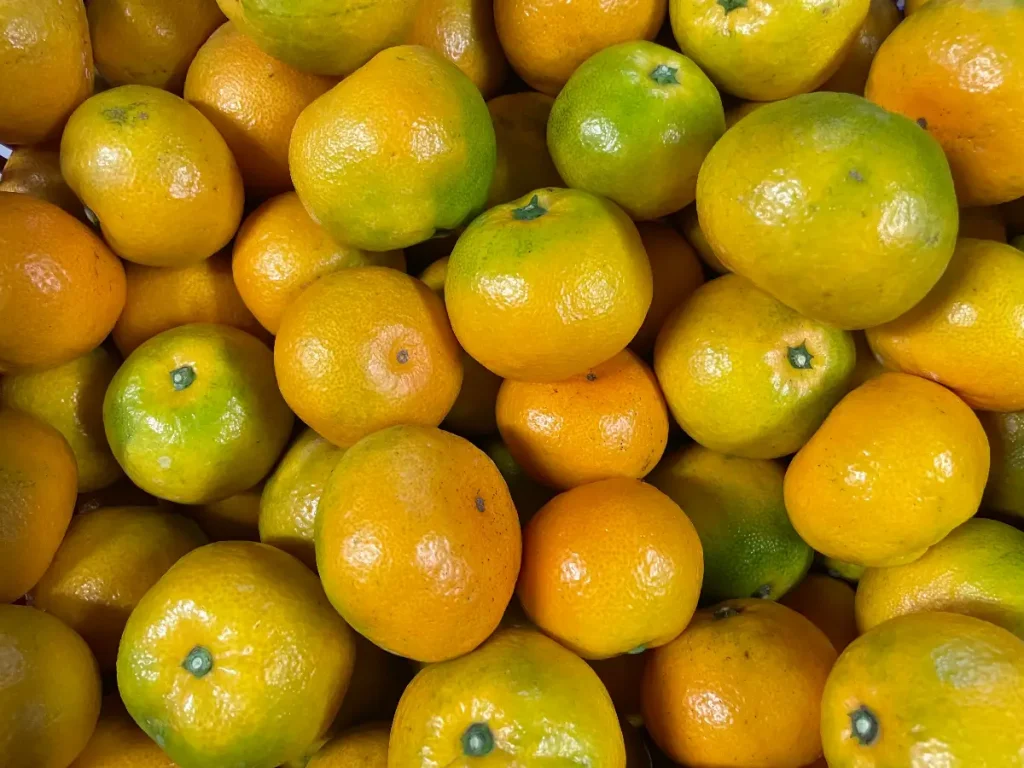
The real stars here are Japan’s most celebrated brand-name fruits. Arida mikan (mandarin oranges) are synonymous with premium Japanese citrus, and Nanko plums are regarded as the gold standard of Japanese ume — found on tables across the country.
On top of that, Shirasaki Kaiyō Kōen (Shirasaki Marine Park) — where brilliant white limestone cliffs jut dramatically into the sea — has earned the nickname “Japan’s Aegean Sea.” It’s an absolute must for anyone chasing that perfect Instagram shot.
Kinan / Nanki (South): Resorts, World Heritage & Wild Nature
Kinan stretches across the southern part of Wakayama and is the largest of the three regions. It includes Shirahama, Kushimoto, Tanabe, Nachikatsuura, and Shingu.
This region has three distinct personalities:
- Shirahama — one of the Kansai region’s premier beach resorts
- The sacred lands of the World Heritage Kumano Kodo pilgrimage trails and the Kumano Sanzan shrines
- The dramatic landscapes of the Nanki Kumano Geopark — a playground of extraordinary geological formations
Southern Wakayama truly has it all: relaxation, wonder, and adventure.
Which Region Is Right for You? A Quick Guide by Interest & Time
Not sure which region to choose? Use this handy table to figure out the best fit for your trip.
| What You’re Looking For | Best Region |
|---|---|
| History & temple/shrine hopping | Kihoku |
| Fruit picking & farm experiences | Kihoku / Kichu |
| Scenic spots & Instagram-worthy views | Kichu / Kinan |
| Hot springs & resort vibes | Kinan (Shirahama) |
| World Heritage & trekking | Kinan (Kumano) |
| Family trips & animal encounters | Kinan (Shirahama) |
| Wild nature & geopark landscapes | Kinan (Kushimoto / Tanabe) |
For a 1-night, 2-day trip, we’d recommend focusing on either Kihoku or Shirahama.
If you have 2 nights or more, you’ll have plenty of time to explore the Kumano Kodo and the wider Kinan region at a comfortable pace.
【Kihoku (North)】History, Faith & Fresh Fruit — Wakayama’s Northern Gateway
Kihoku brings together temples, history, and delicious fruit in one convenient region — and it’s Wakayama’s most accessible area from Osaka. Whether you’re planning a day trip or an overnight stay, there’s plenty to keep you busy.
Let’s start with Wakayama City and work our way through the region’s highlights.
Wakayama City: Wakayama Castle, Nichizen-gu & Kimii-dera
Wakayama City is the prefectural capital — a place where history and the sea coexist beautifully.
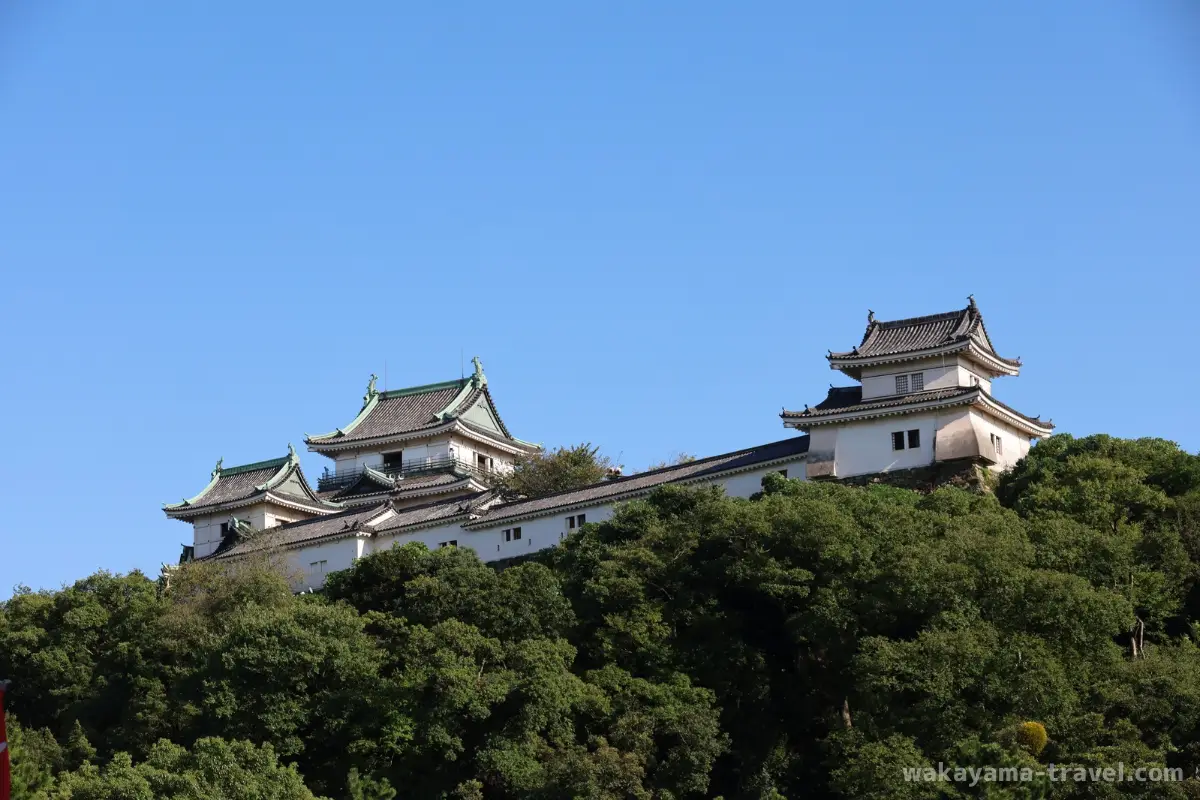
Once the castle town of the Kishu Tokugawa clan during the Edo period, the city’s most iconic landmark is Wakayama Castle, which stands proudly in the city center.
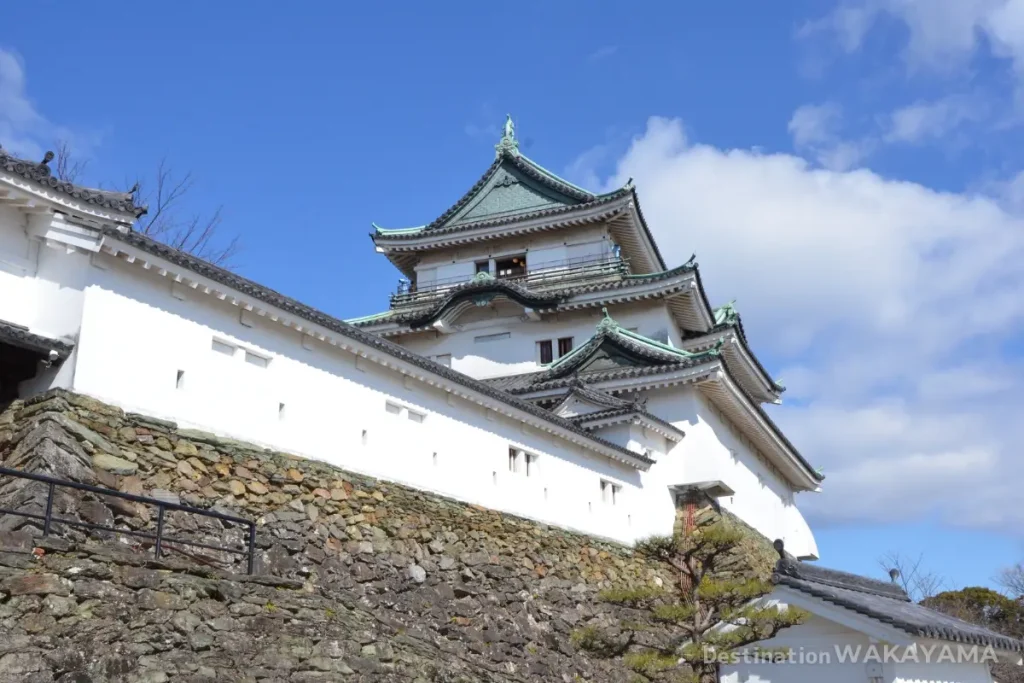
From the castle tower, you can look out over the cityscape and the Kinokawa River — a view that changes beautifully with the seasons. During cherry blossom season, it’s one of the most popular hanami spots in the region.
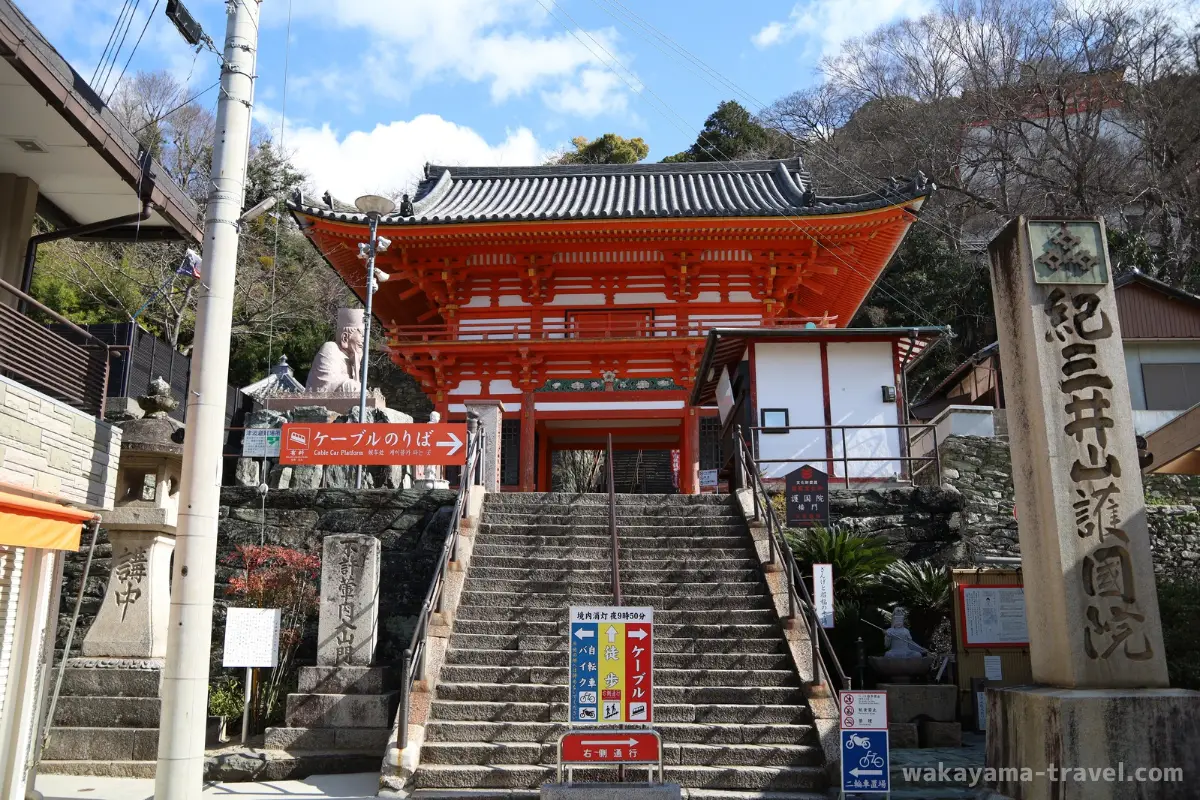
After soaking up the castle town atmosphere, make your way to Nichizen-gu (formally known as Hinomae Jingu and Kakikake Jingu). It’s one of the rare shrines in Japan where two separate shrines share the same grounds — a truly special and dignified place to visit.
Don’t skip Kimii-dera either, located southeast of the city. It’s the second temple on the Saigoku 33-temple pilgrimage circuit and is famously home to the cherry tree used as Japan’s official benchmark for forecasting the start of sakura season.
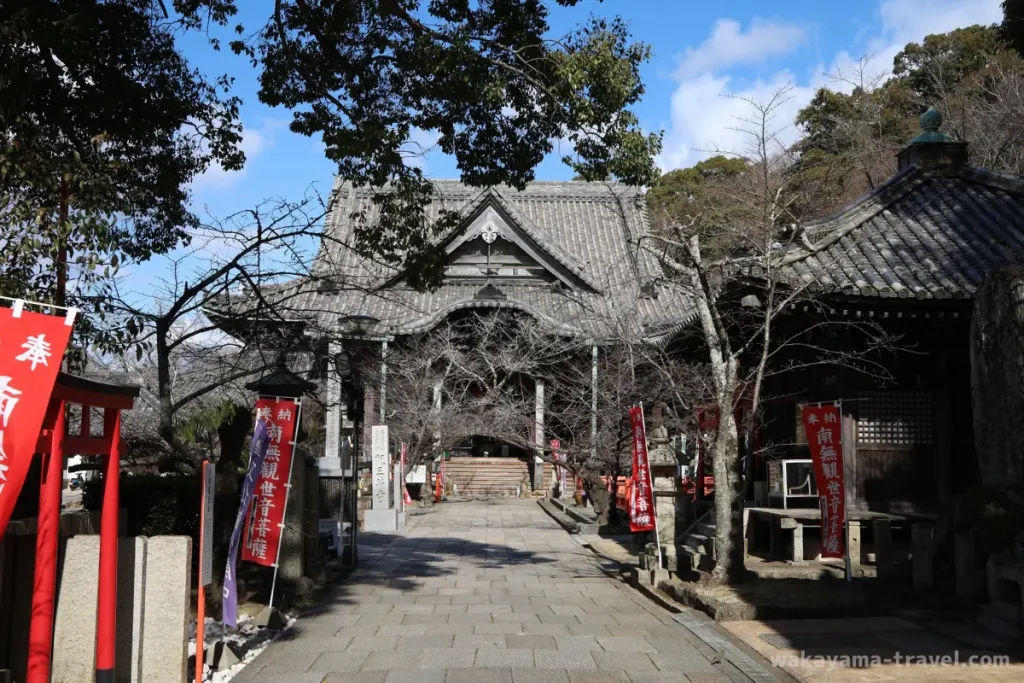
From the temple’s hilltop perch, the view of Kataoname beach stretching below is simply breathtaking.
Wakayama City is a great match for anyone who loves exploring history on foot.
Iwade City: Negoro-ji Temple & Its National Treasure Pagoda
In Iwade City, Negoro-ji Temple commands attention with its towering National Treasure pagoda.
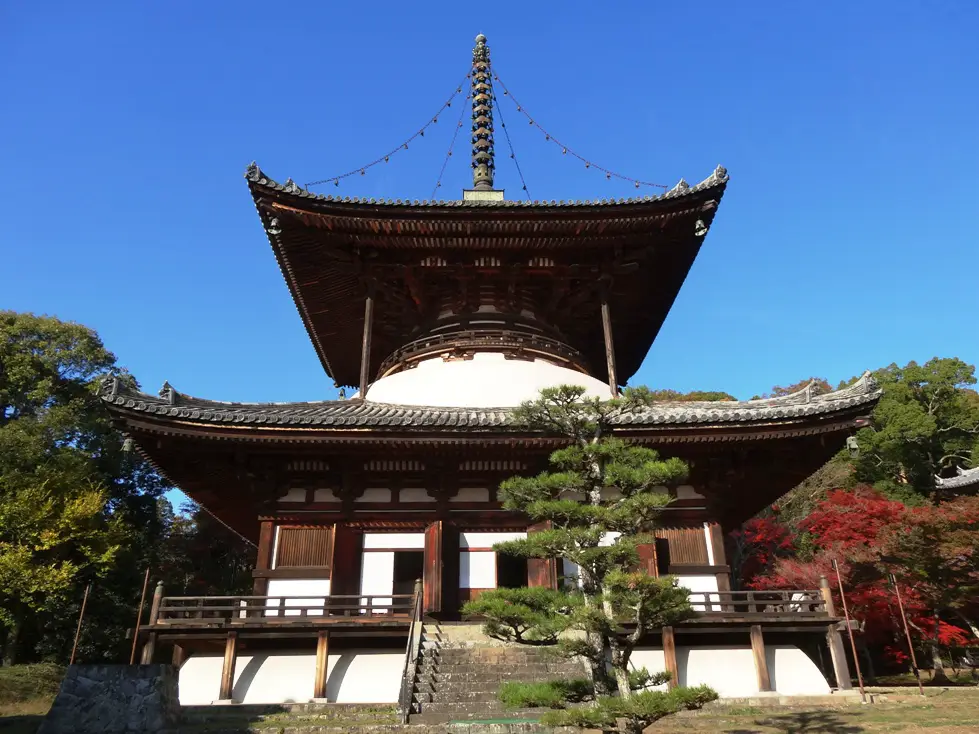
Negoro-ji was founded in the late Heian period by the monk Kakuban as a major Shingon Buddhist temple complex. At its peak, it is said to have had hundreds of halls and buildings within its grounds.
The undisputed star of the complex is the National Treasure Daito (multi-story pagoda). Standing nearly 40 meters tall, it’s one of the largest wooden pagodas of its type in all of Japan. The striking contrast of its vermillion and white paintwork against the surrounding greenery is simply gorgeous.
In spring, cherry blossoms add a soft, colorful backdrop to the grounds; in autumn, it transforms into a spectacular spot for fall foliage.
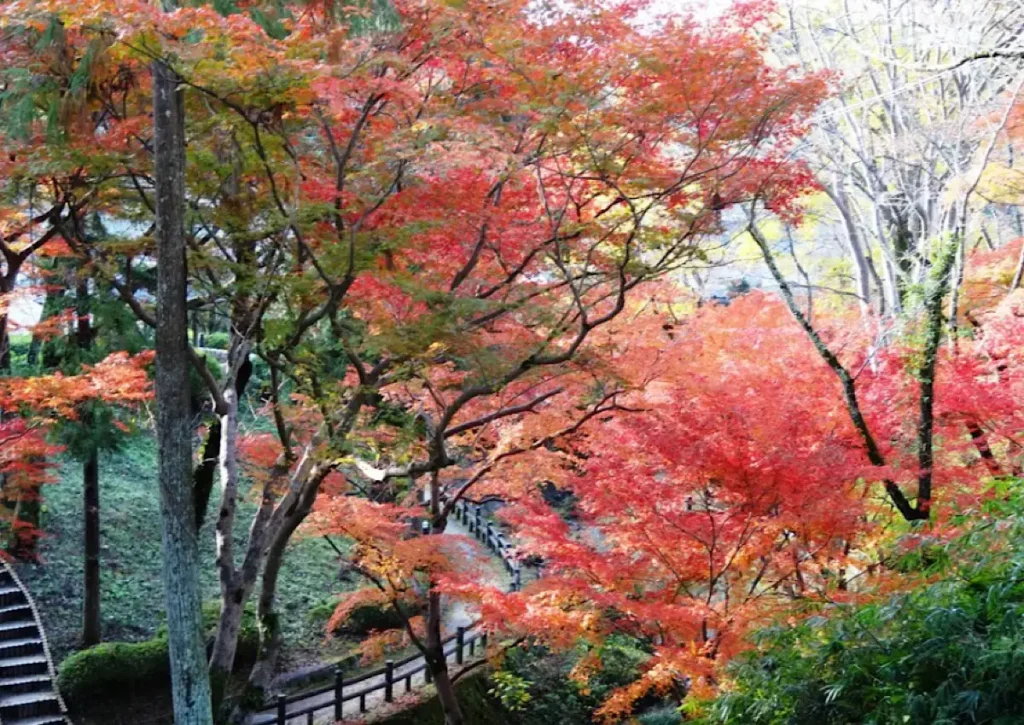
Conveniently located between Osaka and Wakayama City, it’s an ideal half-day stop on your itinerary.
Kinokawa City: Kokawa-dera, the Kishigawa Line & Fruit Picking in the Countryside
Kinokawa City offers a laid-back rural experience combining an ancient temple, a beloved local train line, and some of Wakayama’s best fruit picking.
First up is Kokawa-dera, the third temple on the Saigoku pilgrimage circuit, with a history spanning roughly 1,300 years.
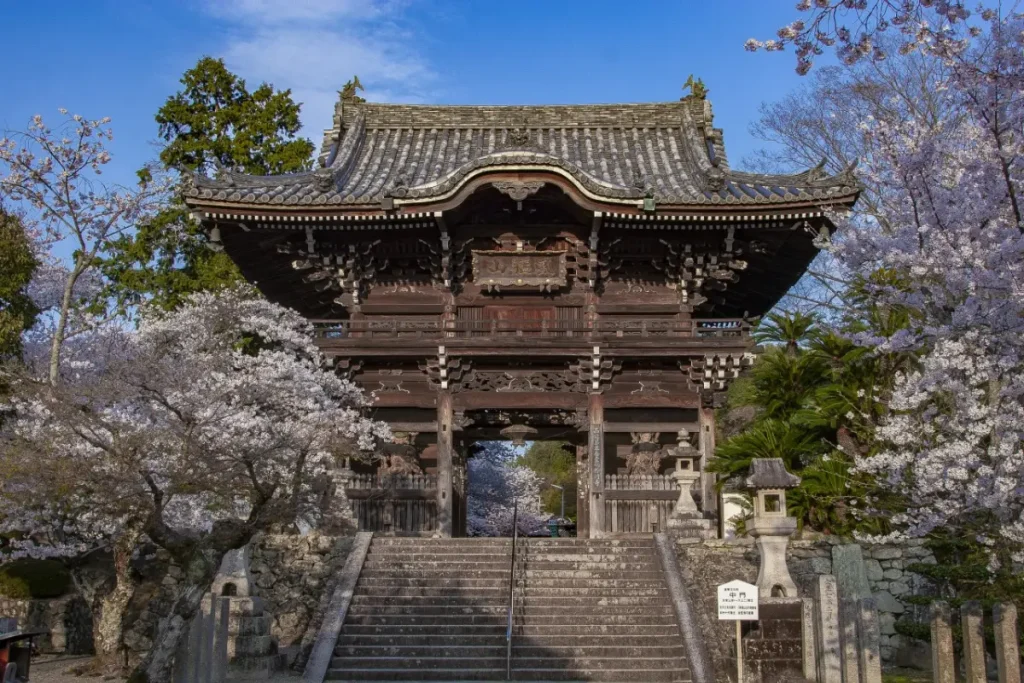
The sprawling grounds and its designated National Scenic karesansui (dry landscape) garden are the highlights. Just walking along the stone-paved approach from the great gate gives you a real sense of the temple’s long and storied past.
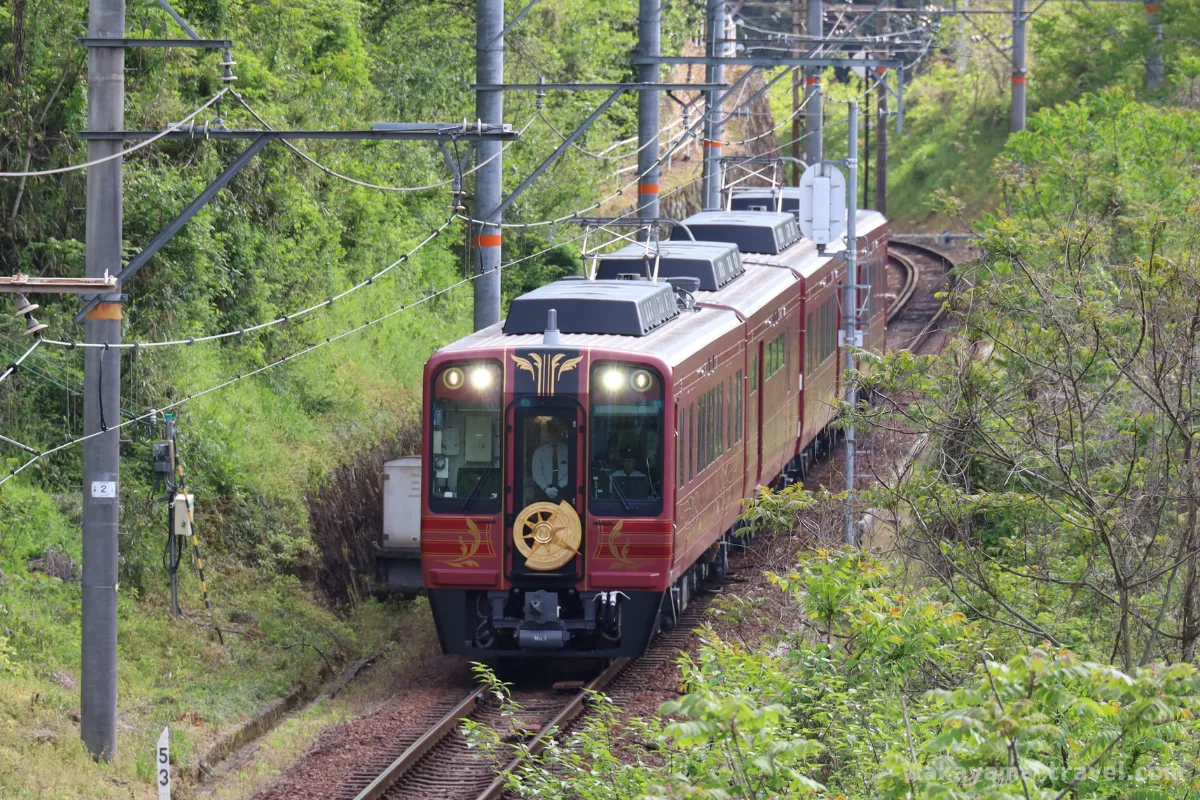
Next, we highly recommend hopping on the Wakayama Dentetsu Kishigawa Line. This charming local railway runs from Wakayama Station to Kishi Station and is famous for its one-of-a-kind themed trains — including the “Tama Train,” “Strawberry Train,” and “Umeboshi Train.”
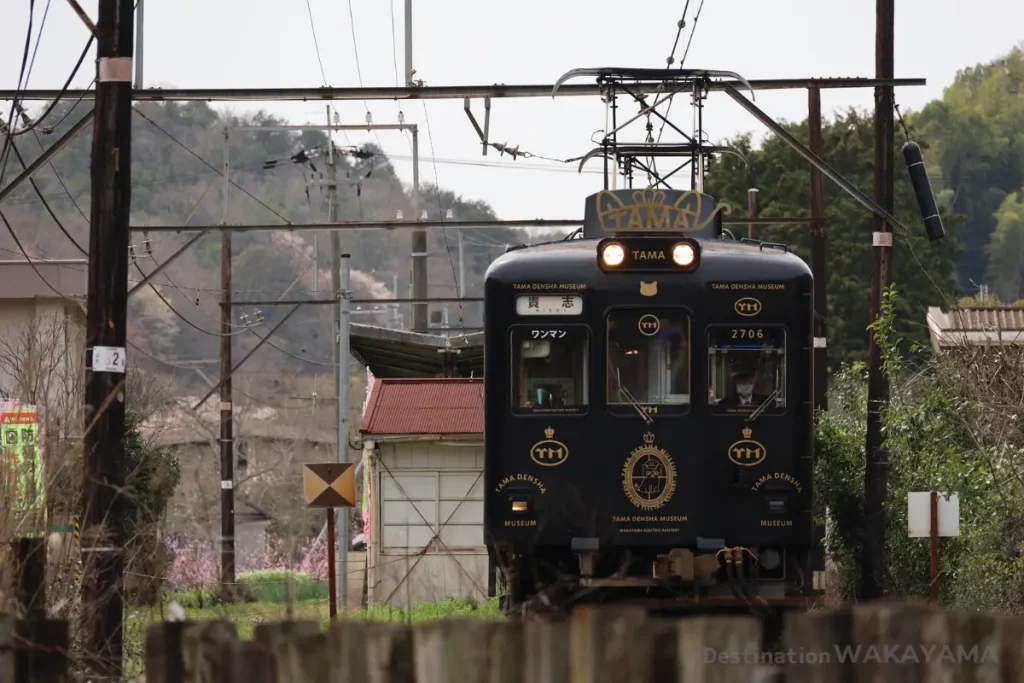
The story of Tama, the calico cat who once served as official stationmaster, is known and loved both in Japan and abroad. Riding the train and watching the scenery roll by is a travel memory in itself.
And of course, Kinokawa City is fantastic for fruit picking. Depending on the season, you can pick peaches, persimmons, strawberries, kiwis, and more.
Whether you’re traveling with kids or a group of adults, Kinokawa City delivers a genuinely fun and relaxing experience.
Ito Area (Hashimoto & Katsuragi): Niutsuhime Shrine & the Road to Koyasan
The Ito area is a land of spiritual heritage, where a World Heritage shrine and ancient pilgrimage routes still remain.
The two must-see destinations here are Niutsuhime Shrine and Koyasan.
Listed as part of the World Heritage Site “Sacred Sites and Pilgrimage Routes in the Kii Mountain Range,” Niutsuhime Shrine in Wakayama is the head shrine of approximately 180 Niutsuhime shrines found throughout Japan.
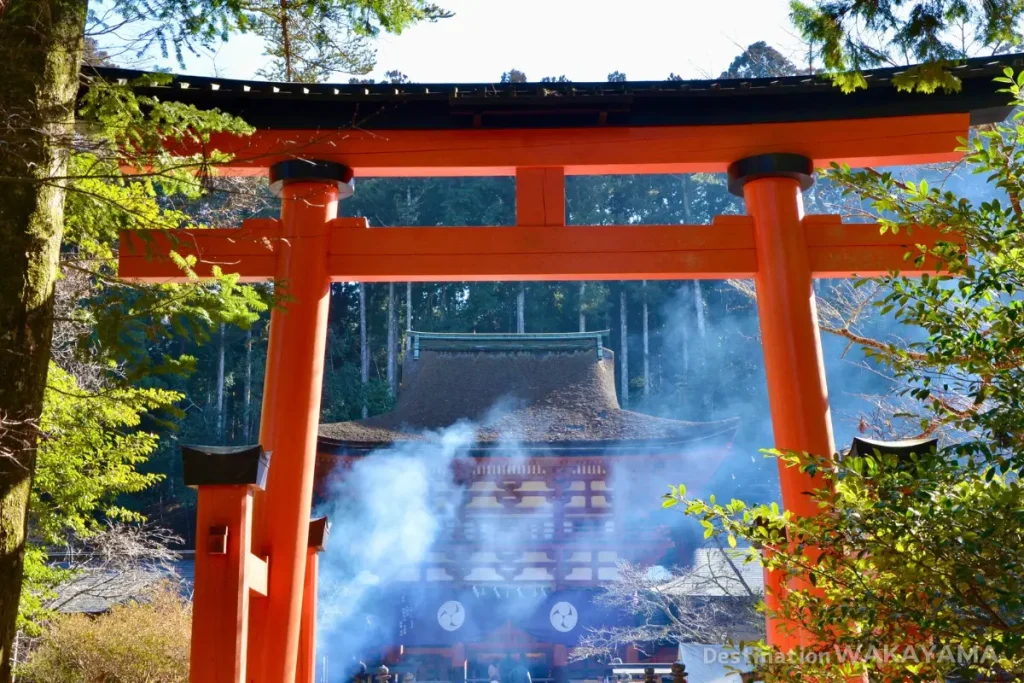
Its vermillion gate and serene, hushed grounds offer a sense of deep peace to every visitor. Tucked away in the mountains of Katsuragi Town, the atmosphere is truly that of a “hidden sacred place.”
Hashimoto City is an important transportation hub where the Nankai Koya Line and JR Wakayama Line intersect — it’s the main transfer point for travelers heading from the Osaka area up to Koyasan.
And of course, the most famous destination in this area is Koyasan itself.
Koyasan, spread across a plateau at roughly 800 meters above sea level, is the headquarters of Shingon esoteric Buddhism, founded about 1,200 years ago by the monk Kobo Daishi (Kukai). This isn’t just a collection of temples — the entire mountain constitutes a single sacred precinct known as Kongobu-ji.
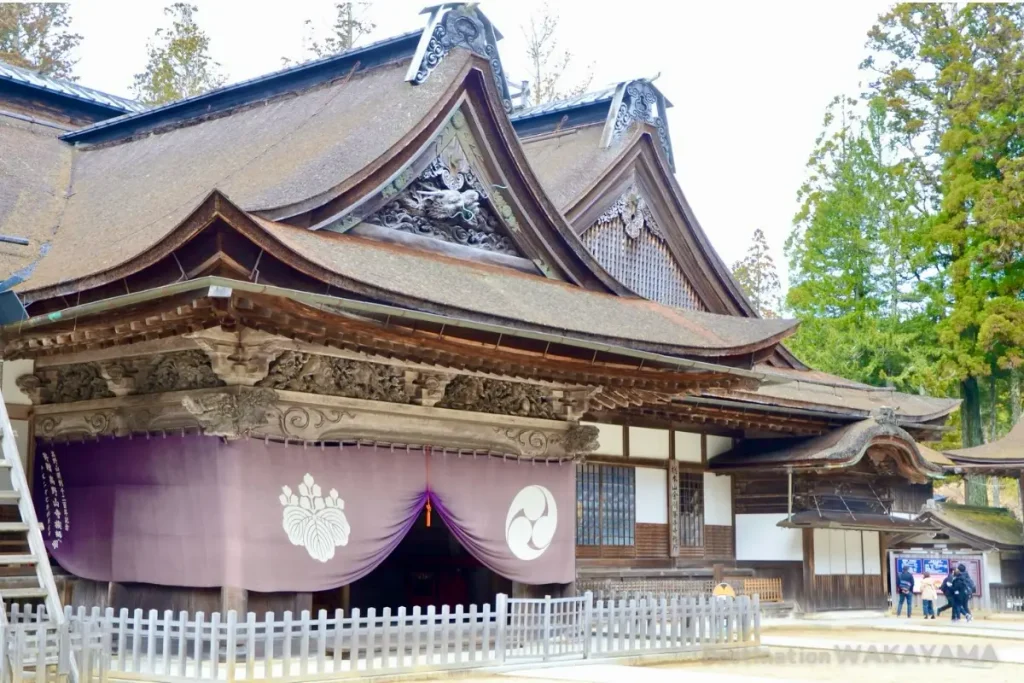
With temples still active across the mountain, it truly lives up to its reputation as a “sacred city in the clouds.”
▼ Related Article
【Kichu (Central)】Arida Mikan, Nanko Plums & Shirasaki — A Trip for All the Senses
Kichu is both the home of Japan’s most celebrated brand-name fruits and a region packed with stunning, camera-ready scenery.
It may not be as flashy as some other areas, but it’s where you’ll find the authentic, unfiltered Wakayama experience. If you’re after great food, gorgeous views, and that off-the-beaten-path local feel, this is the region for you.
Arida Area: Pick Japan’s Most Famous Oranges & Drive Through Stunning Hillside Views
The Arida area is the heartland of Arida mikan — Japan’s most iconic brand of mandarin orange.
The history of Arida mikan goes back roughly 400 years, when cultivation first began in this region. Come autumn, the terraced orchards cascading down the slopes along the Aridagawa River turn a vivid orange — a sweeping sight that’s well worth a drive through on its own.
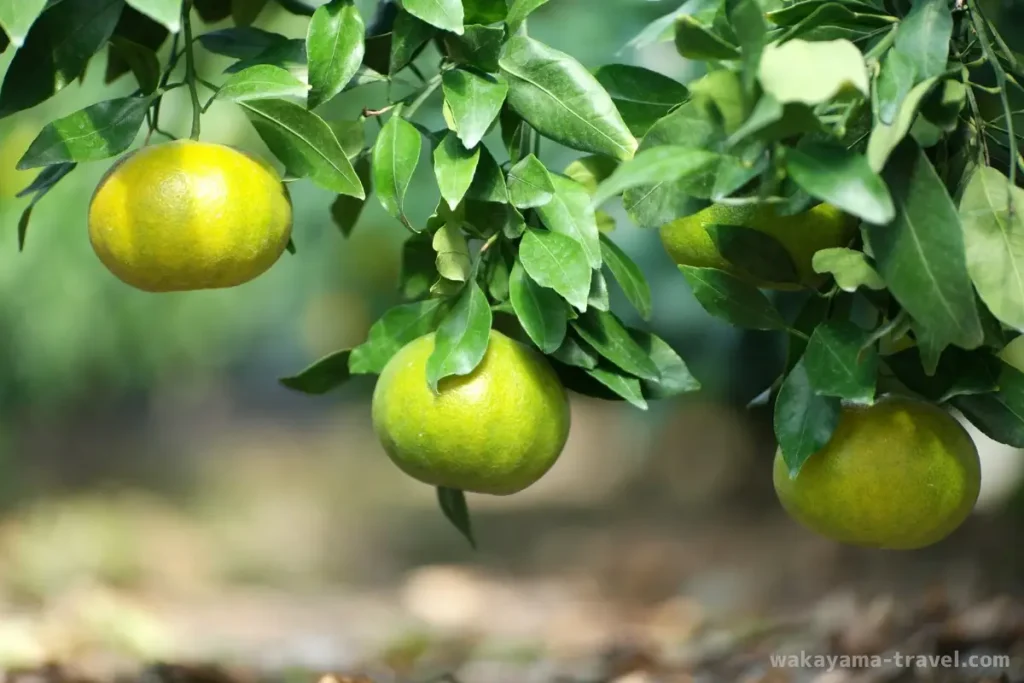
During the harvest season from October through December, many orchards open their doors for fruit-picking experiences. Biting into a freshly picked orange straight from the tree is a totally different experience from anything you’ll find at a supermarket — and it’s fun for all ages.
Gobo & Hidaka Area: Hidden Gems & Breathtaking Natural Scenery
The Gobo and Hidaka area is a true hidden gem — a place where untouched nature and local culture are still very much alive.
Gobo City is the main hub of the Hidaka region.
The Kishū Railway — one of the shortest rail lines in Japan — runs through the city, and its retro charm has won the hearts of travelers who love local train adventures. The line may be short, but the scenery along the way feels wonderfully nostalgic and unhurried.
The Hidakagawa River valley is lush and beautiful, making it a popular destination for families who want to enjoy river activities or camping. The further upstream you go, the deeper and greener the mountain scenery becomes — it’s the kind of air that just makes you feel refreshed.
In the town of Yura, Shirasaki Kaiyō Kōen is nothing short of spectacular — it’s often called “Japan’s Aegean Sea,” and the name really fits.
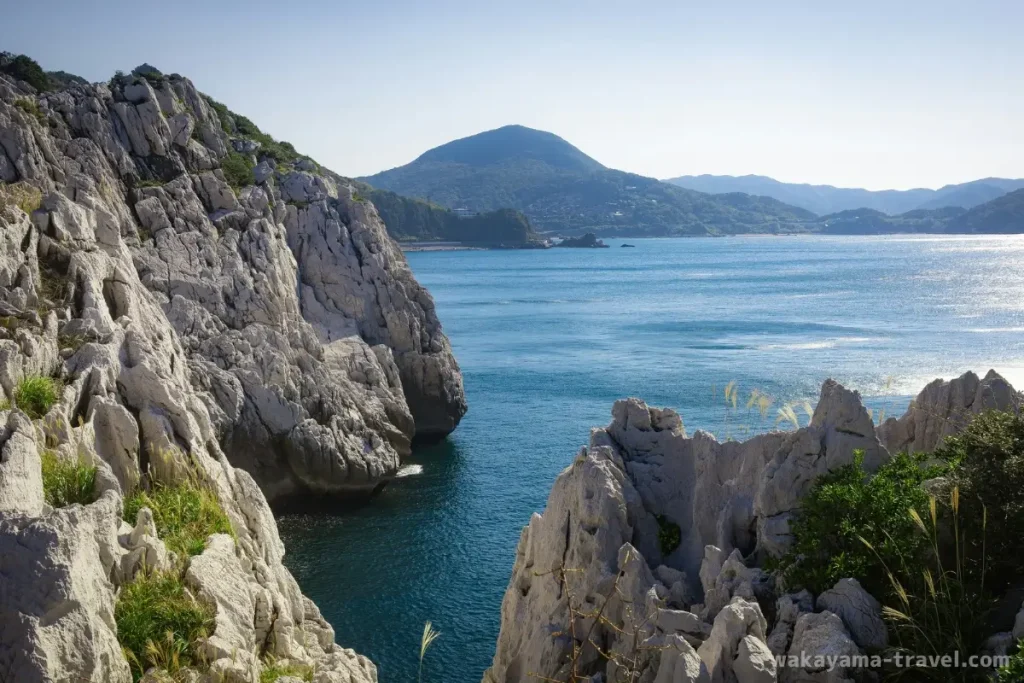
The white limestone cliffs jutting into the vivid blue sea at Shirasaki Cape create a contrast so striking it leaves people speechless. The scenery is genuinely unlike anything else in Japan — first-time visitors often find themselves asking, “Wait, is this really Japan?”
Well-maintained walking paths let you explore the rocky terrain right up close to the water. On a clear day, the sea is crystal clear and the whole place feels like a Mediterranean getaway. Visit around golden hour and the white cliffs glow orange — it’s magical.
It’s also a well-known spot for stargazing and night photography.
Whether you’re chasing the perfect photo or just want a great road trip stop, Shirasaki is a winner. Pair it with the Arida and Gobo areas for a great loop through the Kichu region.
Minabe Area: Japan’s Plum Capital
Minabe Town is the birthplace of Nanko plums — the undisputed king of Japanese ume.
Nanko plums are renowned across Japan for their thick, tender flesh and rich flavor. Minabe is also the largest plum-producing area in the country, and the entire town has a wonderfully distinctive character shaped by plum cultivation.
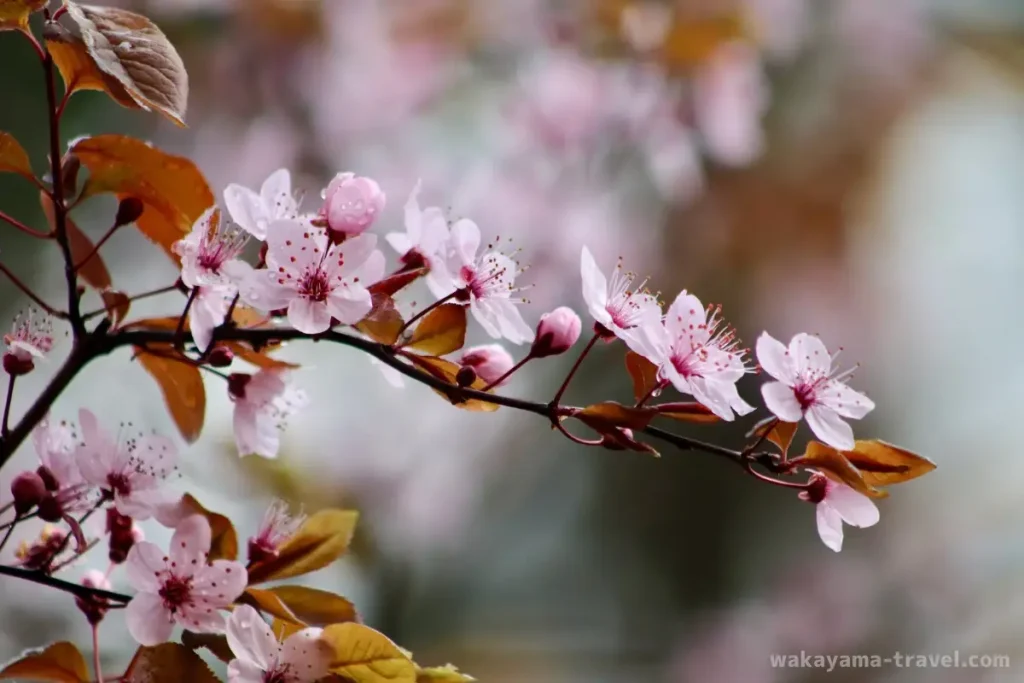
From February to March, the plum orchards across town burst into white and pink blossoms. The Nanbu Bairin plum grove in particular is celebrated with the phrase “a million trees in view, fragrance for ten leagues” — and the scale truly lives up to the hype. Standing amid the blossoms, you can feel spring arriving with your whole body.
The area is also full of shops selling umeboshi, plum wine, and other plum-based products — so souvenir shopping is a treat in itself. Keep an eye out for local restaurants serving plum-themed lunches too.
【Kinan (South) ①】Shirahama: Beach, Hot Springs & Wildlife at Kansai’s Top Resort
Shirahama is Wakayama’s flagship resort town. Clear blue skies, white sandy beaches, centuries-old hot springs, and one of the world’s most beloved animal parks — it’s all here in one place.
When people say “Wakayama trip,” they usually mean Shirahama — and it’s easy to see why.
Shirahama Beach: Kansai’s Most Beautiful White Sand Beach
Shirahama Beach is one of the most beautiful stretches of white sand in the entire Kansai region.
Stretching about 620 meters, the dazzling white sand is said to be the same type as Waikiki Beach in Hawaii. The beach is shallow and gently sloping, making it safe and fun for young children.
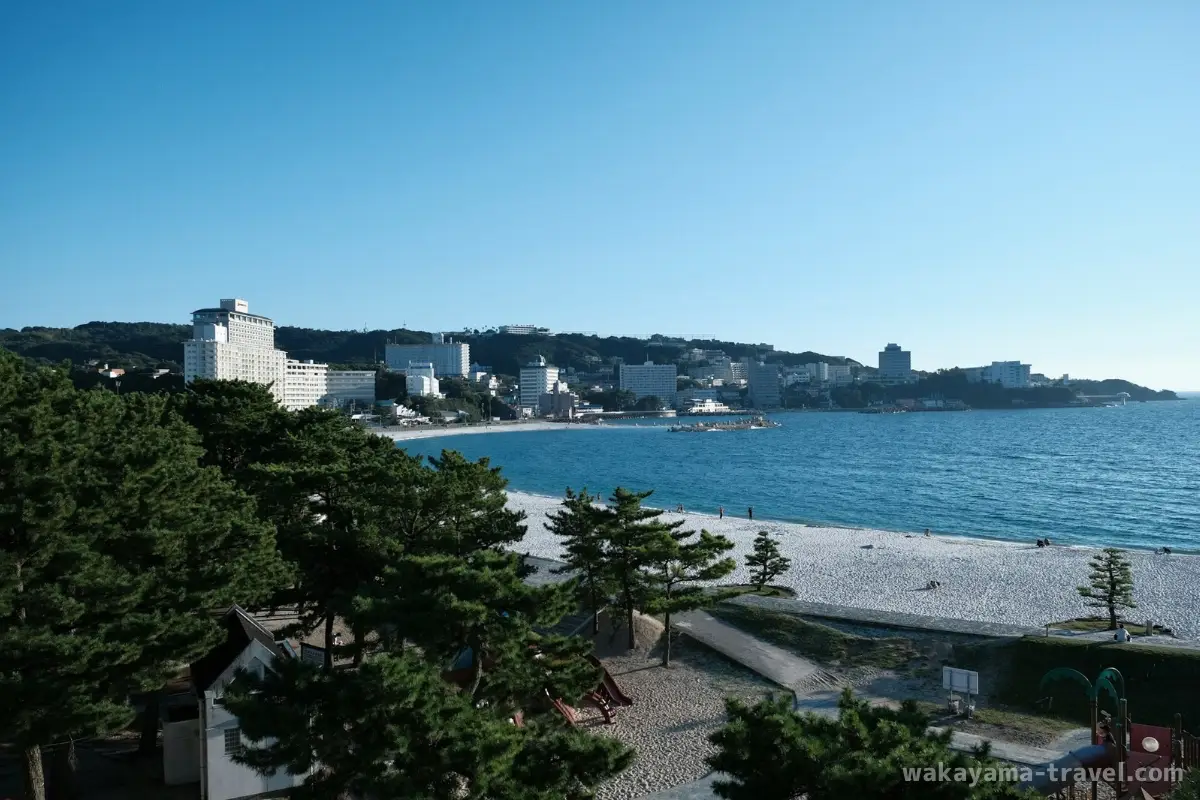
Swimming season: May 3 – mid September
It gets busy in summer, but the beach is just as beautiful in the off-season when it’s quiet and peaceful.
At sunset, the beach turns a warm golden orange — stunning. It’s a hugely popular spot for couples and families to take an evening stroll. There are also plenty of cafés and restaurants along the beachfront where you can sit back, enjoy a meal, and watch the waves.
Sandanbeki Cliffs & Senjojiki Rock Platform: Raw, Dramatic Coastal Scenery
Sandanbeki and Senjojiki are two awe-inspiring natural landmarks that showcase the raw power of Shirahama’s coastline.
Sandanbeki is a stretch of sheer cliffs, 50–60 meters high, running for about 2 kilometers along the coast. The dramatic landscape — carved out by relentless waves over thousands of years — is genuinely breathtaking to stand before.
Beneath the cliffs lies a cave you can reach by elevator down to 36 meters underground. Inside, the thundering roar of the waves echoes all around you — a powerful reminder of just how mighty nature really is.
Senjojiki, on the other hand, is a broad expanse of eroded rock stretching out toward the sea. The name roughly means “a thousand tatami mats,” and the wave-sculpted patterns in the rock create a truly unique landscape.
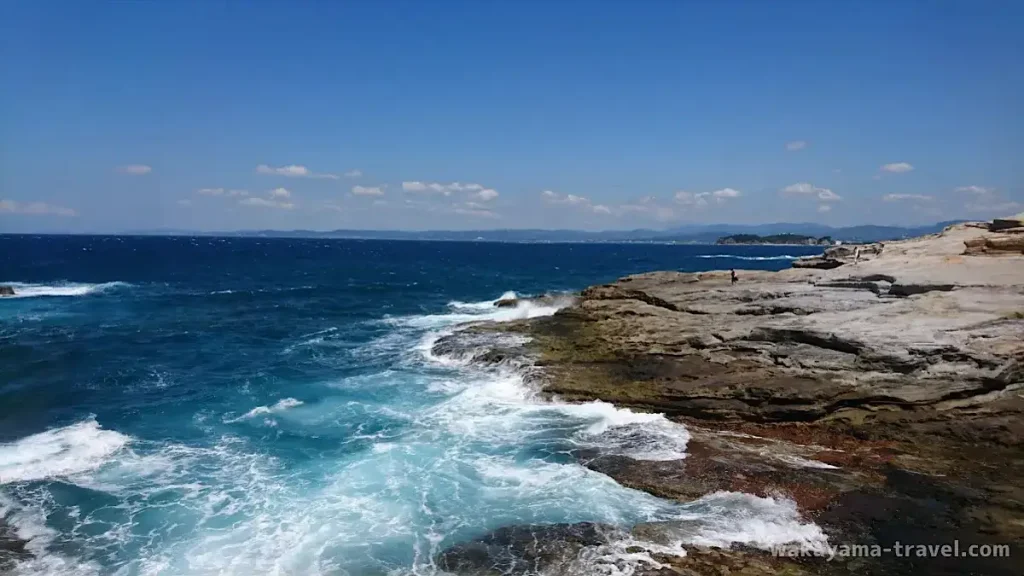
At low tide, you can walk out to the far edge and feel the ocean spray up close.
Shirahama Beach, Sandanbeki, and Senjojiki are all within about 10 minutes of each other by car — visiting all three in one go is the classic Shirahama itinerary.
Adventure World: The Ultimate Family Theme Park
Adventure World is Shirahama’s beloved theme park, where unforgettable animal encounters await at every turn.

The park features a safari zone, a marine world, and an amusement area, all packed with incredible animals. You can get up close to lions, giraffes, polar bears, and more by bus or on foot. The dolphin shows and penguin parades are always crowd-pleasers.

The park has built an impressive record of successful animal breeding over the years, drawing visitors from across Japan and around the world. It’s one of those places that’s just as fun for adults as it is for kids — easily a full day out.
Of all the spots in Shirahama, this one demands the most time — so plan to spend a whole day here and take it all in.
Shirahama Onsen: One of Japan’s Three Oldest Hot Springs
Shirahama Onsen is counted among Japan’s three oldest hot spring resorts, alongside Arima and Dogo — a legendary status well-earned.
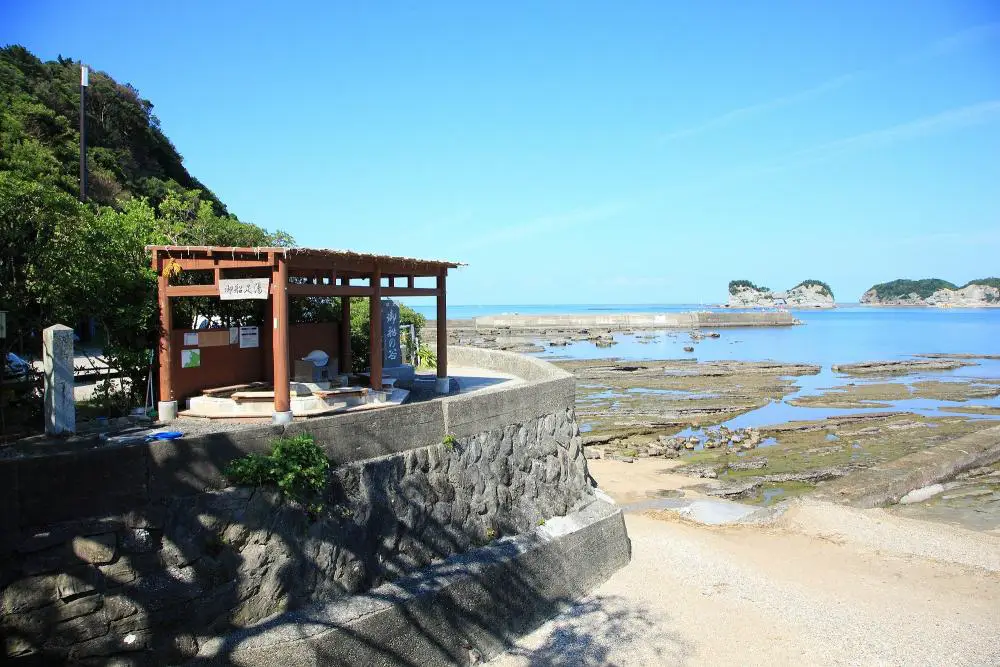
With a history stretching back over 1,300 years, records show that even emperors and aristocrats made the journey here during the Nara period. The water is a sodium chloride spring — gentle on the skin, warm to the core, and slow to cool. It’s the kind of bath that melts away fatigue from the inside out.
Among Shirahama’s many baths, Sakino-yu is the most iconic. This outdoor rock bath sits so close to the Pacific Ocean that you can feel the sea breeze and hear the waves as you soak. Many visitors describe it as “feeling at one with the ocean” — and it’s easy to see why.
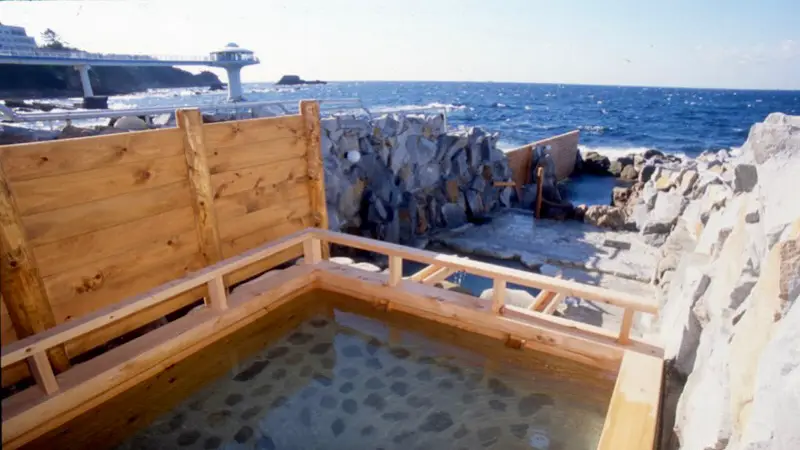
Shirahama is also well-stocked with excellent accommodation, including ryokan with ocean-view rooms and private open-air baths. It’s the complete package — sightseeing and hot springs, all in one place.
▼ Related Article
【Kinan (South) ②】Kumano Kodo & Kumano Sanzan: Walking Japan’s Sacred World Heritage Trails
The Kumano area is a place that touches something deep in the Japanese spirit. Towering mountains, crystal-clear rivers, and ancient paths of faith quietly embrace every visitor who arrives.
Pilgrims and travelers come from around the world to experience this — it’s one of Wakayama’s greatest gifts to the world.
What Is the Kumano Kodo? Everything You Need to Know Before You Walk
The Kumano Kodo is the collective name for the ancient pilgrimage routes that lead to the Kumano Sanzan shrines. In 2004, they were inscribed as a UNESCO World Heritage Site.
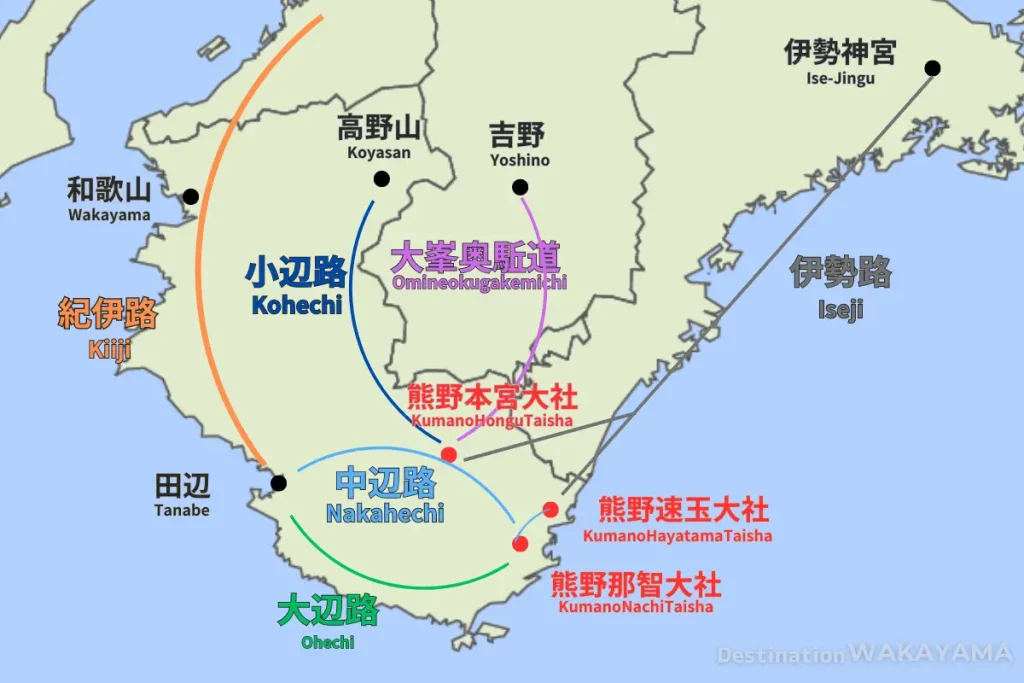
For centuries, people of all walks of life — emperors, nobles, samurai, and ordinary people — made the journey to Kumano along these trails. The expression “a procession of ants heading to Kumano” was coined to describe just how many pilgrims walked these paths.
There are several routes through the Kumano Kodo. For first-timers, the Nakahechi route is the top recommendation.
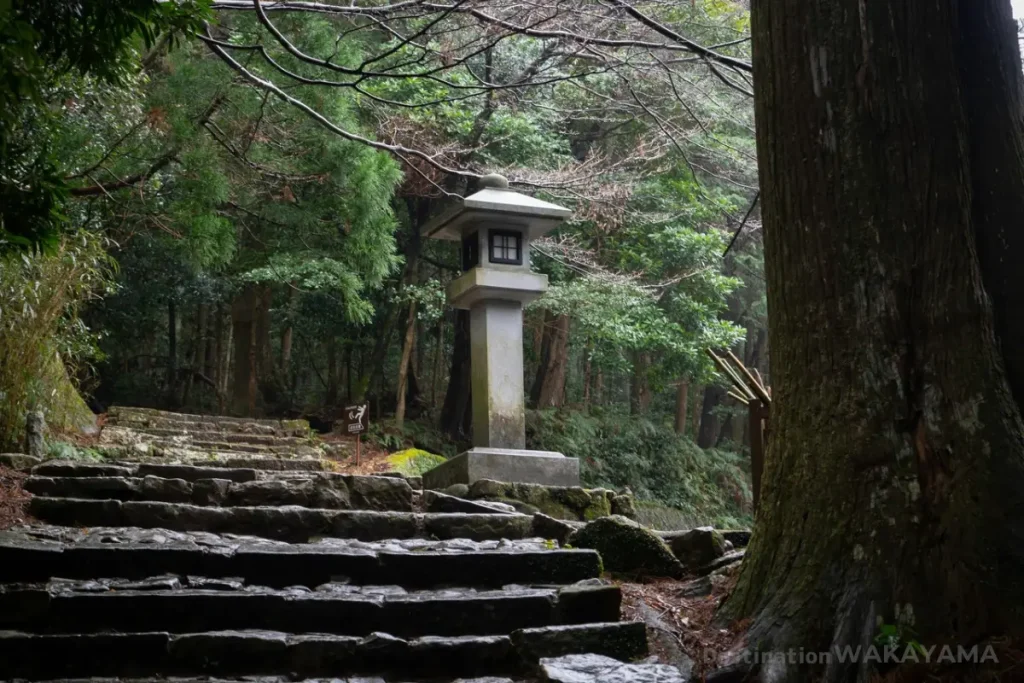
Starting from Tanabe and winding its way to the Kumano Sanzan, this route takes you through stone-paved forest paths and towering cedar groves — an experience unlike anything else. You can choose a section that matches your fitness level, so even first-time trekkers can take it on with confidence.
Beyond the walking itself, one of the great joys of the Kumano Kodo is pausing in a village or a tea house along the way to rest and let your thoughts drift back to the pilgrims of centuries past.
▼ Related Article
The Kumano Sanzan: Visiting Hongu Taisha, Hayatama Taisha & Nachi Taisha
The Kumano Sanzan refers to the three great shrines that stand at the end of the Kumano Kodo pilgrimage routes.
Each has its own distinct character and history — together, they offer a profound immersion into the world of Kumano worship.
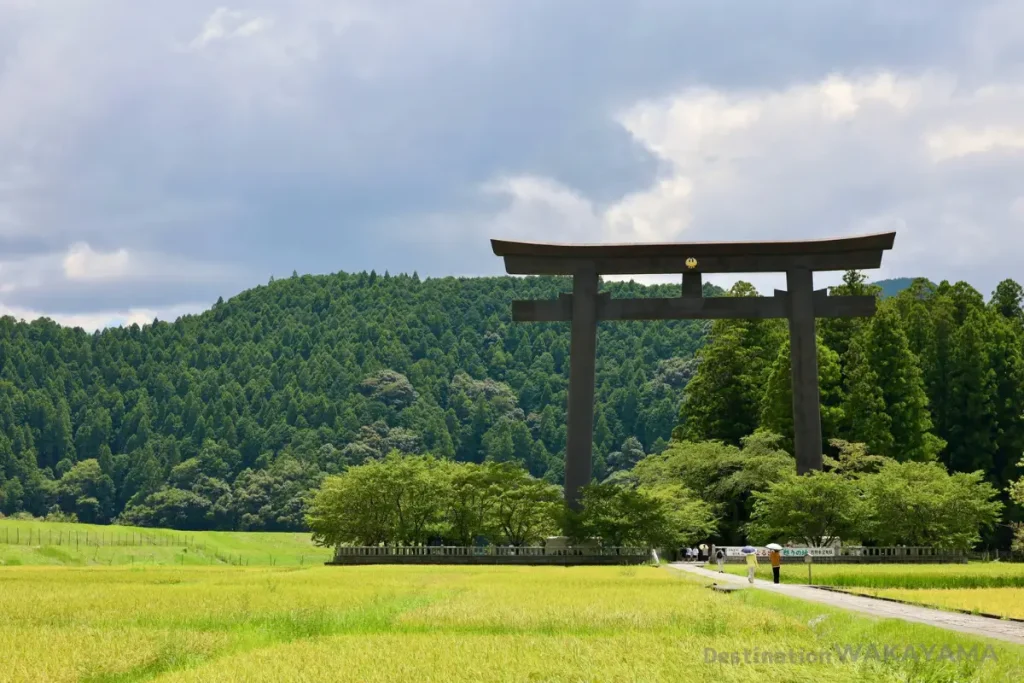
Kumano Hongu Taisha is the spiritual heart of the three. Set deep within a cedar forest in Hongu Town, Tanabe City, it radiates a solemn, reverent atmosphere. The massive torii gate at the former shrine site of Oyunohara — the largest in Japan — makes for an unforgettable sight.
Kumano Hayatama Taisha is a beautifully vermillion-lacquered shrine in Shingu City, set along the banks of the Kumano River. The sacred nagi tree in its grounds is revered as a symbol of good relationships and marriage.
Kumano Nachi Taisha enshrines Nachi Falls as its divine object of worship. It sits alongside Seiganto-ji Temple, preserving the tradition of shinbutsu-shugo (the blending of Shinto and Buddhism). The iconic photograph of the vermillion three-story pagoda framed against the backdrop of Nachi Falls is one of the most recognizable images in all of Wakayama.
Nachi Falls: Japan’s Tallest Single-Drop Waterfall
Nachi Falls drops 133 meters and spans 13 meters at its crest — making it one of the most powerful and impressive waterfalls in all of Japan.
The sheer scale and volume of water is something you feel in your whole body just by standing before it. Revered as a sacred place since ancient times, Nachi Falls is the divine centerpiece of Kumano Nachi Taisha and continues to draw worshippers to this day.
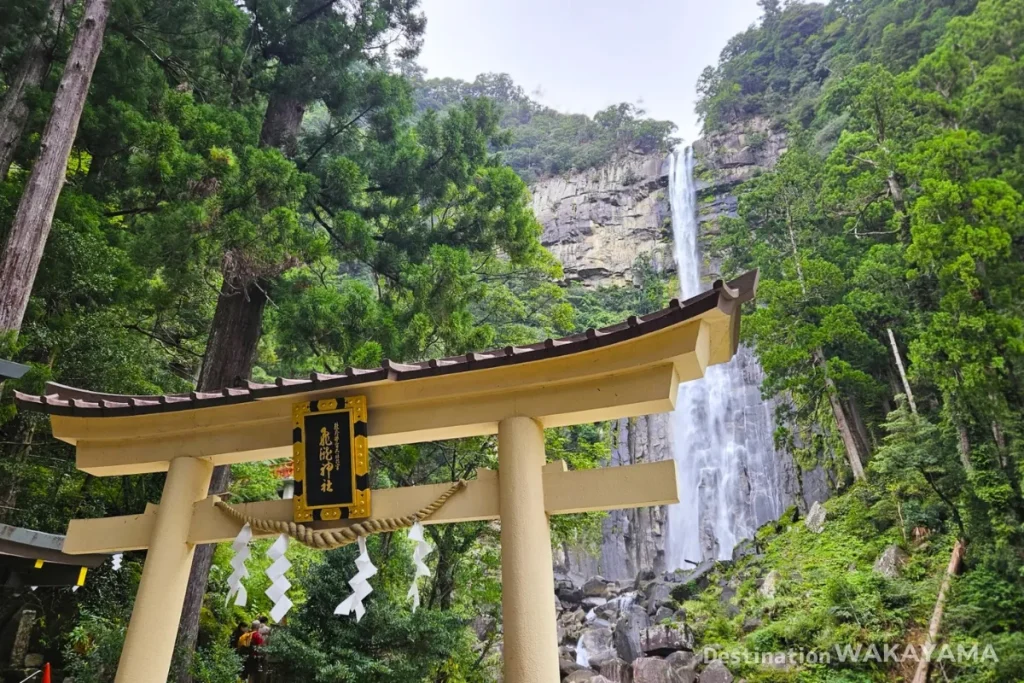
Walking down the approach to Hirou Shrine brings you close enough to feel the mist on your skin. Breathing in that ion-rich air while gazing up at the cascade feels like washing away every bit of everyday stress.
One of Nachi Falls’ notable qualities is its consistent water volume year-round. After a rainy day, the flow increases dramatically for an even more powerful show. Pair it with a visit to Kumano Nachi Taisha and Seiganto-ji for the full experience of this remarkable place.
▼ Related Article
Nachikatsuura: Bluefin Tuna & Hot Springs to Cap Off Your Trip
Nachikatsuura Town is Japan’s top landing port for bluefin tuna — a true paradise for seafood lovers.
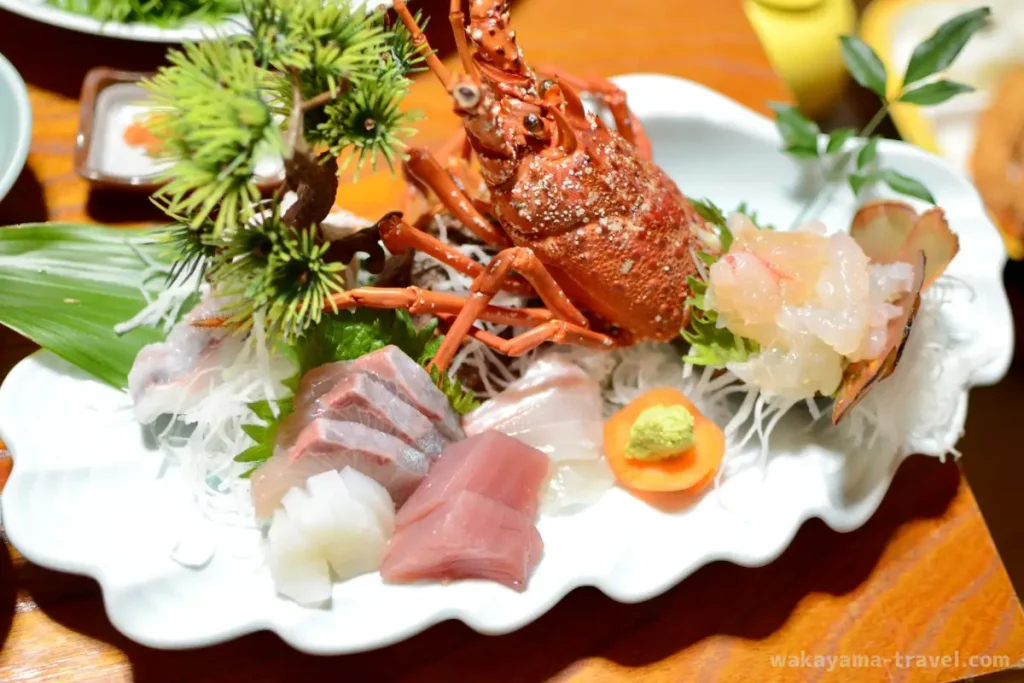
Around Katsuura Fishing Port, you’ll find restaurant after restaurant serving the freshest tuna imaginable. The lean cuts, medium fatty toro, and rich otoro are available at prices and freshness levels you simply won’t find anywhere else. At the morning market, you can watch local fishermen and traders lay out their catch up close.
Nachikatsuura is also a celebrated hot spring destination. Katsuura Onsen is famous for its unusual baths — including springs on small islands and inside sea caves — that have captivated hot spring enthusiasts across Japan. Bokido, a natural cave hot spring, is a particular standout: soaking in an open-air bath inside a cave while listening to the sound of the waves is an experience like no other.
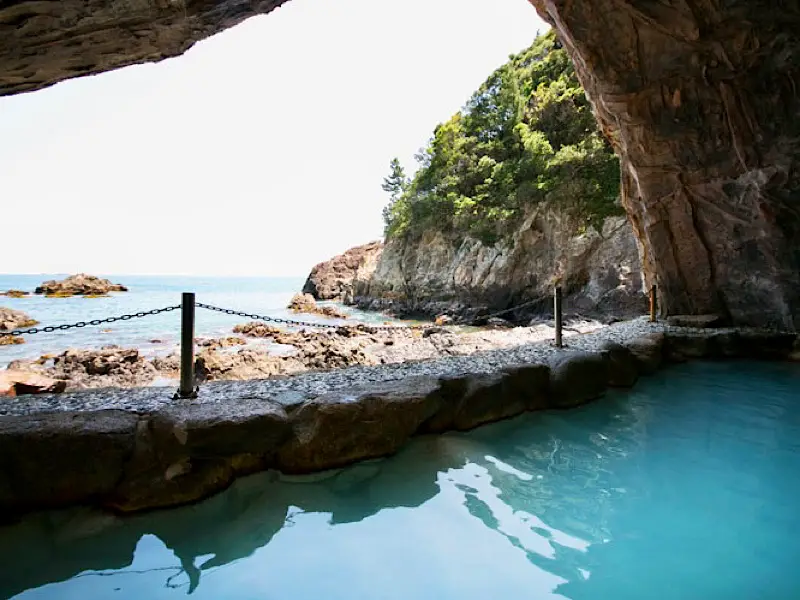
Walk the Kumano Kodo and the sacred Kumano Sanzan, then wind down with fresh tuna and a relaxing soak in Nachikatsuura. It’s the golden ending to any Kinan itinerary.
【Kinan (South) ③】Geopark Wonders & Dramatic Scenery at Japan’s Southernmost Point
Kinan’s appeal doesn’t stop at pilgrimage and resort living — the region’s geological landscapes are something else entirely.
Recognized as part of the Nanki Kumano Geopark, this area has been shaped by tens of millions of years of Earth’s history. If you want to be awestruck by the forces of nature, this is the place.
Kushimoto: Hashiguiiwa Rocks, Cape Shionomisaki & Coral Reefs at Japan’s Southern Tip
Kushimoto Town, at the southernmost point of Honshu, is a compact region packed with some of Japan’s most dramatic scenery.
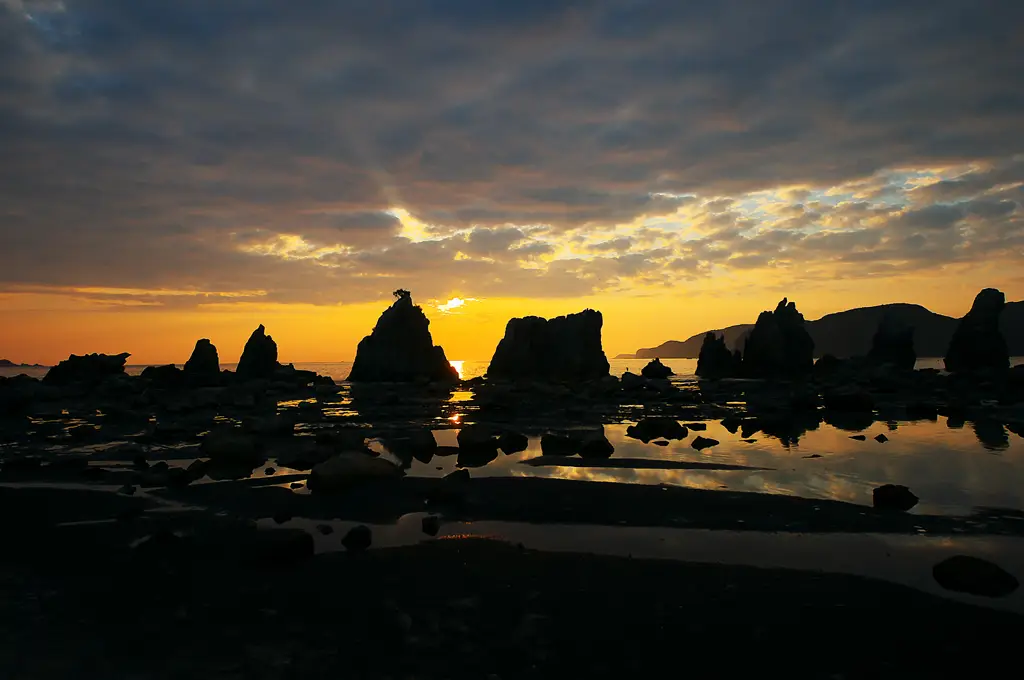
First on the list is Hashiguiiwa (the Bridge Pillar Rocks). About 40 rocks of varying sizes stretch in a single line from the Kushimoto shore toward the offshore island of Oshima — looking for all the world like the pilings of a bridge with its planks removed.
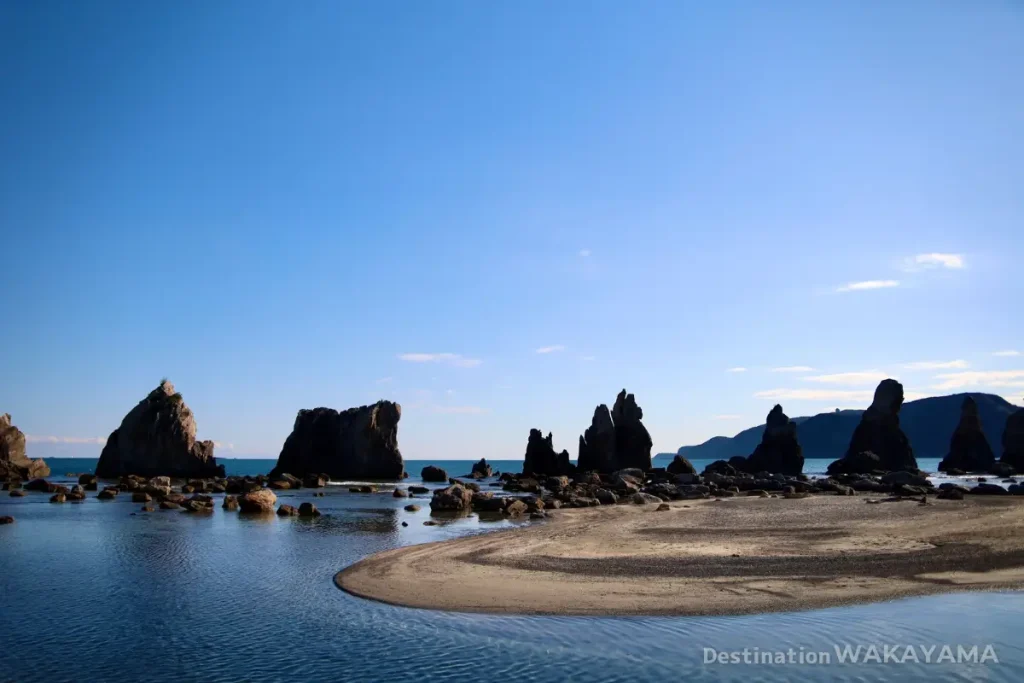
Designated a National Natural Monument, this spot is best visited at sunrise, when the silhouette of the rocks against the glowing sky is nothing short of spectacular. Worth getting up early for — it’s easily one of Kushimoto’s finest views.
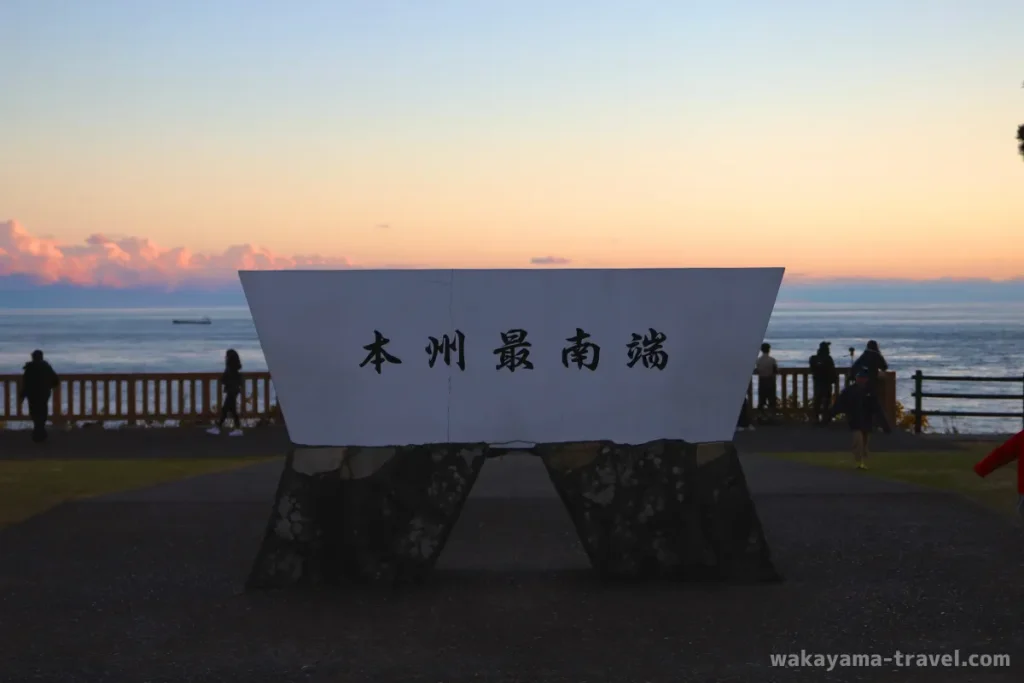
Next, head to Cape Shionomisaki — the southernmost point of Honshu. The sweeping, unobstructed view of the Pacific Ocean from here is liberating. Climb the Shionomisaki Lighthouse for a full 360-degree panorama. Standing at the very tip of Japan’s main island brings its own quiet sense of accomplishment.
Kushimoto is also home to Japan’s northernmost coral reef. The remarkably clear water is teeming with colorful corals, drawing snorkelers and divers from across Japan and abroad.
Peering beneath the surface, you’ll find a world that feels more like a tropical island resort than mainland Japan.
Tanabe & Tenjinzaki: Japan’s Answer to the Bolivian Salt Flats
Tenjinzaki in Tanabe City has earned the nickname “Japan’s Uyuni Salt Flats” — and once you see it, you’ll understand why.
Tenjinzaki is a small cape jutting into Tanabe Bay. At low tide, when the rocky platform emerges from the sea and a thin film of water remains on the surface, the sky is reflected in the water like a giant mirror — a stunningly ethereal scene.
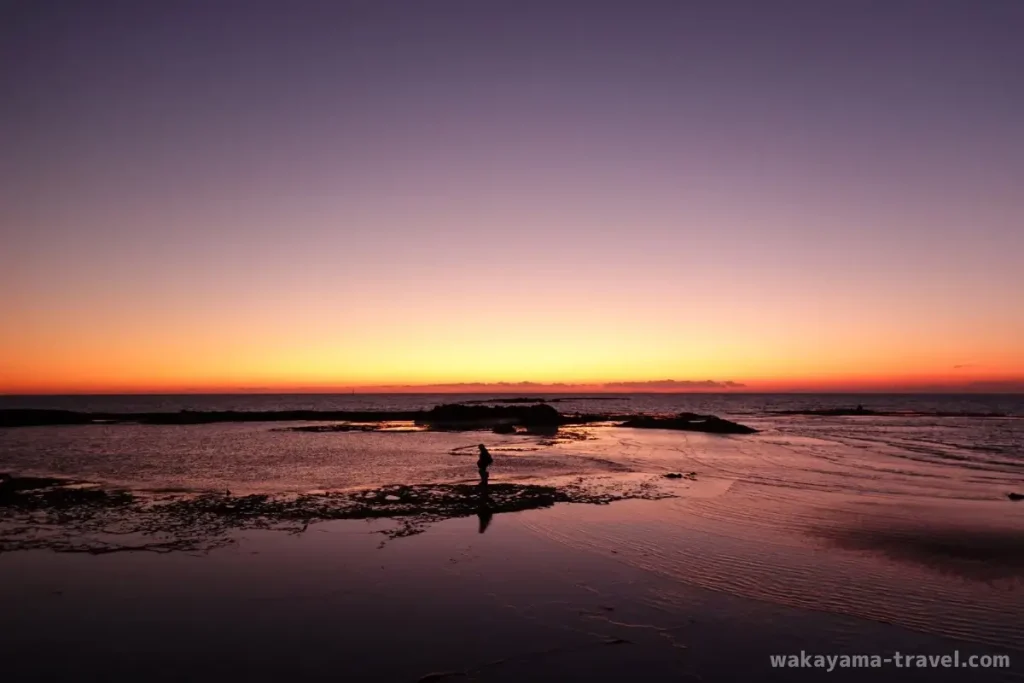
The comparison to Bolivia’s Salar de Uyuni spread online and brought a wave of travelers to discover this hidden gem in recent years.
The best time to visit is around sunset. The moment an orange sky melts into the glassy water below is the kind of scene that keeps your shutter finger busy.
The key to getting that perfect shot is timing your visit with low tide — check a tide chart before you head out.
The Tenjinzaki area is a designated nature preserve, home to a rich and protected ecosystem.
The rocky shore is full of starfish, crabs, and other sea creatures, so it’s also a great spot for exploring tide pools. It’s easy to reach from central Tanabe City and pairs nicely with a visit to the starting point of the Kumano Kodo.
Nanki Kumano Geopark: Walk Through Millions of Years of Earth’s History
The Nanki Kumano Geopark is one of Japan’s premier geoparks — a place where you can genuinely feel the scale of geological time.
A geopark is an area where geologically significant landforms and rock formations are protected while being used for education and tourism. The Nanki Kumano Geopark spans southern Wakayama Prefecture into southern Mie Prefecture, and in 2020 it was recognized as a UNESCO Global Geopark.
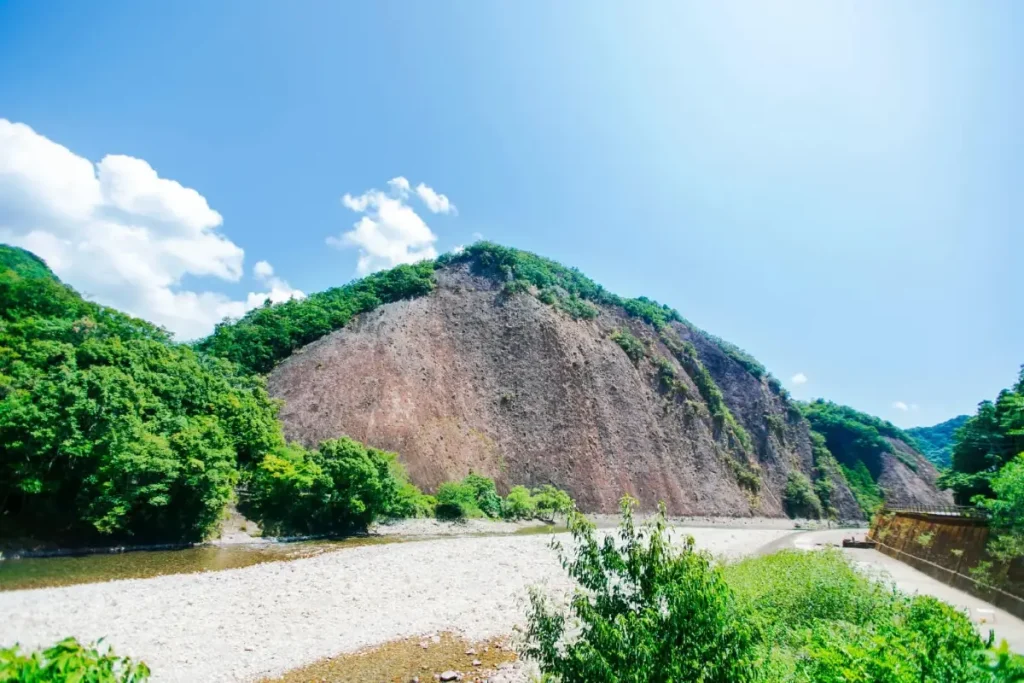
The area is home to an incredible variety of landforms created by tectonic plate movements tens of millions of years ago. The Hashiguiiwa rock pillars, the white limestone cliffs of Shirasaki, the geological layers that gave birth to Nachi Falls — every spot you visit holds a chapter of Earth’s story.
“Why do these rocks look like this?”
“Why does a waterfall exist in this exact spot?”
Sitting with those questions as you explore makes the journey so much richer.
The best way to experience the geopark is on a guided tour. With an expert guide beside you, the backstory behind every rock and ridge comes alive — you’ll never look at a landscape the same way again.
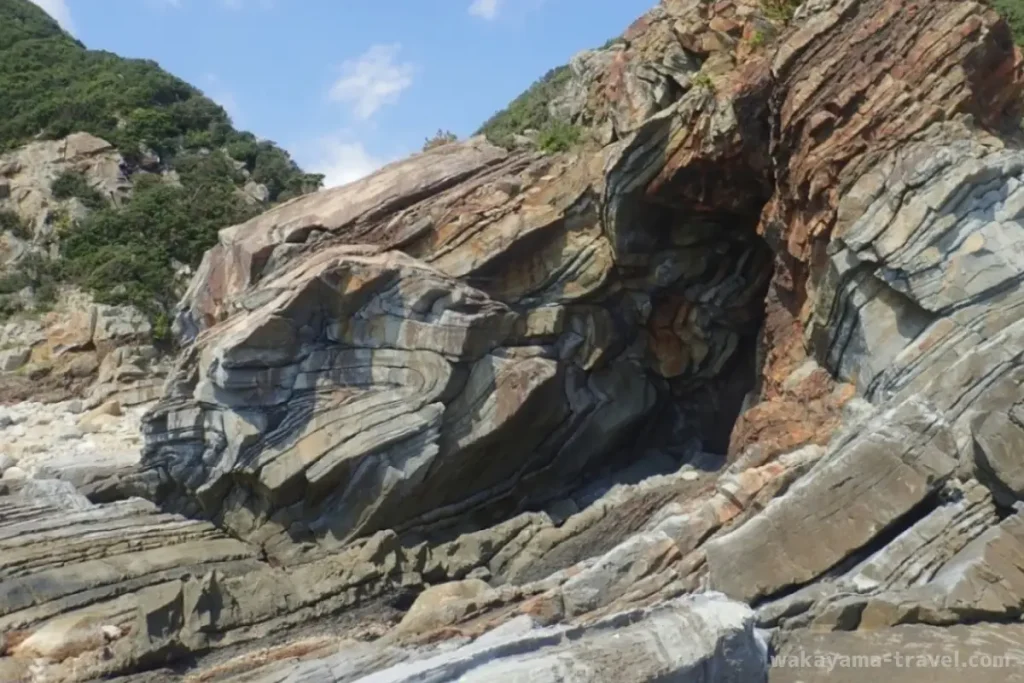
It’s a fascinating experience for adults and a brilliant spark for curious, science-minded kids too.
Wakayama Travel FAQ
Here are answers to some of the questions we hear most often. Get your questions sorted before you go!
When is the best time to visit?
It depends on the region, but spring (March–May) and autumn (October–November) are generally the best times overall. In Kihoku, the cherry blossom season from late March to April is stunning — Wakayama Castle and Kimii-dera are especially beautiful. In Kichu, don’t miss the plum blossoms from February to March, or the mikan-picking season from October to December. In Kinan, the beach season peaks in July and August, but May–June and September–October are great options if you’d rather avoid the summer crowds. For trekking the Kumano Kodo, spring and autumn offer the most comfortable weather and are the most popular seasons for a reason.
How many nights should I plan for?
If you’re focusing on one area, 1 night / 2 days works well. If you want to explore Wakayama more broadly, 3 nights / 4 days is ideal.
Wakayama stretches a long way from north to south — driving from Kihoku to Kinan takes about 3–4 hours. With just 1 night, it’s best to stick to either Kihoku (Koyasan / Wakayama City) or Kinan (Shirahama).
With 2 nights, you can explore the Kinan region at a relaxed pace. If you want to really soak up everything Wakayama has to offer, aim for 3 nights or more — you won’t regret it.
Can I get around without a car?
It’s possible in some areas, but having a car makes a big difference in Kinan.
Wakayama City, Koyasan, and the Kinokawa area are fairly well-served by public transport. The Nankai Electric Railway, JR Wakayama Line, and Wakayama Dentetsu are all useful options — Kihoku is very manageable without a car.
In Shirahama, Kushimoto, and the Kumano area, however, the attractions are spread far apart and rental car travel is much more practical. Buses do run, but services can be infrequent — always check the timetable in advance.
Is Wakayama good for families with kids?
Absolutely! The Shirahama area in particular is full of family-friendly options.
Adventure World has animal shows, safari experiences, and plenty to keep kids entertained for a full day. Shirahama Beach is shallow and calm — perfect for young swimmers.
The fruit picking in Kinokawa City and the adorable themed trains on the Kishigawa Line are also huge hits with kids. And if you pick an easy section of the Kumano Kodo, even primary school-age children can handle it just fine.
Wrapping Up: Know Your Regions, Love Your Trip
In this guide, we’ve taken you through Wakayama’s three main regions — Kihoku, Kichu, and Kinan — covering the highlights and must-see spots in each.
Here’s a quick recap of what makes each area special:
Kihoku is a treasure trove of history and spiritual heritage, with Koyasan, Negoro-ji, Kokawa-dera, and Niutsuhime Shrine at its heart. It’s also a place for warm, relaxing experiences like riding the Kishigawa Line and picking fresh fruit.
Kichu is the home of Japan’s finest brand-name produce — Arida mikan and Nanko plums — and offers photogenic landscapes like Shirasaki Marine Park that you’ll want to capture from every angle.
Kinan is Wakayama’s showpiece — a region with three distinct personalities: the resort beaches of Shirahama, the sacred Kumano Kodo pilgrimage routes, and the jaw-dropping geopark landscapes of Kushimoto and Tanabe.
The secret to a great Wakayama trip is simple: pick your region based on what you’re looking for.
Trying to see everything at once is a recipe for spending half your trip in the car. Instead, think of it as a place you’ll return to — “Kihoku this time, Kinan next time” — and let yourself discover more of Wakayama’s depth with each visit.
Use the spots we’ve shared as your starting point, pick a region that speaks to you, and start planning. Book your accommodation and transportation early to keep things stress-free.
We hope your Wakayama trip is everything you’re hoping for — and then some.

コメント