
“I want to visit Kumano Nachi Taisha, but where should I go?”
“Is there parking? Where do I get the goshuin stamp?”
Sound familiar? You’re not alone.
Kumano Nachi Taisha is one of Wakayama’s most iconic UNESCO World Heritage Sites, with stunning highlights like Nachi Falls and Seiganto-ji Temple. But if it’s your first visit, figuring out what to see and how to get around can feel a bit overwhelming.
In this guide, we’ve got everything covered — from basic info and must-see spots to goshuin stamps, parking, access, model itineraries, and nearby hotels.
Use it to plan the perfect trip!
What Is Kumano Nachi Taisha? A Quick Look at This World Heritage Gem
Kumano Nachi Taisha is one of Japan’s most powerful spiritual destinations, with a history stretching back over 1,700 years.
Essential Info Before You Go
Here’s a quick overview of everything you need to know before your visit.
| Item | Details |
|---|---|
| Address | 1 Nachisan, Nachikatsuura-cho, Higashimuro-gun, Wakayama |
| Visiting Hours | 6:00 AM – 6:00 PM (hours vary for individual facilities within the grounds) |
| Admission | Free (Treasure Hall: ¥300 for adults, ¥200 for children) |
| Phone | 0735-55-0321 |
| Parking | Available (see details below) |
※ Treasure Hall fees and hours are subject to change. Please check the official website before your visit.
Blessings and History
The main deity enshrined here is Kumano Fusumi no Okami — also known as Izanami no Mikoto — a goddess of creation who nurtures all living things.
The name “Fusumi” is linked to the word “musubi” (meaning “to bind” or “to bring together”), which is why the shrine is also called the “Musubi no Miya” (Shrine of Connection). It’s said to grant blessings for all kinds of wishes — not just romantic connections, but anything your heart desires.
The shrine was founded in 317 AD (the 5th year of Emperor Nintoku’s reign), rooted in the ancient worship of Nachi Falls as a sacred natural deity.
Over time, the main hall was built on the mountainside. In 2004, the site was designated a UNESCO World Heritage Site as part of the “Sacred Sites and Pilgrimage Routes in the Kii Mountain Range.”
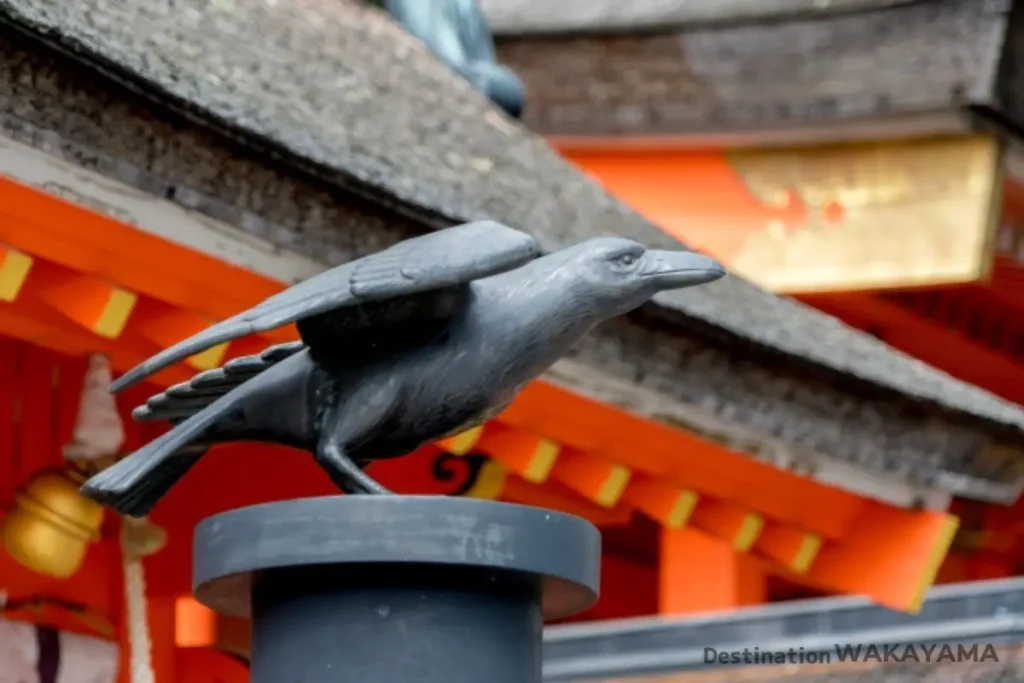
On the grounds, you’ll also find the “Karasu-ishi” (Crow Stone), connected to the legend of Yatagarasu — the three-legged crow said to have guided Emperor Jinmu — as well as a sacred camphor tree (Okusu) estimated to be around 850 years old.
There’s even a hollow at the base of the great camphor tree where you can try the “womb passage” (tainai-kuguri) ritual — walking through for a spiritual rebirth!
Kumano Nachi Taisha Within the Kumano Sanzan
Kumano Nachi Taisha is one of the three grand shrines that make up the “Kumano Sanzan,” alongside Kumano Hongu Taisha (Tanabe City) and Kumano Hayatama Taisha (Shingu City). Together, they serve as the head shrines for over 4,700 Kumano shrines across Japan.
Among the three, Nachi Taisha stands out for its breathtaking combination of the vermilion shrine buildings and the majestic Nachi Falls — widely considered the most visually spectacular of the Kumano Sanzan.
If you can only visit one of the three shrines, Kumano Nachi Taisha is the one we’d recommend.
Top 5 Must-See Spots at Kumano Nachi Taisha
The shrine grounds alone are worth the trip, but exploring the surrounding area takes the experience to a whole new level.
① Nachi Falls — Japan’s Tallest Waterfall
Nachi Falls is Japan’s tallest single-drop waterfall, plunging 133 meters. It’s one of Japan’s three great waterfalls, with an awe-inspiring flow of about 3 tons of water per minute. The falls are enshrined as the sacred object of worship at Hirō Jinja (Nachi Taisha’s sub-shrine), and have been revered as a divine presence for centuries.
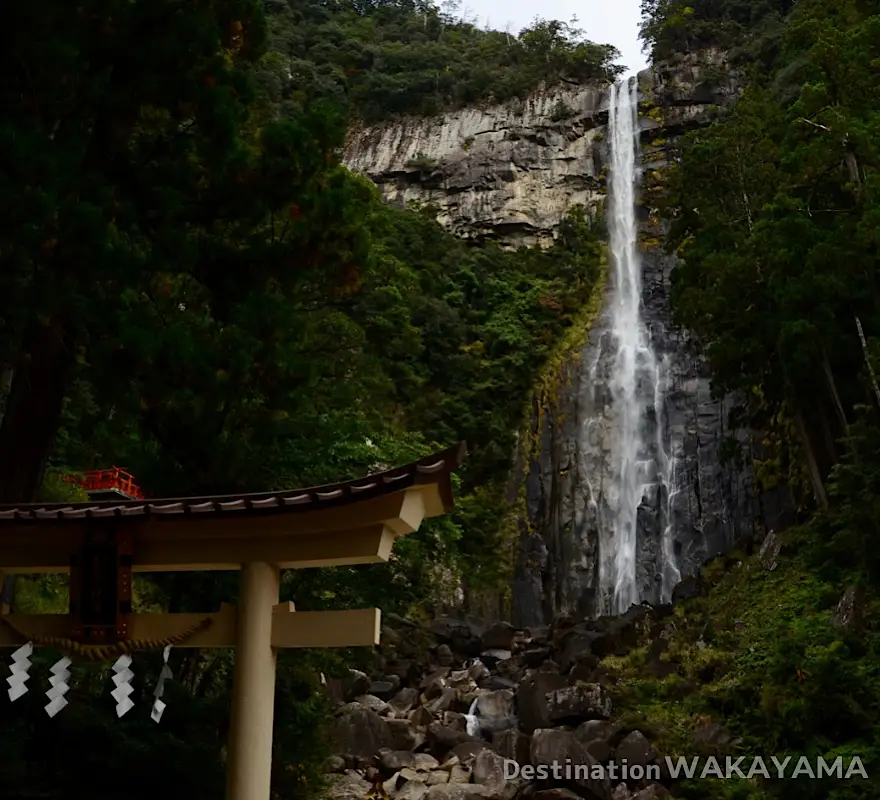
There’s a paid viewing platform near the base of the falls where you can get up close and even drink from the water — known as the “Water of Long Life.” The falls are about a 15–20 minute walk from the main shrine, so plan to visit both while you’re there.
② Main Hall and Worship Hall — Vermilion Shrines in a Sacred Forest
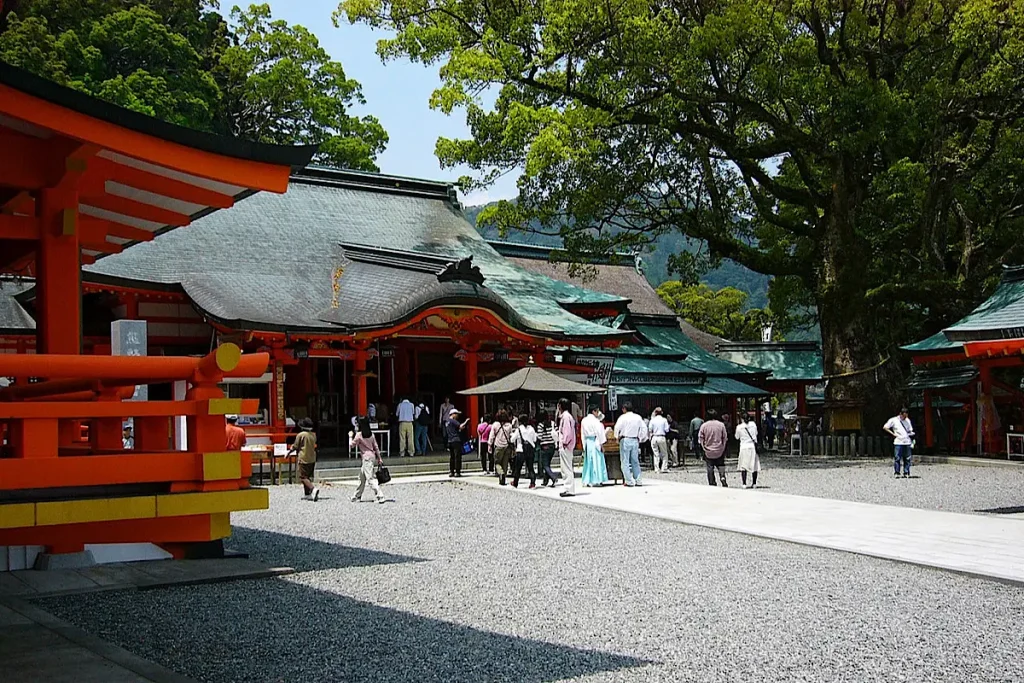
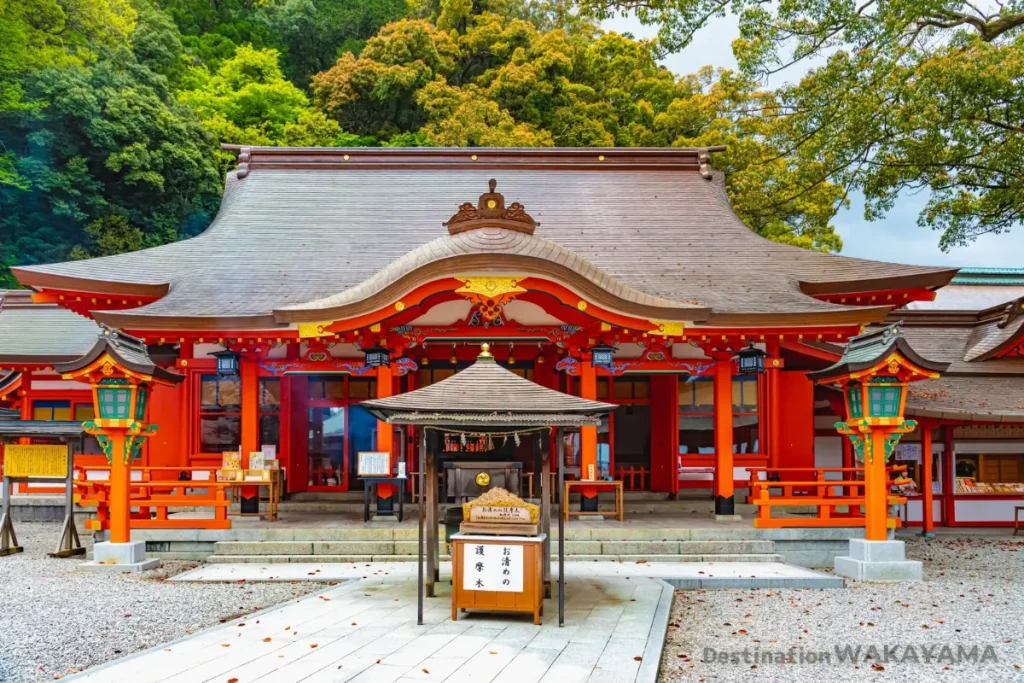
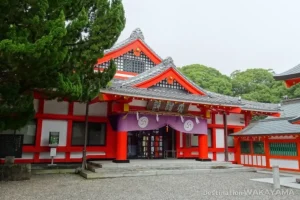
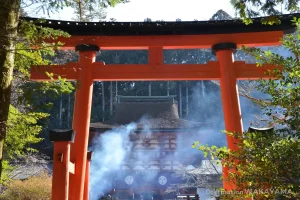
Perched on the slope of Mt. Nachisan, the six vibrant vermilion shrine buildings are designated Important Cultural Properties of Japan. The vivid contrast between the lush green forest and the rich red architecture creates an almost otherworldly atmosphere.
The halls are built in the distinctive Kumano-gongen style and were reconstructed by Toyotomi Hideyori. Within the grounds, you’ll also find the Miagata Hiko Shrine (dedicated to the Yatagarasu crow) and the sacred camphor tree where you can do the tainai-kuguri ritual.
③ Seiganto-ji Temple — The First Stop on the Saigoku Pilgrimage
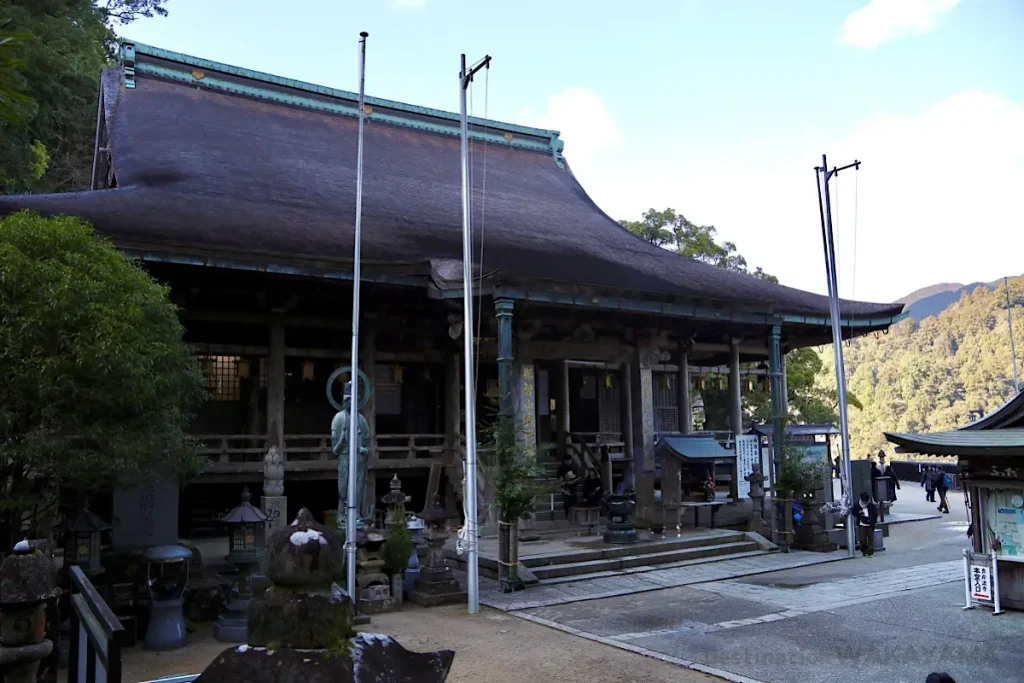
Right next to Kumano Nachi Taisha sits Nachisan Seiganto-ji, the first temple on the renowned Saigoku 33 Temple Pilgrimage. The fact that a Buddhist temple sits side by side with a Shinto shrine is a beautiful remnant of Japan’s historical shinbutsu-shugo (syncretism of Shinto and Buddhism). Today, many visitors still pay their respects at both. The main hall, rebuilt by Toyotomi Hideyoshi, is one of the oldest structures in the Kumano region and is designated an Important Cultural Property.
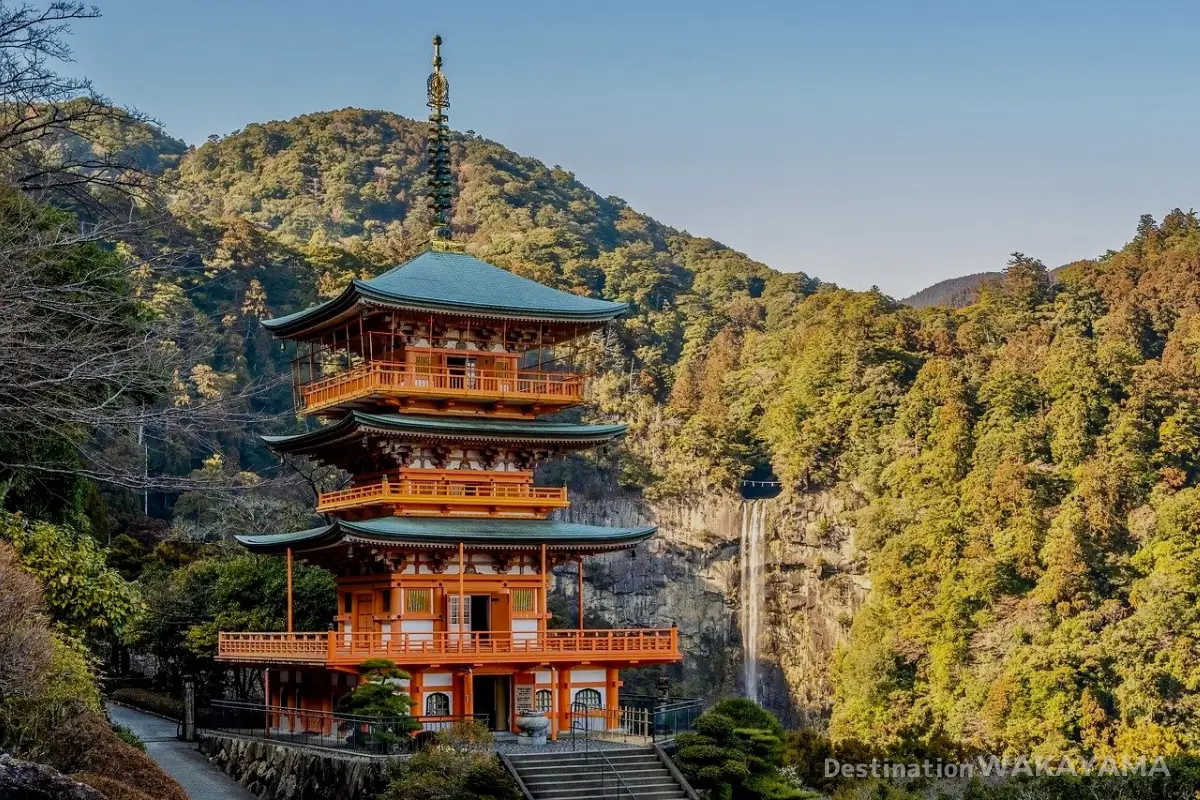
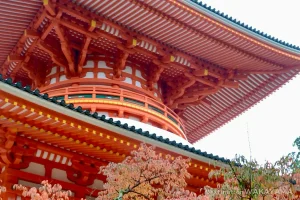
④ The Iconic Photo Spot — Nachi Falls with the Three-Story Pagoda
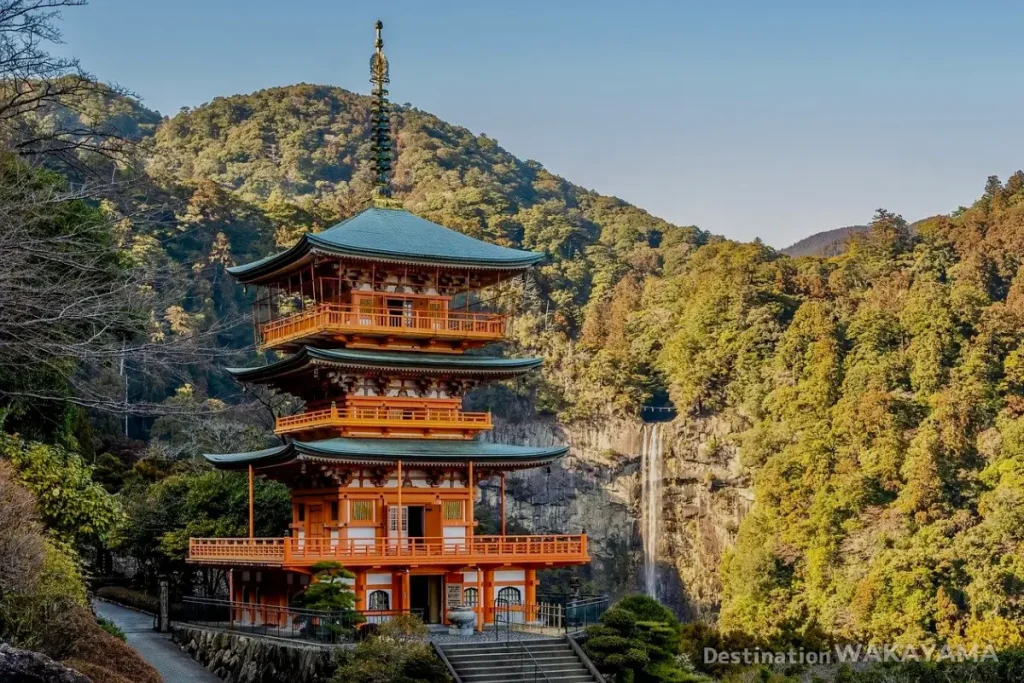
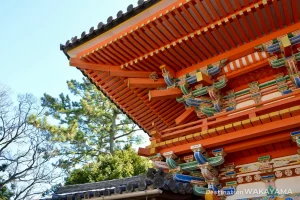
The viewing spot where you can frame Seiganto-ji’s three-story pagoda with Nachi Falls in the background is widely regarded as one of the most beautiful viewpoints in all of Wakayama. The sight of a striking vermilion pagoda with the 133-meter white waterfall cascading behind it is a classic image featured in countless magazines and travel shows. And this is the only spot in the world where you can capture it. Perfect for Instagram, no question.
⑤ Kumano Kodo (Daimonzaka) — World Heritage Trekking on Mossy Stone Steps
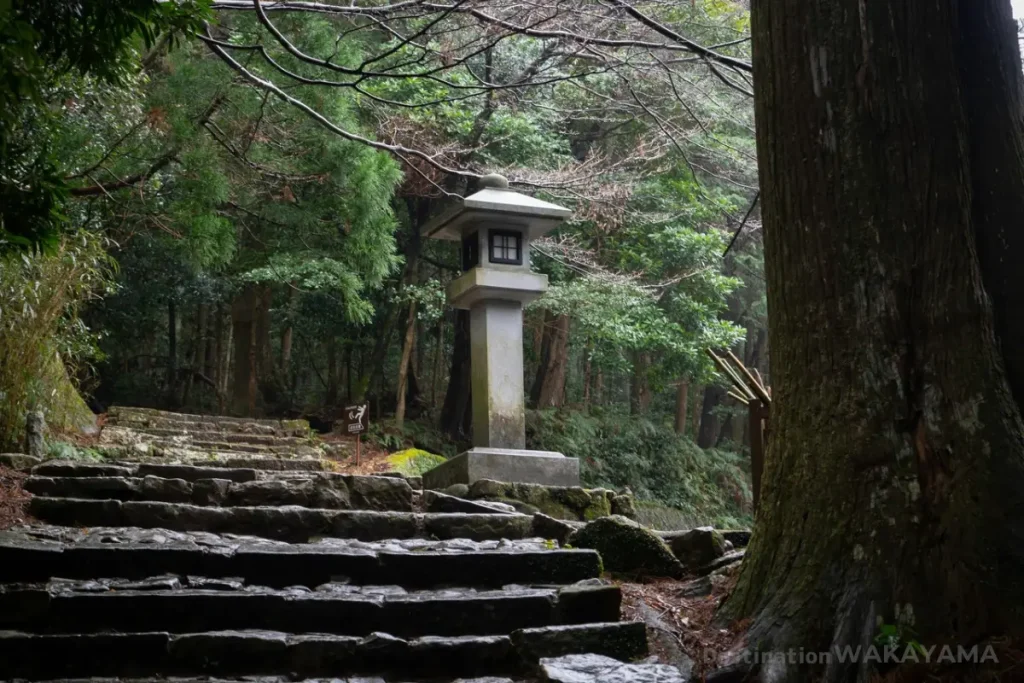
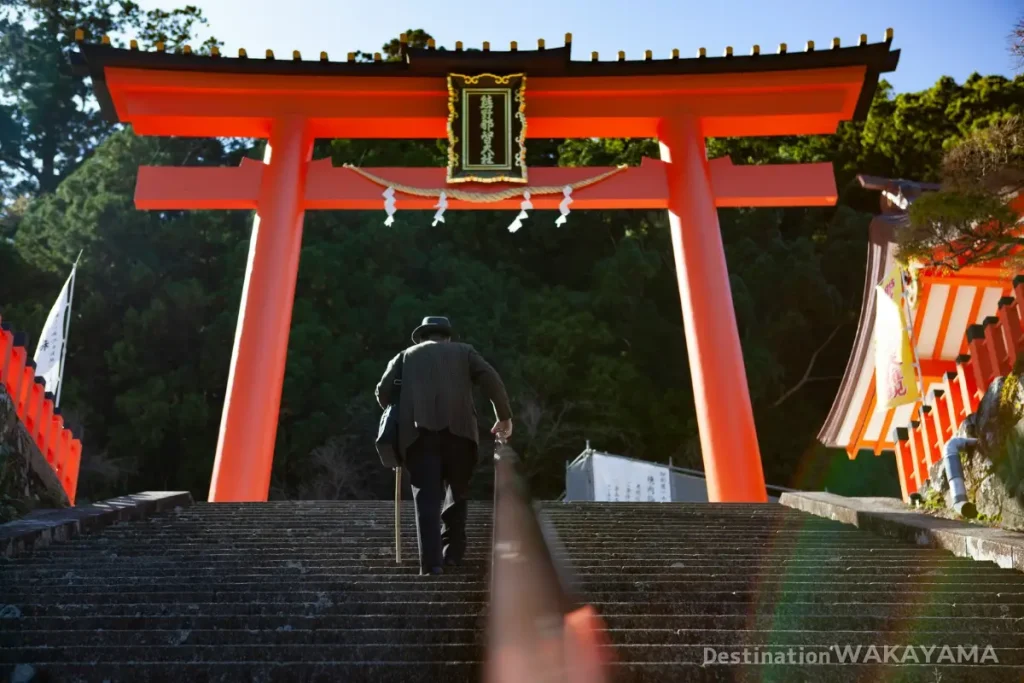
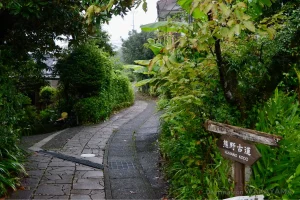
Daimonzaka is one of the most popular sections of the Kumano Kodo pilgrimage trail. This roughly 600-meter stone-paved path is lined with towering cedar trees hundreds of years old, giving it an atmosphere that feels like stepping back into medieval Japan.
The hike from the Daimonzaka entrance to Nachi Taisha takes about 30–40 minutes uphill, with 267 stone steps along the way. It’s a bit of a workout, but absolutely worth it. If walking isn’t an option, you can also access the shrine by bus.
There’s a free parking lot at the Daimonzaka trailhead for those arriving by car.
Goshuin Stamps at Kumano Nachi Taisha — Types, Locations, Prices & Hours
Kumano Nachi Taisha offers two types of goshuin stamps, and you can also pick up a goshuin book right on-site.
Types of Goshuin and Prices
There are two main goshuin available at Kumano Nachi Taisha:
| Type | Description | Price |
|---|---|---|
| Kumano Nachi Taisha Goshuin | Features the “Kumano Nachi Taisha” calligraphy in the center, with the “Japan’s No. 1 Sacred Site” seal | ¥300 |
| Miagata Hiko Shrine Goshuin | Distinctive design featuring the Yatagarasu (three-legged crow) seal | ¥300 |
You can also receive goshuin at Seiganto-ji Temple and Hirō Jinja (Nachi Falls). At Hirō Jinja, there’s a “Nachi Otaki” (Nachi Great Falls) goshuin available, and limited-edition stamps may be offered seasonally — check the official website ahead of time.
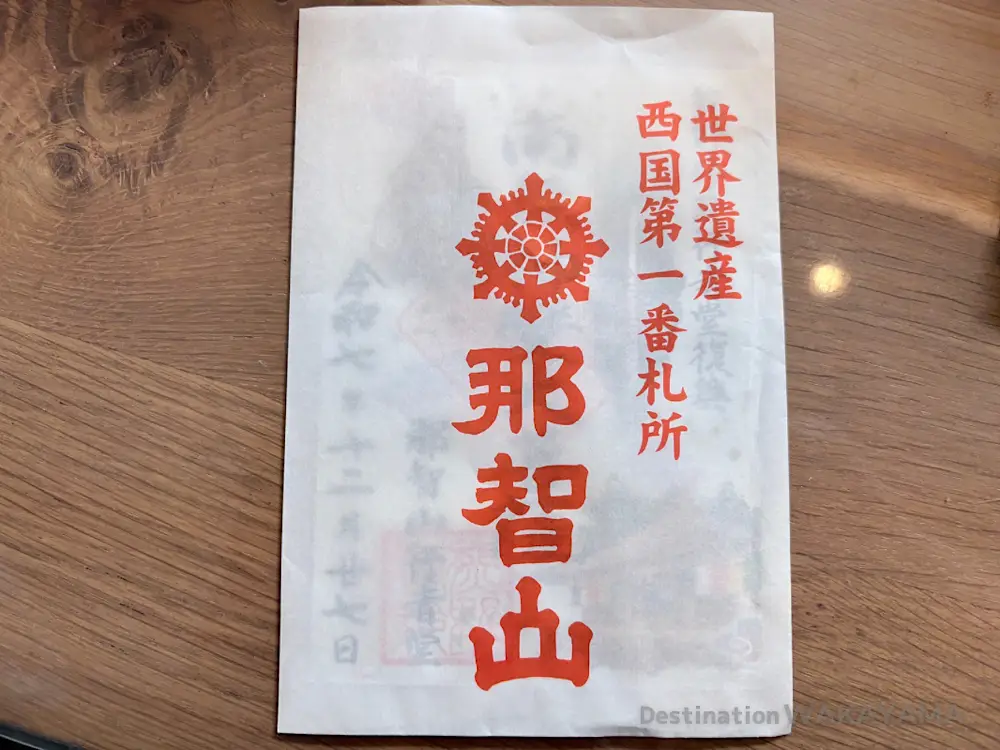
You can also pick up the unique Kumano Goō Shinpu (熊野牛王神符) at the shrine office — a sacred talisman exclusive to the Kumano Sanzan shrines.
Written in crow-shaped characters, this distinctive amulet is said to ward off evil and bring peace to the household.
Can I Buy a Goshuin Book On-Site?
Yes! You can purchase an original goshuin book (goshuincho) right at Kumano Nachi Taisha. Options include designs featuring Nachi Falls and the main hall, as well as motifs inspired by the Nachi Fire Festival (Ogi Matsuri).
Prices start at around ¥2,000 (subject to change). If you don’t have a goshuin book, grabbing one here is a great idea.
How Long Does a Visit Take? Time Estimates + Recommended Itinerary
Quick answer: The shrine alone takes 1–1.5 hours. Add Nachi Falls and Seiganto-ji and you’re looking at 2–3 hours total.
Shrine Only (About 1–1.5 Hours)
If you’re just visiting the main Kumano Nachi Taisha grounds, 1–1.5 hours is a good estimate. That includes praying at the main hall, visiting the Miagata Hiko Shrine (dedicated to Yatagarasu), the womb passage at the 850-year-old sacred camphor tree, and the Treasure Hall.
This is a great option if you’re short on time or prefer a more relaxed pace.
Shrine + Nachi Falls + Seiganto-ji (About 2–3 Hours)
If you’re adding Seiganto-ji Temple and Nachi Falls (Hirō Jinja) to your visit, set aside 2–3 hours.
Here’s the order we recommend:
- Get off at the Nachisan bus stop (or walk from the parking lot)
- Visit Kumano Nachi Taisha and Seiganto-ji Temple (about 1–1.5 hours)
- Head to the viewing spot for the three-story pagoda + Nachi Falls photo
- Walk about 15 minutes down to Nachi Falls (Hirō Jinja)
- Take in the falls and collect your goshuin stamp (about 30–45 minutes)
If you add in time for shopping and a meal, it can easily stretch to 3+ hours. We’d recommend building in some buffer time.
With Daimonzaka Trekking (About 3–4 Hours)
If you want to walk the Kumano Kodo trail up to the shrine via Daimonzaka, add about an extra hour to your plan.
Starting from the Daimonzaka parking lot or bus stop, you’ll walk the stone-paved path for about 30–40 minutes to reach the shrine.
This route is especially recommended for history lovers and photography enthusiasts who want to soak up the full atmosphere.
Getting to Kumano Nachi Taisha — By Car, Train, and Bus
Getting here by car is the most convenient option. Train and bus are possible too, but expect longer travel times with transfers.
By Car + Parking Info
By car, take the Kinki Expressway to the Nachikatsuura IC, then follow Route 46 for about 15 minutes. From Osaka, it’s roughly 3.5–4 hours; from Nagoya, about 3 hours.
Parking Options
There are two main parking areas near Kumano Nachi Taisha:
- ① Nachisan Kanko Center Large Parking Lot (Recommended Option 1)
-
- Fee: Usually free (¥500 during busy periods like Golden Week and Obon)
- Capacity: Relatively large
- Notes: Close to the approach entrance, but you’ll need to climb 467 stone steps to reach the shrine
- Best for: Those who want the full stone-step experience and want to keep costs down
- ② Nachi Taisha Shrine Parking Lot (Recommended Option 2)
-
- Fee: ¥800 shrine disaster prevention road toll (parking itself is free)
- Capacity: About 30 vehicles
- Hours: 7:00 AM – 5:00 PM
- Notes: You can reach the shrine from the lot without climbing any stone steps
- Best for: Visitors with limited mobility, families with young children, seniors, or anyone visiting on a hot summer day
There are also some roadside shops along the way that offer parking for shrine visitors, typically around ¥500.
During busy seasons (Golden Week, Obon, New Year’s, fall foliage season), arriving early is strongly recommended.
By Train + Bus
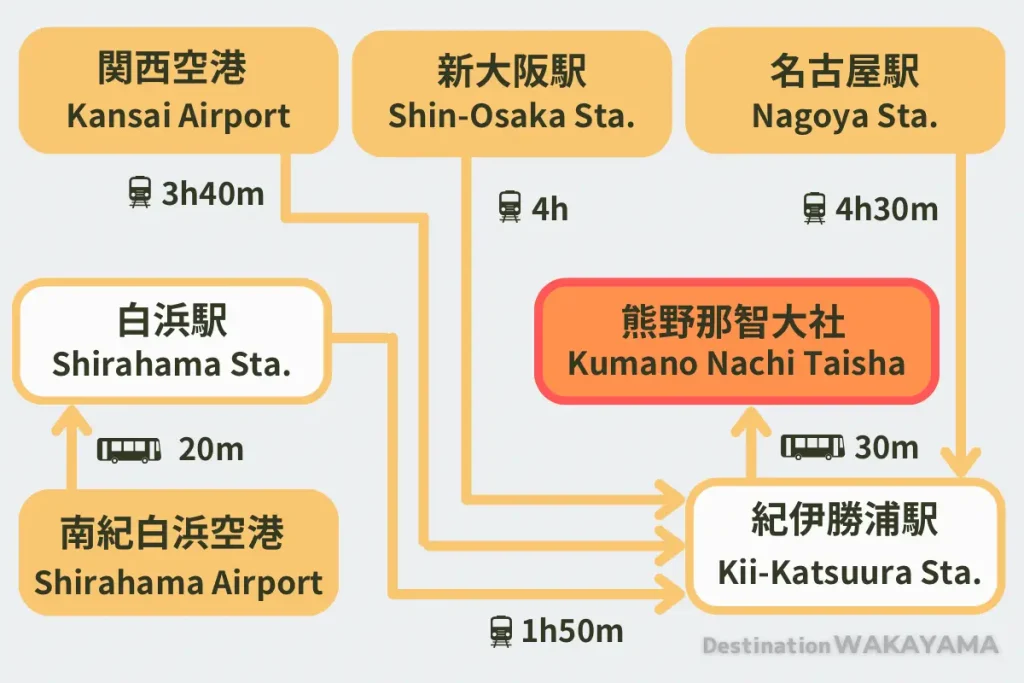
The nearest station is Kii-Katsuura Station, accessible via limited express trains:
- From Osaka: JR Limited Express “Kuroshio”
- From Nagoya: JR Limited Express “Nanki”
From Kii-Katsuura Station, board the Kumano Gobo Nankai Bus bound for Nachisan and ride for about 30 minutes to the “Nachisan” bus stop (fare: ¥630). If you’re heading to Daimonzaka, get off at the “Daimonzaka” stop instead (fare: ¥430).
Note that buses run infrequently, so always check the timetable before heading out.
Reference: Nachikatsuura Town Bus Route Map
Getting Here from Kumano Hongu Taisha
- By Car
-
From Kumano Hongu Taisha to Kumano Nachi Taisha, it’s about 1 hour by car.
There’s no direct route, so you’ll need to go through Shingu City — which makes it a bit of a detour. A great option is to stop by Kumano Hayatama Taisha along the way.
- By Bus
-
Take a bus from the Hongu Taisha-mae stop to Shingu Station (about 1 hour), then transfer to a train to Kii-Katsuura Station. From there, take the local bus to Nachisan.
Total travel time is roughly 2.5–3 hours. Be sure to check schedules in advance, as connection times can add up.
Getting Here from Kumano Hayatama Taisha
- By Car
-
From Kumano Hayatama Taisha in Shingu City, it’s about 30–40 minutes to Nachi Taisha. The common route goes via National Route 42 and then Prefectural Route 46.
- By Train + Bus
-
Take the train from Shingu Station to Kii-Katsuura Station, then transfer to the Nachisan-bound bus.
Total travel time is approximately 1.5 hours.
Kumano Sanzan Itineraries — 1-Night 2-Day and 2-Night 3-Day Plans
You can efficiently cover all three Kumano shrines in just 1 night and 2 days, but a 2-night 3-day trip lets you take things at a more leisurely pace.
【1 Night / 2 Days】 Hit All Three Kumano Shrines
To cover all three shrines efficiently in 2 days, having a car is essential.
- Day 1
-
- Morning: Visit Kumano Hongu Taisha (about 1–1.5 hours)
- Lunch: Enjoy local dishes like Kumano moude-mochi around Hongu
- Afternoon: Visit Kumano Hayatama Taisha (about 1 hour)
- Evening: Drive to Nachikatsuura and check in to your hotel
- Night: Unwind in Nachikatsuura’s famous hot springs
- Day 2
-
- Morning: Visit Kumano Nachi Taisha and Seiganto-ji Temple (about 1.5–2 hours)
- Stop for photos at the pagoda + waterfall viewpoint
- Late morning: Visit Nachi Falls (Hirō Jinja)
- Lunch: Grab a meal in the Nachisan area
- Afternoon: Head home
【2 Nights / 3 Days】 Kumano Kodo + All Three Shrines, Properly
If you’ve got more time, the 3-day plan is the way to go — it includes time for trekking the Kumano Kodo trail.
- Day 1
-
- Morning: Walk the Kumano Kodo from Daimonzaka to Nachi Taisha (about 1 hour)
- Explore Kumano Nachi Taisha, Seiganto-ji, and Nachi Falls (about 3 hours)
- Stay overnight in Nachikatsuura and enjoy the hot springs
- Day 2
-
- Morning: Visit Kumano Hayatama Taisha (about 1 hour)
- Lunch: Sample fresh tuna and other local seafood in the Shingu area
- Afternoon: Visit Kumano Hongu Taisha (about 1.5 hours)
- Stay at Kawayu Onsen or Yunomine Onsen
- Day 3
-
- Morning: Stroll around the Oyunohara Grand Torii gate and the Hongu area
- After lunch: Head home
A Relaxed Itinerary for Families with Kids or Seniors
If you’re traveling with young children or older adults, don’t try to cram in all three shrines. Taking it easy is the key.
Using the shrine’s disaster prevention road parking lot (¥800), you can access the main hall in just about a 1-minute walk — no stone steps required. This significantly reduces physical strain.
We recommend spending a full, relaxed day exploring just the three main highlights: Kumano Nachi Taisha, Seiganto-ji, and Nachi Falls.
Local Food You’ve Got to Try in Nachikatsuura
After exploring Kumano Nachi Taisha, treat yourself to some of the best local eats the area has to offer.
Once you’ve paid your respects at this World Heritage site, it’s time to feed your appetite. Nachikatsuura has some incredible flavors waiting for you that you simply can’t find anywhere else.
① Fresh Tuna from Katsuura Port — The Real Deal
When it comes to Nachikatsuura, fresh tuna is an absolute must. Katsuura Fishing Port brings in four different species: bluefin, bigeye, yellowfin, and albacore tuna.
What makes it special? The tuna here is never frozen — it goes straight from the sea to your plate. The result is a rich, springy texture and depth of flavor that’s in a completely different league from frozen tuna.
Peak season runs from December through February, when the fat content is at its best. But fresh tuna is landed year-round, so no matter when you visit, you’re in for a treat.
The best place to dig in is Nigiwai Ichiba (Lively Market), located inside Katsuura Fishing Port. You can enjoy tuna sushi, rice bowls, skewers, and more on the spot. On a nice day, eating out on the waterfront deck with a sea breeze is absolutely glorious.
You can also watch an exciting tuna butchering show at the back of the market.
Hotels and nearby restaurants throughout the area also offer tuna rice bowls, tuna cutlet sets, and sashimi platters. Since you’re at the source, go all in on the tuna!
② Nachiguro Soft Serve — The Mysterious Black Swirl of Nachisan
As you stroll along the approach to Kumano Nachi Taisha, keep an eye out for the local specialty: Nachiguro soft serve ice cream. Its jet-black color makes for an unforgettable first impression — you’ll want to snap a photo before taking your first bite.
The striking color comes from flavors inspired by “Nachiguro” — a famous black candy from the Kumano region — using black sugar and/or black sesame. The result is a rich, deep sweetness that’s really something special.
Nachiguro candy itself is a beloved Wakayama confection. A black sugar candy first created in 1877 by Morita Kyokasho in Shingu City, it was named after the distinctive black Nachiguro stone found in the area.
The soft serve version captures that same flavor in a cool, creamy form and is sold at souvenir shops and stalls along the approach to the shrine.
It’s the perfect treat after climbing all those stone steps! Cold, sweet, and totally unique to Nachisan — the kids will love it too. Don’t leave without trying this one-of-a-kind local sweet.
Where to Stay Near Kumano Nachi Taisha — Top 3 Onsen Ryokan in Nachikatsuura
If you’re making the trip to Kumano Nachi Taisha, staying at a hot spring inn in Nachikatsuura is the way to go.
Nachikatsuura is one of Japan’s premier onsen (hot spring) destinations and is also renowned for having one of the country’s top tuna fishing ports — making it a place where you can enjoy world-class seafood and relaxing hot springs all in one trip.
① Hotel Urashima — The Cave Onsen Icon of Nachikatsuura
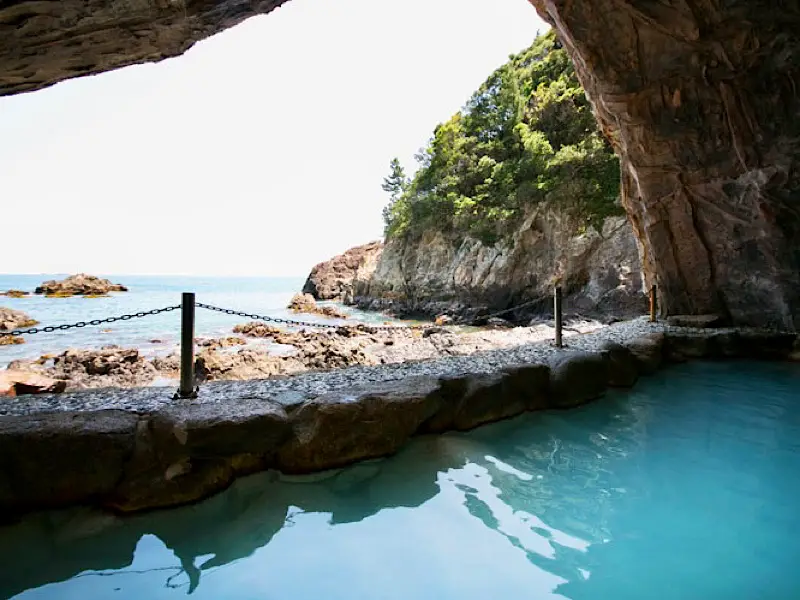
Hotel Urashima is Nachikatsuura’s flagship large-scale resort, perched on the Noroshiyama Peninsula. The property spans an area 4.5 times the size of Tokyo Dome, spread across four wings — the Honkan, Nagisa-kan, Nissho-kan, and Sanjo-kan — so expect to be wowed by the sheer scale.
The crown jewel is “Bokido” — a massive natural cave converted into an open-air hot spring bath. With a mouth 25 meters wide, 50 meters deep, and 15 meters high, you’ll be soaking in the therapeutic waters while the crashing Pacific waves roar just outside. It’s an unforgettable experience.
The name “Bokido” (which translates roughly to “Forgetting to Return”) comes from a feudal lord who was so enchanted by the place that he reportedly couldn’t bring himself to leave. The hotel also offers spring-hopping across more than 10 different sources on-site.
Access: About 6 minutes on foot from JR Kii-Katsuura Station to the pier, then a short ride by dedicated ferry or shuttle bus to the hotel.
Compare prices to find the best deal:
Prices vary by date. Check for the latest deals!
② TAOYA Nachikatsuura — Ocean Views and Great Hot Springs
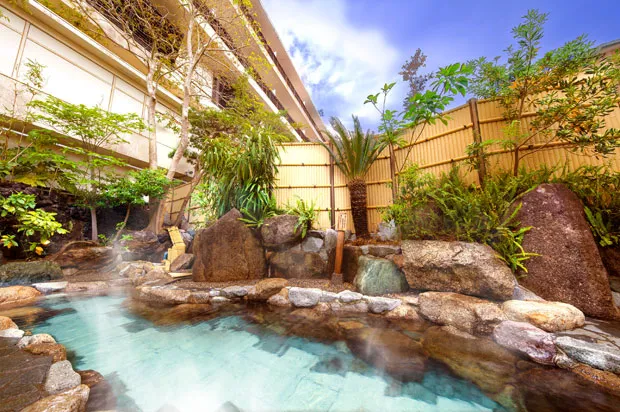
TAOYA Nachikatsuura is a resort hotel operated by the Ooedo-Onsen Monogatari group. The highlight here is the spectacular open-air bath and large communal bath overlooking the Nachikatsuura coastline.
Sinking into the gentle sodium chloride hot spring while gazing out at the ocean is pure bliss.
There’s also a foot bath on the ocean terrace where you can sit back, dip your feet in, and take in the views at a leisurely pace.
Dinner is a premium buffet at the oceanview restaurant, featuring local fresh tuna and plenty of other dishes (with unlimited drinks included in the evening). Great value for the price, and a popular choice for families.
Compare prices to find the best deal:
Prices vary by date. Check for the latest deals!
③ Aoki-jima no Yado Kumano Bettei Nakanoshima — A Private Island Escape
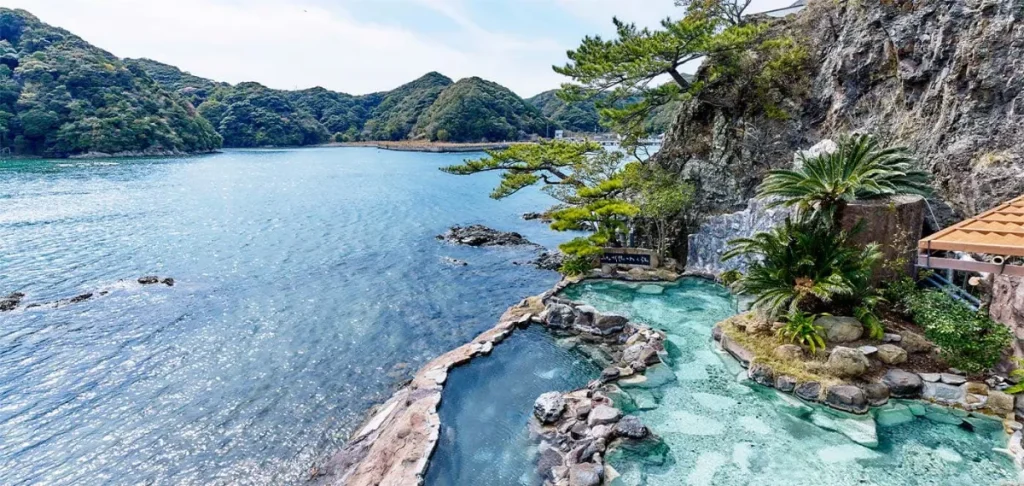
Formerly known as “Hotel Nakanoshima,” this property was relaunched in 2019 as “Aoki-jima no Yado Kumano Bettei Nakanoshima.” Occupying the entirety of Nakanoshima island in Katsuura Bay, it’s one of the rare ryokan in Japan where an entire island is your hotel — only reachable by boat.
From the sightseeing pier, just about 7 minutes on foot from JR Kii-Katsuura Station, a dedicated boat whisks you to the hotel entrance in about 5 minutes.
The island has six natural springs, and the spectacular open-air bath “Kishu Shiobu no Yu” — perched right at the water’s edge — is a bucket-list experience for any hot spring lover. All rooms are ocean-facing, and soaking while listening to the waves is as close to paradise as it gets. The kaiseki (traditional multi-course) dinner, featuring Nachikatsuura’s fresh tuna, is exceptional.
Compare prices to find the best deal:
Prices vary by date. Check for the latest deals!
This one’s perfect for special occasions and trips where you want to create lasting memories.
Wrapping Up
Kumano Nachi Taisha is a place that rewards every visit — with Nachi Falls, Seiganto-ji Temple, and the Kumano Kodo trail, there’s always something new to discover.
- Basic Info: Visiting hours are 7:00 AM – 4:30 PM; admission to the grounds is free
- Must-See Spots: Nachi Falls, main hall, Seiganto-ji Temple, the pagoda + waterfall viewpoint, and Daimonzaka trail
- Goshuin: Two types available at the shrine office — “Kumano Nachi Taisha” and “Miagata Hiko Shrine” (¥300 each)
- Visit Duration: 1–1.5 hours for the shrine alone; 2–3 hours including Nachi Falls and Seiganto-ji
- Getting There: Car is most convenient; by public transit, take the bus from JR Kii-Katsuura Station (about 30 minutes)
- From Hongu Taisha: About 1 hour by car (via Shingu); 2.5–3 hours by bus
- From Hayatama Taisha: About 30–40 minutes by car; about 1 hour by train + bus
- Local Food: Fresh tuna (at Nigiwai Ichiba and beyond) and Nachiguro soft serve are both must-tries
Use this guide to plan your perfect trip to Kumano Nachi Taisha. The vibrant vermilion shrines, ancient old-growth forest, and Japan’s tallest waterfall are waiting to sweep you off into a world unlike any other.

コメント