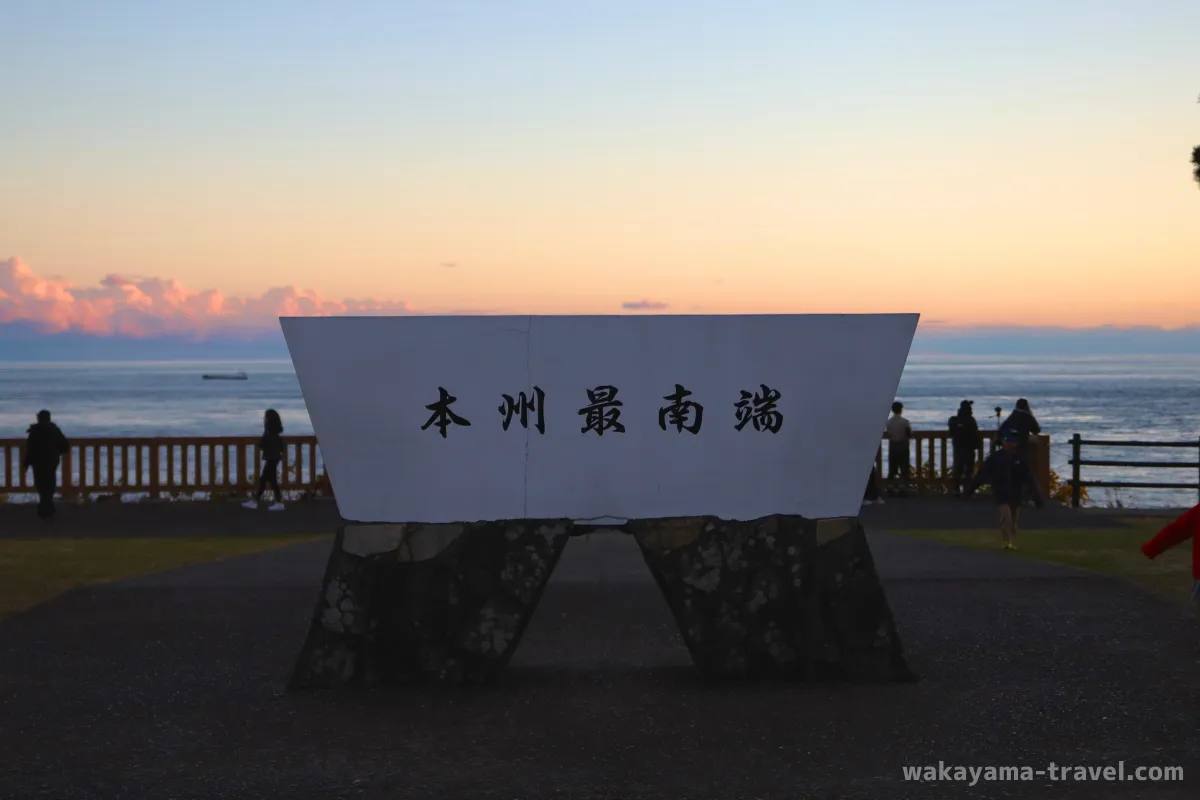

“Wakayama City — where do you even start?“
If that thought has crossed your mind, you’re not alone. There’s a castle, there’s the sea, there are shrines. With so many options, it’s easy to feel a bit overwhelmed.
In this article, we’ve hand-picked the best sightseeing spots in Wakayama City, organized by area.
Read on to the end and get the most out of your trip to Wakayama City.
Wakayama City Travel Basics|What to Know Before You Go
First off, what kind of place is Wakayama City?
Wakayama City is the prefectural capital, sitting in the northwest of Wakayama Prefecture. It’s about an hour from Osaka by train, which makes it a popular choice for a day trip.
▶︎ How to Get to Wakayama Prefecture
It’s a former castle town with plenty of history, but it’s also blessed with sea and nature right on its doorstep.
Whether you’re into history, nature, or food, Wakayama City has something for you.
The 4 Sightseeing Areas of Wakayama City
Wakayama City’s sightseeing spots can be roughly divided into four areas.
Getting a sense of the big picture first will make planning your trip much easier.
| Area | Main Spots |
|---|---|
| City Center | Wakayama Castle, Prefectural Museum of Art, Prefectural/City Museums, etc. |
| Wakaura / South Area | Wakaura, Saikazaki, Marina City, Kimiidera, etc. |
| Kada Area | Kada, Awashima Shrine, etc. |
| Kishigawa Line Area | Kishigawa Line, Shiki-no-Sato, Sansha-mairi (Nichizen-gu, Kamayama Shrine, Itakiso Shrine), etc. |
We’ll cover the highlights of each area in more detail below.
Getting Around (Car, Train, Bus)
Wakayama City’s sightseeing spots are spread out across town, so you’ll need a car or public transport to get between them.
It’s worth checking access options ahead of time so your day runs smoothly.
- By Car
-
Your own car, a rental car, or a taxi will give you the most freedom to get around.
If you want to hit spots across multiple areas, driving is especially recommended.
- By Train
-
Three lines are handy for sightseeing around the city: JR, Nankai Railway, and the Wakayama Electric Railway Kishigawa Line.
The Nankai Kada Line runs straight to Kada, so you can get there directly from Nankai Wakayamashi Station with no transfers.
For the Kishigawa Line area, you can board at the Wakayama Electric Railway platform inside JR Wakayama Station. - By Bus
-
Wakayama Bus covers most of the city. Buses run from JR Wakayama Station and Nankai Wakayamashi Station to major sightseeing spots like Wakaura and Kimiidera.
It’s a convenient option if you don’t have a car, and it works well for international visitors too.
Wakayama City Center|Where History and Culture Meet
The center of Wakayama City is where the old castle town’s history and its cultural facilities come together.
It’s a great place to start your sightseeing.
The Prefectural Museum of Art and the Prefectural and City Museums are all near Wakayama Castle, so if you’re into history or art, it’s worth swinging by.
▶︎ The Ultimate Guide to Wakayama Castle
Wakayama Castle|Feel the History of the Old Castle Town
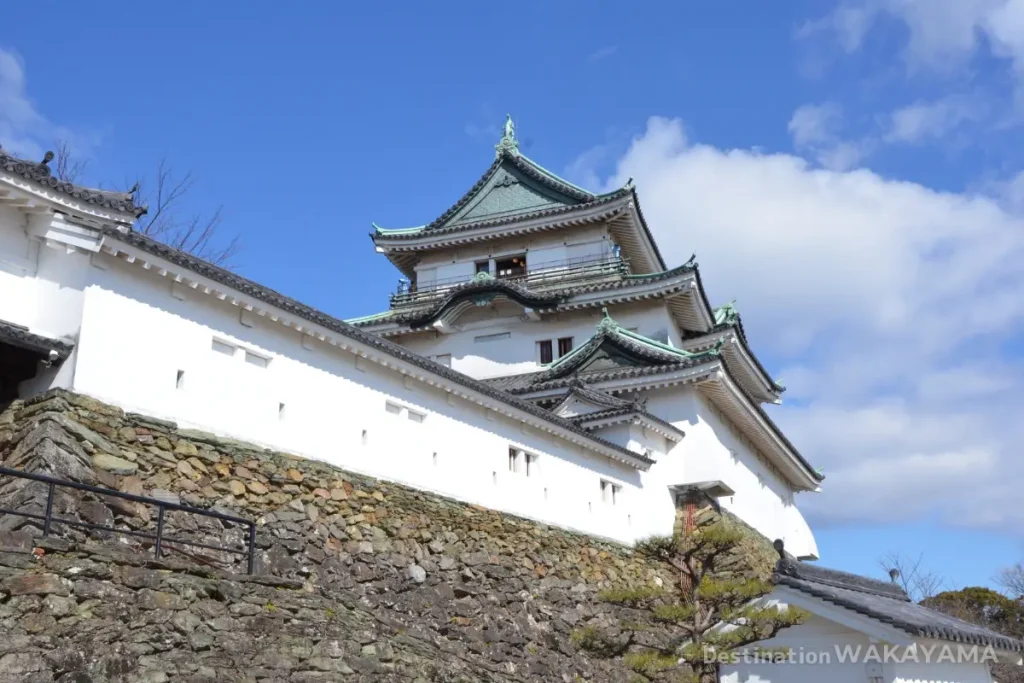
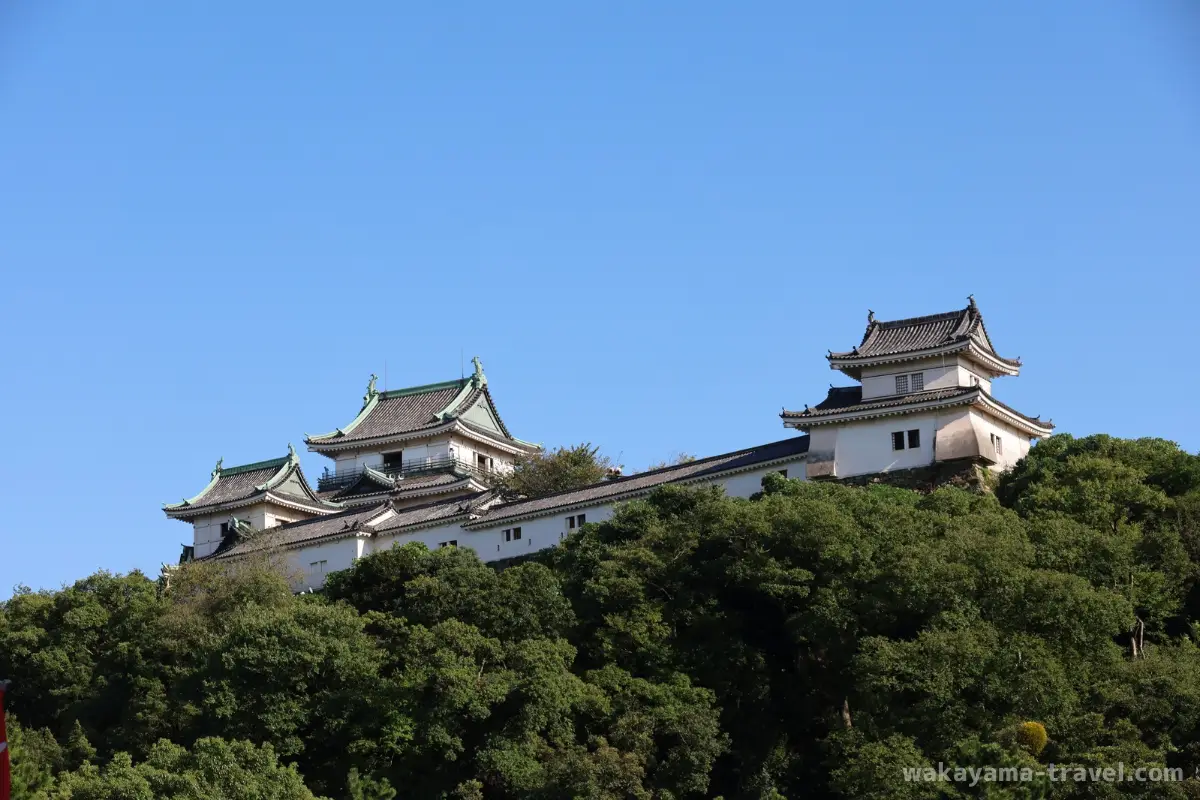
Wakayama Castle is the spot to visit first when exploring Wakayama.
It flourished during the Edo period as the seat of the Kishu Tokugawa family, and its main keep is visible from almost anywhere in the city, making it Wakayama’s unmistakable symbol.
The castle was originally built on the orders of Toyotomi Hideyoshi by his younger brother Hidenaga, but it was later lost to war. The current main keep was rebuilt in 1958, and today it houses a history museum inside.
Highlight 1: The View from the Keep and the Garden
From the top, you get a sweeping panorama over the city, the Kinokawa River, and all the way to Awaji Island in the distance.
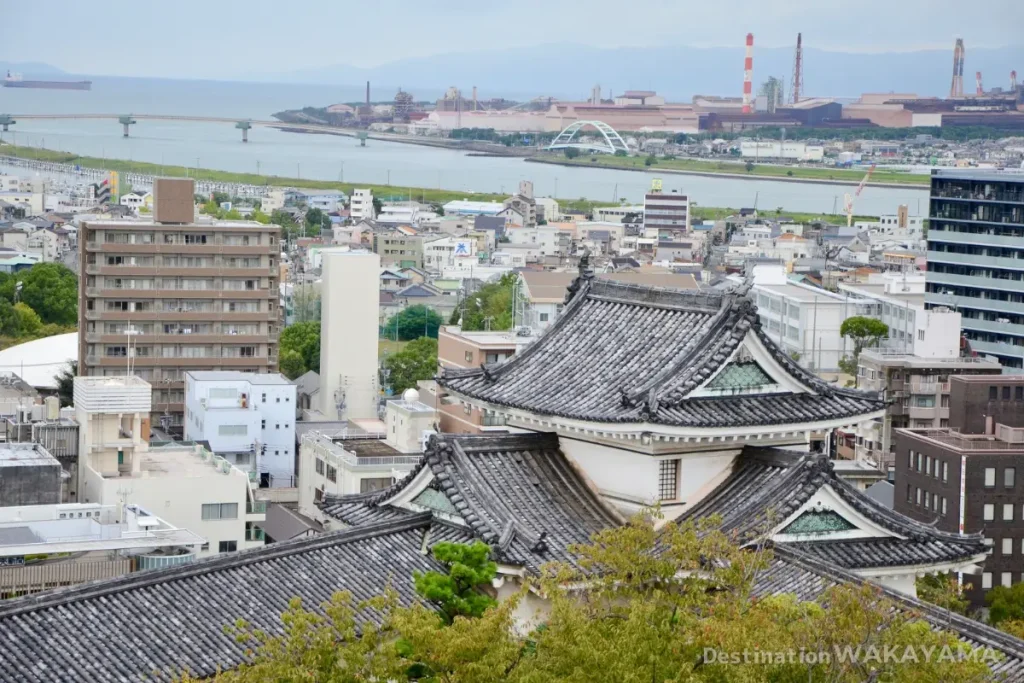
Nishinomaru Garden (also known as Momiji-dani Garden), which surrounds the castle, is a beautiful Japanese garden with a pond and teahouse. It’s lovely with cherry blossoms in spring and autumn colors in fall.
Highlight 2: The Free Wakayama Castle Park Zoo
Great news for families with young kids — this little zoo is completely free to enter.
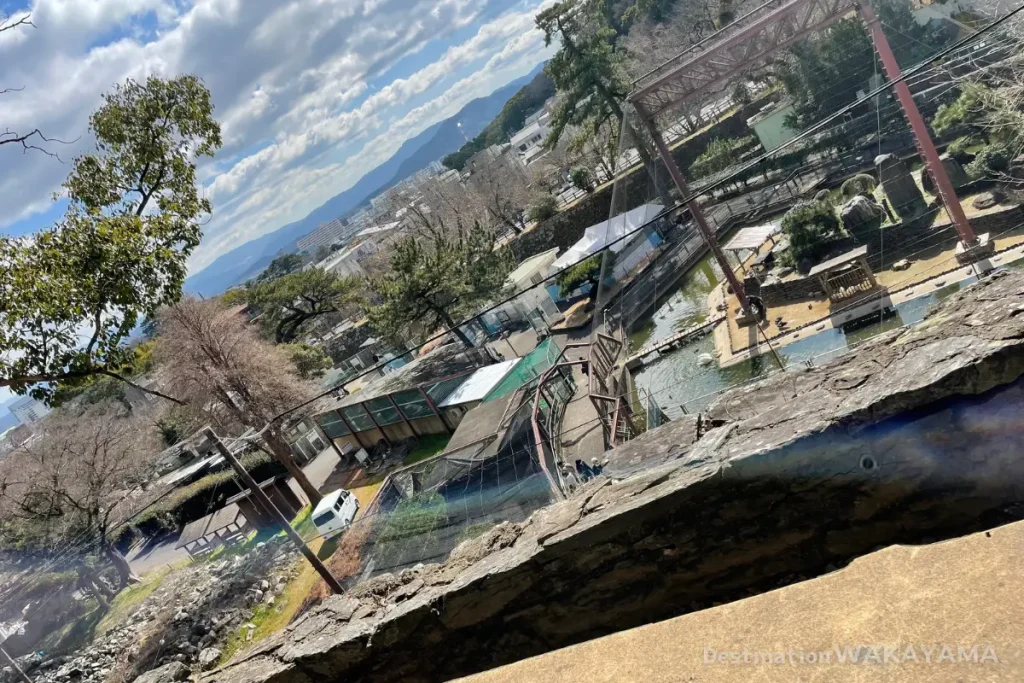
You’ll find penguins, flamingos, and more, plus a chance to feed the goats. It’s small, but it packs in plenty to see.
Highlight 3: Magical Night Illuminations
Wakayama Castle is also lit up at night, giving it a completely different, almost dreamlike atmosphere compared to daytime.
Since it looks so different after dark, it’s well worth strolling the grounds again in the evening.
Wakayama Castle is a hit with history buffs, but also with couples, families, and travelers from abroad.
Make it your starting point for exploring Wakayama City.
- Address: 3 Ichibancho, Wakayama City
- Hours: 9:00 AM–5:30 PM (last entry 5:00 PM)
Park grounds open 24 hours - Keep admission: Adults ¥410, elementary/junior high students ¥150 (park grounds free)
- Closed: December 29–31
- Access: About 15–20 minutes by bus or on foot from JR Wakayama Station or Nankai Wakayamashi Station
Wakaura & South Area|Stunning Coastal Scenery
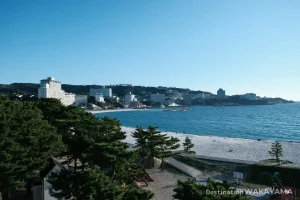
Stretching along the southern edge of Wakayama City, the Wakaura area offers a wonderfully varied mix of sea, tidal flats, fishing villages, and gardens.
It’s about a 20-minute drive from the city center, and it’s also reachable by bus.
Wakaura|A Scenic Spot Cherished Since the Manyo Era
Wakaura is a historic beauty spot that’s been celebrated in poetry for over 1,300 years.
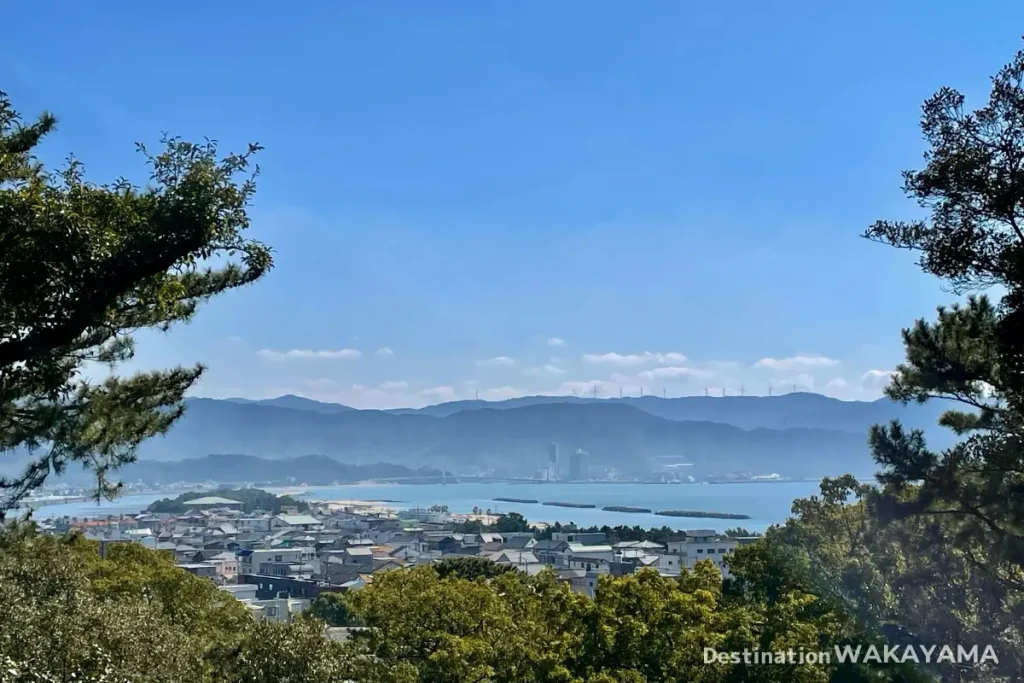
Featured in the Manyoshu(万葉集), Japan’s oldest poetry anthology, Wakaura charms visitors with its blend of tidal flats, pine groves, and shrines. At low tide, a vast tidal flat appears, drawing in shorebirds like plovers and sandpipers — it’s quite a sight.
Katanami Park, which runs alongside Katanami Beach, is perfect for a walk or bike ride. The promenade overlooking Wakaura Bay is popular with couples and families alike.
- About 15 minutes by car from JR Wakayama Station or Nankai Wakayamashi Station
- About 40 minutes by Wakayama Bus from JR Wakayama Station or Nankai Wakayamashi Station, get off at “Shin-Wakaura”
Saikazaki|The “Amalfi of Japan”
Saikazaki is one of Wakayama’s finest views, with fishing village houses clustered along a steep hillside.
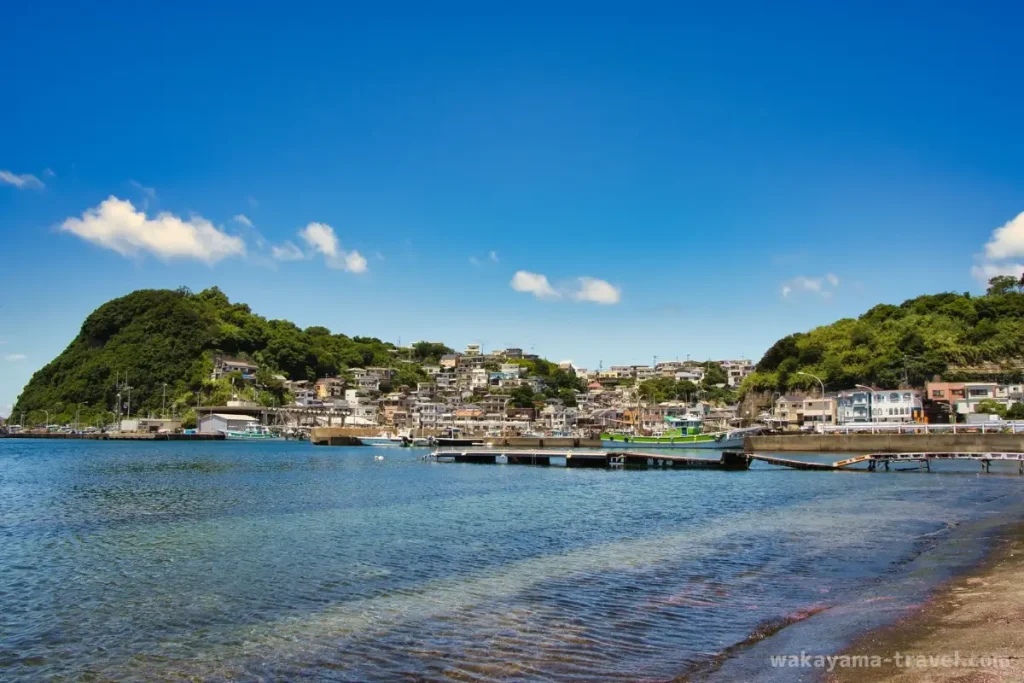
Thanks to its resemblance to Italy’s Amalfi Coast, a UNESCO World Heritage Site, it’s earned the nickname “Amalfi of Japan” and picked up quite a following on social media. The view of houses stacked up the hillside from the harbor has become a famous photo spot in its own right.
The view from Saikazaki Lighthouse is exceptional too, stretching all the way to the Kii Channel and Awaji Island. It’s also one of Japan’s top 100 sunset spots — as evening falls, the sea turns a brilliant red for a truly romantic scene.
You can get there by bus, but public transport isn’t the most convenient, so driving is recommended. Just note that the roads are narrow.
- About 15 minutes by car from JR Wakayama Station or Nankai Wakayamashi Station
- About 40 minutes by Wakayama Bus from JR Wakayama Station or Nankai Wakayamashi Station, get off at “Saikazaki”
Yosuien|A Rare Daimyo Garden Fed by Seawater
Yosuien is a rare daimyo (feudal lord’s) garden that draws seawater right into its ponds — one of only a handful in Japan.
Built in the late Edo period by Tokugawa Harutomi, the 10th lord of the Kishu Tokugawa family, this stroll garden is designated a national Place of Scenic Beauty. Because the ponds use seawater, their water level actually rises and falls with the tide — a unique feature you won’t find in most Japanese gardens.
The calm atmosphere created by the pine trees and ponds makes for a peaceful escape from the bustle. It pairs nicely with a visit to Wakaura.
There’s a bus route here too, but it’s a bit inconvenient, so driving is the better option.
- Address: 2-chome, Wakauranishi, Wakayama City
- Hours: 9:00 AM–5:00 PM (last entry 4:30 PM)
- Closed: Mondays (following day if Monday is a holiday)
- Admission: Adults ¥150, elementary/junior high students ¥50
- Access: About 15 minutes by car from JR Wakayama Station or Nankai Wakayamashi Station
About 30 minutes by Wakayama Bus from JR Wakayama Station or Nankai Wakayamashi Station, get off at “Yosuien-mae,” then about a 5-minute walk
Kimiidera|A Top Cherry Blossom Spot with a Stunning Lookout
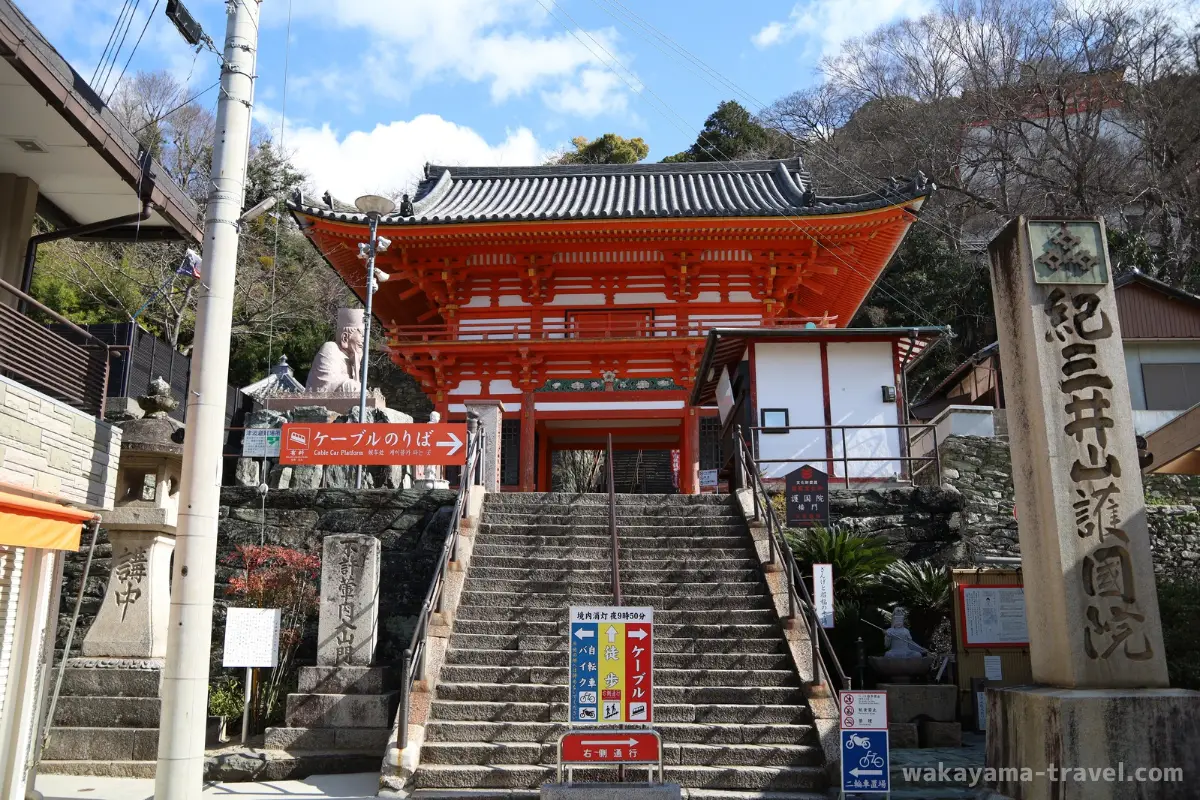
Kimiidera is a historic temple famous for its cherry blossoms in spring and the sweeping view from its hilltop.
Officially named “Kimiisan Kongoho-ji Gokoku-in,” it’s a historic temple founded in the Nara period. It’s known as one of the Kansai region’s earliest-blooming cherry blossom spots, drawing crowds of flower-viewers each spring — the prefecture’s official reference cherry tree for tracking bloom dates is even located here.
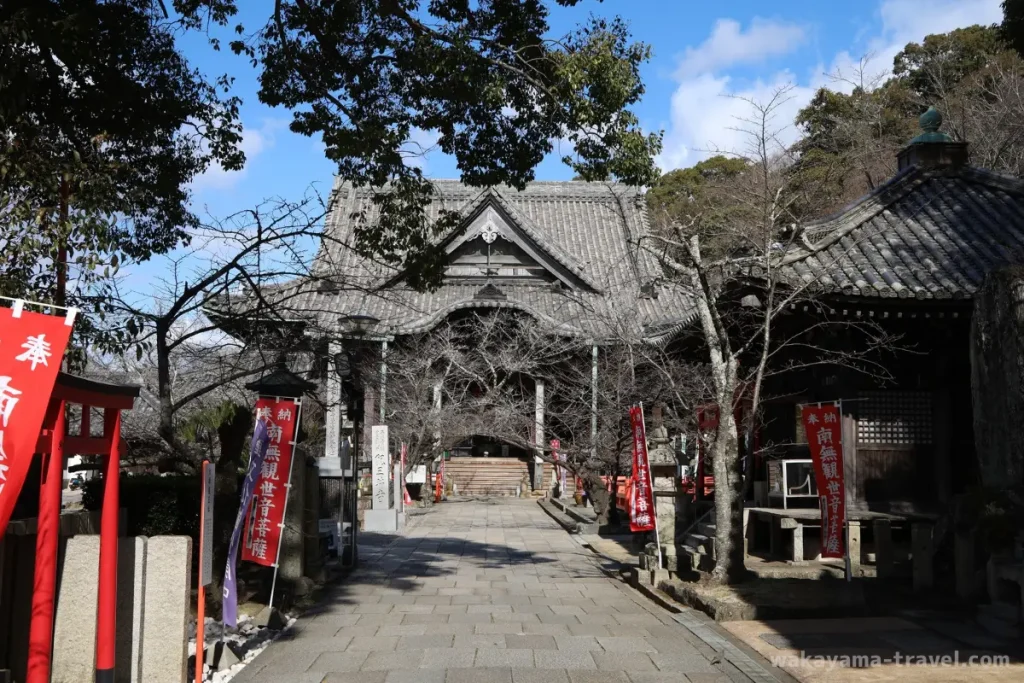
Climb the steep 231-step staircase and you’re rewarded with a stunning view over Wakaura Bay. If stairs aren’t your thing, there’s also a paid cable car.
The temple grounds are also home to one of Japan’s largest wooden standing statues, the Great Thousand-Armed Eleven-Faced Kannon — it’s genuinely impressive in person.
- Address: 1201 Kimiidera, Wakayama City
- Hours: 8:00 AM–5:00 PM
- Access: About a 5-minute walk from JR Kimiidera Station
Marina City|Fresh Seafood and Seaside Fun at Kuroshio Market
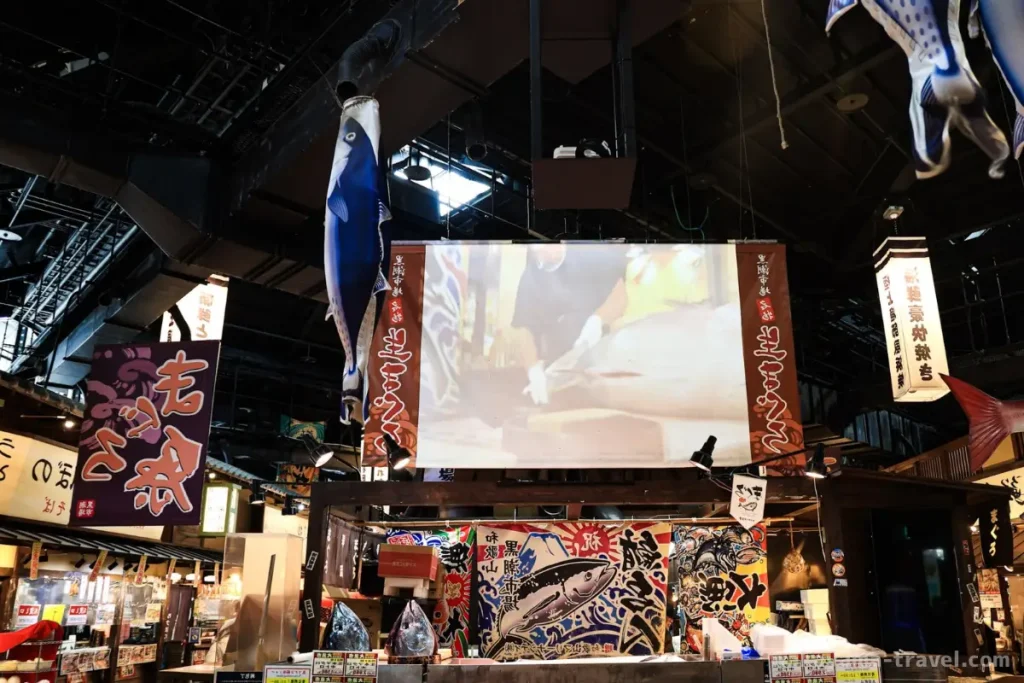
Marina City is a leisure complex built on a man-made island out in the bay.
Inside, Kuroshio Market is a popular seafood market packed with fresh catches. The tuna-cutting show is a real spectacle and one of the most popular attractions for visitors. Grilling and eating fresh seafood right on the spot is one of the quintessential Wakayama food experiences.
Porto Europa, on the same grounds, is a theme park designed to look like a Southern European town.
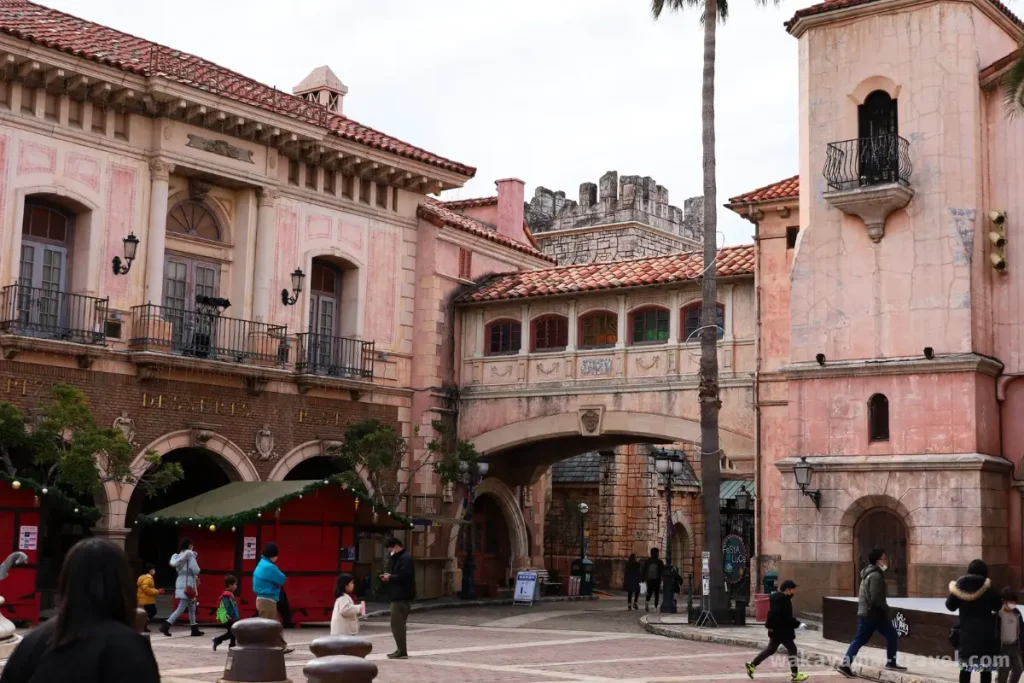
The colorful buildings against the blue sea give it an exotic, photogenic feel that visitors love. There are also rides and shows on offer, making it a hit with families.
It’s also been used as a filming location for various movies and TV shows, so it’s fun to visit spots you might recognize from the screen.
During long weekends and holidays, fireworks events are also held here. Fireworks launched over the water make for a spectacular nighttime scene that’s unique to Marina City, and they draw big crowds.
For accommodation, the on-site Marina City Hotel is a convenient choice. The ocean-view rooms offer a great view, making it a solid pick for anyone wanting to take Marina City at a leisurely pace. The breakfast buffet, loaded with local Wakayama specialties, is especially popular.
There’s plenty of seaside leisure too, including a fishing park and a yacht harbor — great for families, couples, and groups of friends alike.
- Address: 1535 Kemi, Wakayama City
- Access: About 30 minutes by Wakayama Bus from JR Wakayama Station or Nankai Wakayamashi Station, get off at “Marina City”
Kada Area|A Laid-Back Fishing Town with Sea and Culture
The Kada area is a quiet fishing town at the northwestern tip of Wakayama City.
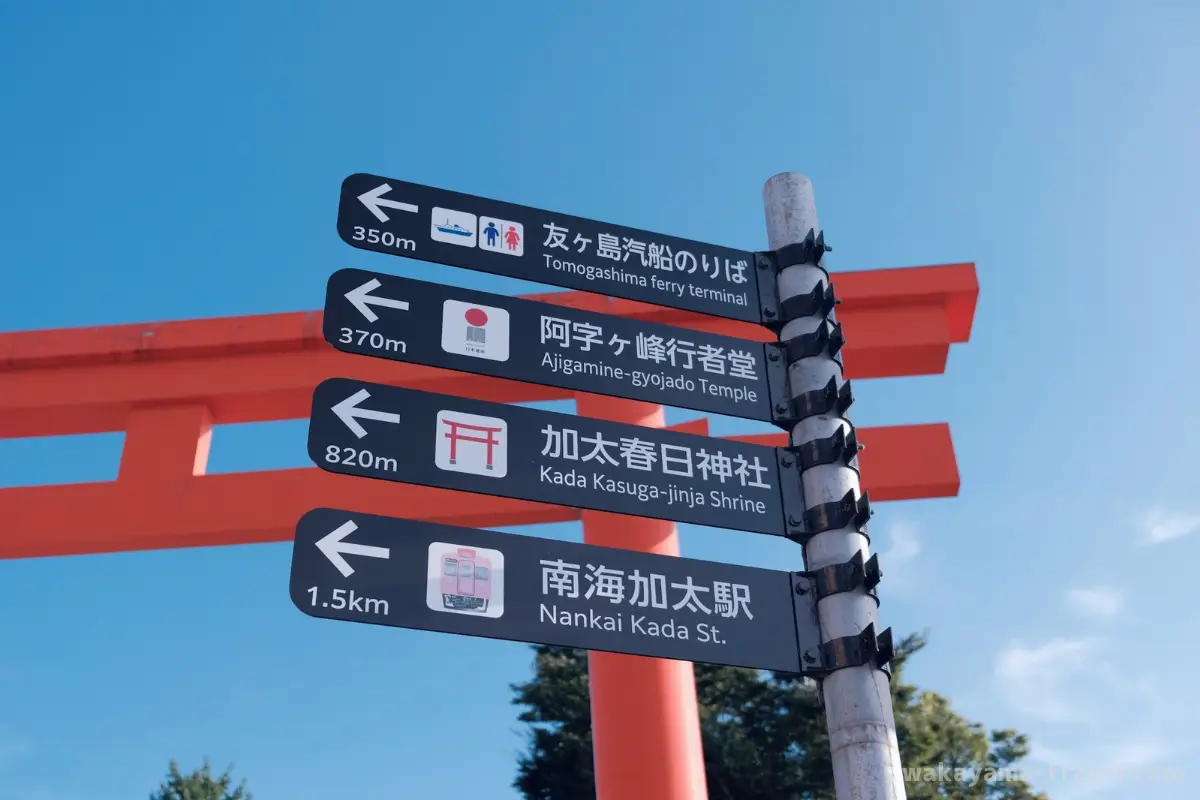
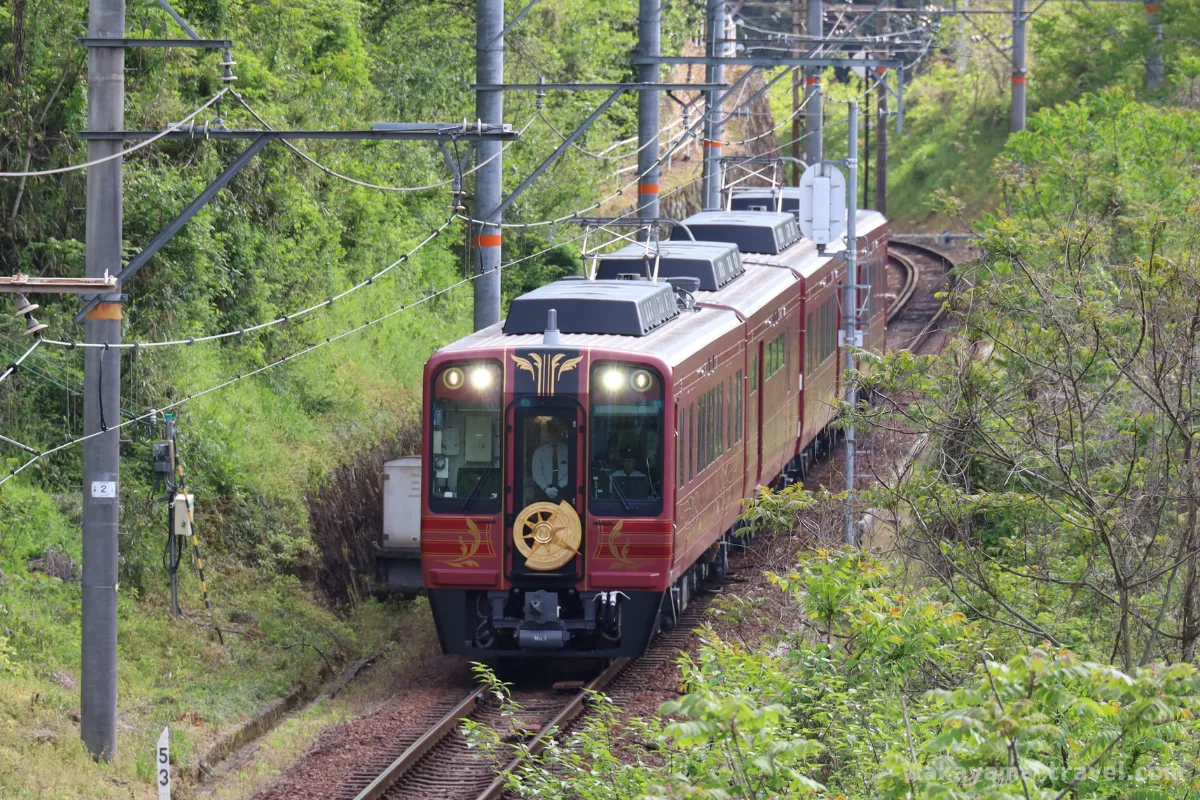
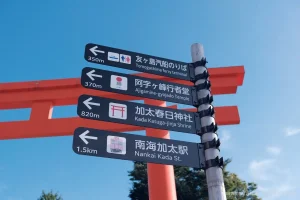
Hop on the Nankai Kada Line’s “Medetai” train and ride it to the end of the line, Kada Station, and you’ll step out into a town with a nostalgic, unhurried charm.
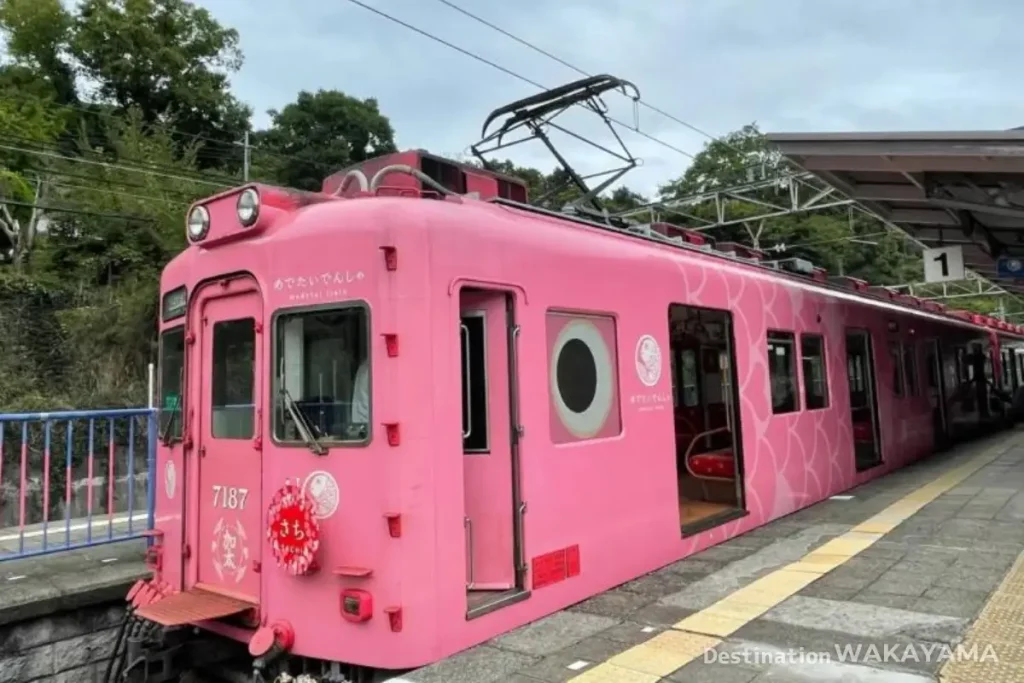
It’s an area where fresh seafood, distinctive shrines, and traces of history all come together — you won’t find anything quite like it elsewhere.
Kada|Fresh Seafood and Awashima Shrine
Kada is a distinctive destination where rich seafood and a one-of-a-kind spiritual culture come together.
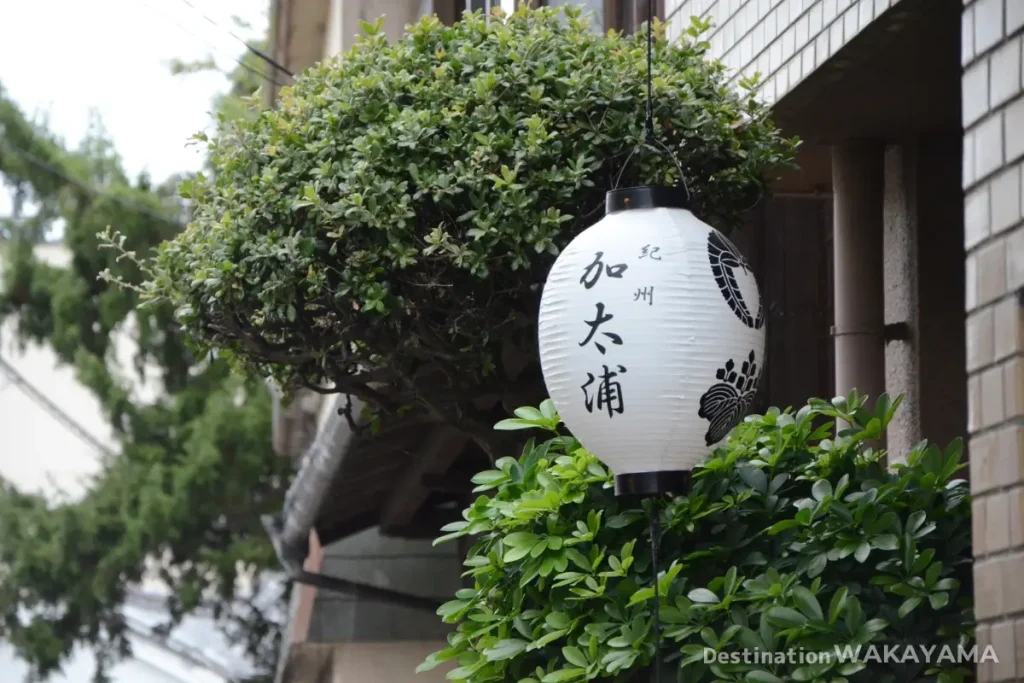
Facing the Kii Channel, the waters off Kada are known for their fast currents and rich nutrients. The local “Kada sea bream” is a well-known regional delicacy, drawing food lovers when it’s in season.
Restaurants serving fresh seafood line the area around the harbor, so you can enjoy just-caught fish right on the spot.
The other big draw is Awashima Shrine. It’s known as the head shrine of all Awashima shrines across Japan, and it’s famous for its doll memorial services.
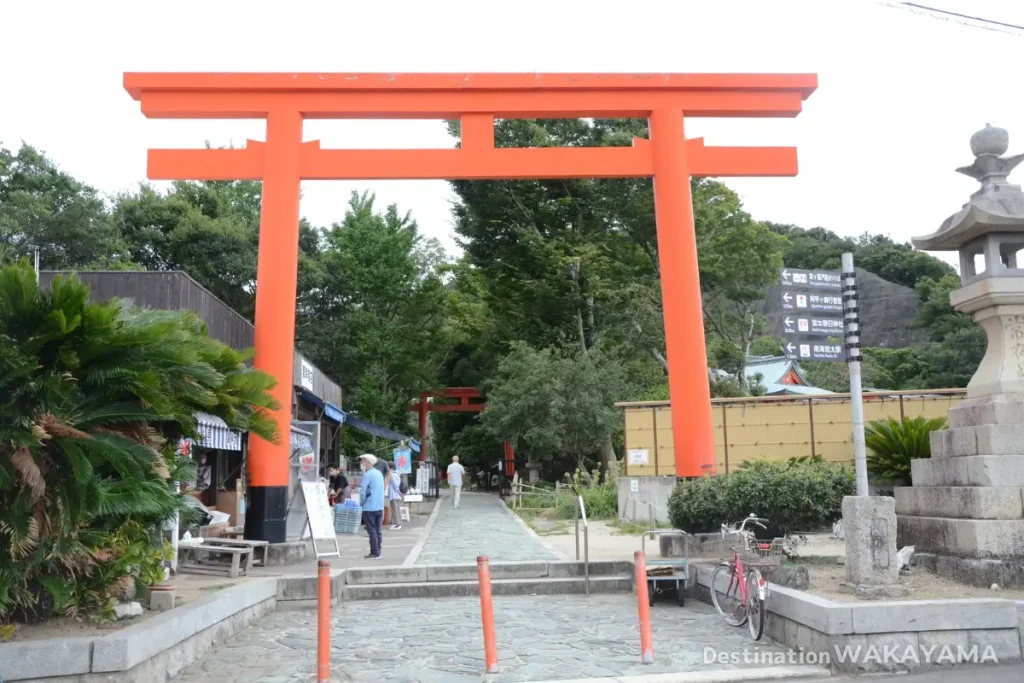
Countless dolls left as offerings fill the shrine grounds, creating a truly unusual sight.
Kada itself is compact, so you can easily walk from the station to the shrine, the harbor, and the restaurants.
Take your time wandering around and soak in the fishing town atmosphere.
- Access: About a 10-minute walk from Kada Station (Nankai Kada Line) to Awashima Shrine
- Awashima Shrine visiting hours: 9:00 AM–5:00 PM (free admission)
Tomogashima|An Uninhabited Island Straight Out of a Ghibli Film
Tomogashima is a romantic, uninhabited island where crumbling fort ruins meet lush nature.
About a 20-minute boat ride from Kada Port, Tomogashima is actually a collective name for four islands: Okinoshima, Jinoshima, Toraijima, and Kamishima.
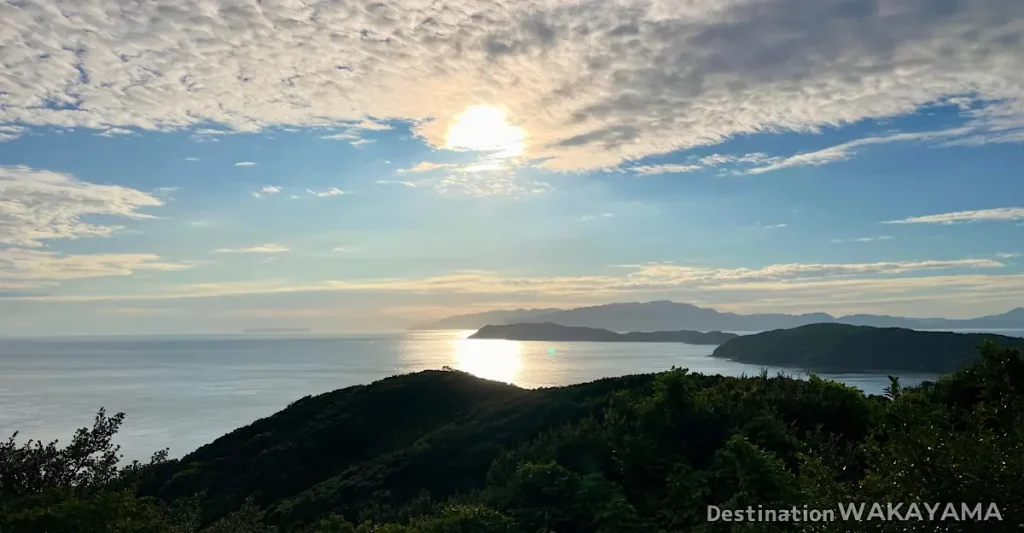
From the Meiji era through the end of World War II, the island served as a military fortress, and today it’s open to the public as a nature park.
The moss-covered brick remains of the Third Battery and other fort ruins on the island became a talking point for their resemblance to the world of the film “Castle in the Sky.” It’s a favorite spot for ruins enthusiasts, history fans, and photographers alike.
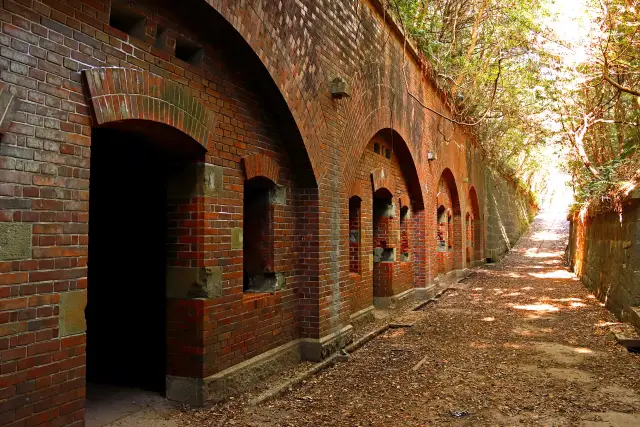
The island has well-maintained hiking trails that wind past the fort ruins and through beautiful scenery. Plan on around 3–4 hours to see it all properly.
Keep in mind that the ferry is the only way to reach Tomogashima, and it can be suspended depending on the season and weather.
If that happens, consider visiting the “Miyama Battery Ruins” in the Miyama district of the Kada area instead. These are also Meiji-era Japanese military fortress ruins, with moss-covered brick structures still standing today.
The surrounding area is maintained as Miyama Park, offering fantastic views over the Kii Channel and Tomogashima.
- Access: About 20 minutes by Tomogashima ferry from Kada Port
- Ferry fare: Adults ¥2,200 (round trip), children ¥1,100 (round trip) *Subject to change
- Ferry schedule: Varies by season and weather — check in advance
- Access to Miyama Battery Ruins: About a 10-minute drive from Kada Station (Nankai Kada Line)
Kishigawa Line Area|A Quirky Train and Shrines Amid Nature
The Kishigawa Line area stretches from eastern Wakayama City into Kinokawa City. It’s centered around the Wakayama Electric Railway Kishigawa Line, nationally famous for its cat stationmasters, with plenty of unique spots scattered along the way.
The biggest draw here is that the train ride itself is part of the fun.
What Is the Kishigawa Line?|A Train Ride That’s an Attraction in Itself
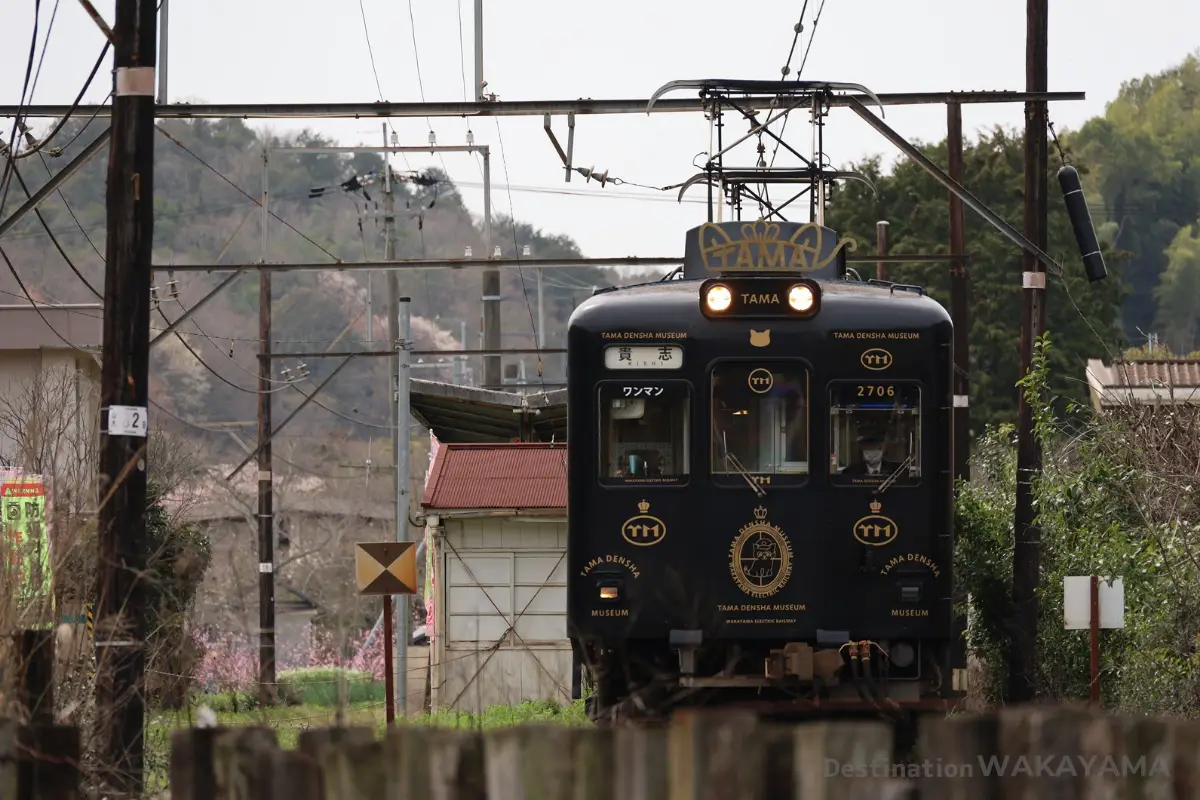
The Kishigawa Line is famous for its cat-themed trains and stationmasters — riding it is an attraction all on its own.
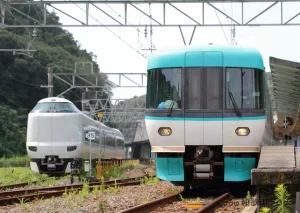
It’s about a 30-minute ride from Wakayama Electric Railway Wakayama Station (inside JR Wakayama Station) to the last stop, Kishi Station. Distinctive themed trains like the “Strawberry Train,” “Ume-boshi Train,” and “Tama Train” run the line, so the vibe changes depending on which one you catch.
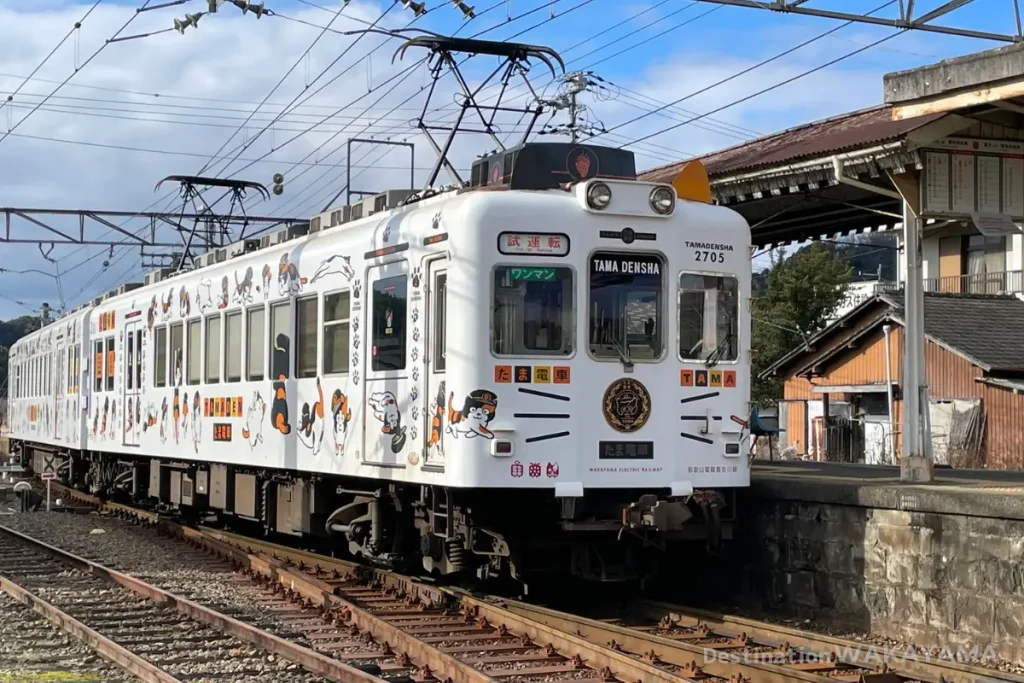
At the last stop, Kishi Station, you’ll find the calico cat Yontama (the third stationmaster, following the original Tama and her successor Nitama), along with deputy stationmaster Gotama and trainee Rokutama (“Fuku” being a nod to both “deputy” and “good fortune” in Japanese).
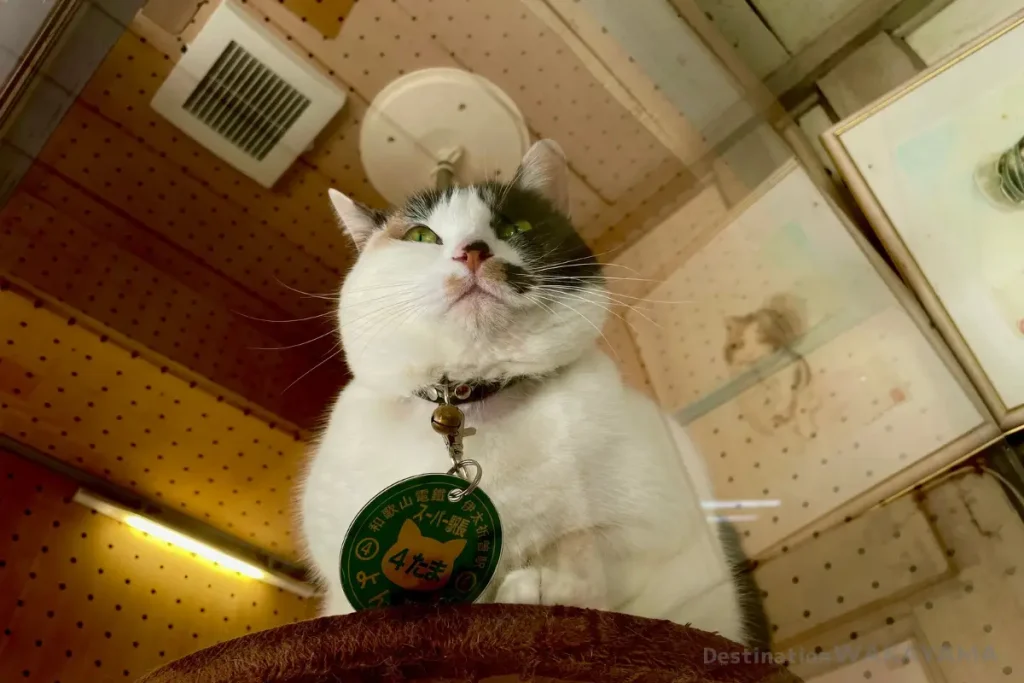
These cats in their little stationmaster caps are hugely popular with visitors from Japan and abroad. It’s a great spot for cat lovers and families with kids alike.
The three cats are usually on duty at Itakiso Station and Kishi Station.
- Access: Board at Wakayama Electric Railway Wakayama Station (adjacent to JR Wakayama Station)
- Wakayama Station to Kishi Station: About 30 minutes
- Fare: ¥410 one way from Wakayama to Kishi (rising to ¥480 from July 1, 2026)
Shiki-no-Sato|A Park Full of Seasonal Flowers and Greenery
Shiki-no-Sato is a park where the flowers and greenery change with the seasons — it also happens to be Wakayama City’s only roadside station (michi-no-eki).
Within walking distance of Itakiso Station on the Kishigawa Line, its spacious grounds are filled with countryside scenery. Cherry blossoms and tulips bloom in spring, lotus flowers in summer, and cosmos in autumn — there’s color here in every season.
There’s shopping, a restaurant, a barbecue area, and even a hands-on farming corner, making it a popular spot for families too.
It’s a great pick if you just want to relax and take in some nature.
- Address: 97 Myooji, Wakayama City
- Hours: 9:00 AM–5:00 PM
- Closed: Mondays (following day if Monday is a holiday), New Year holidays
- Admission: Free (some facilities charge a fee)
- Access: About a 15-minute walk from Itakiso Station (Wakayama Electric Railway)
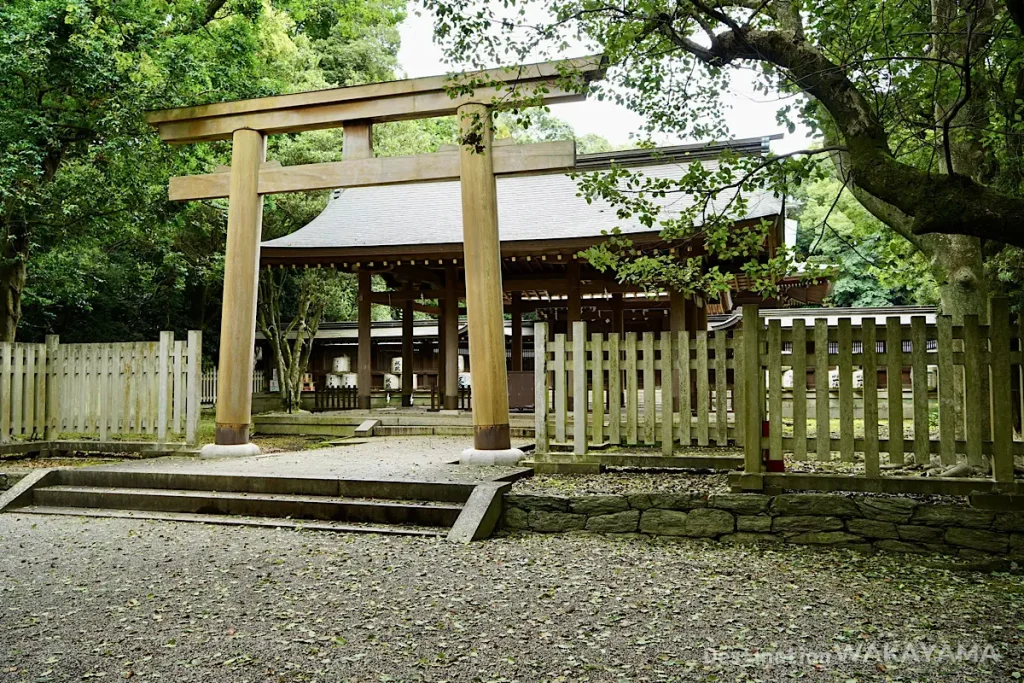
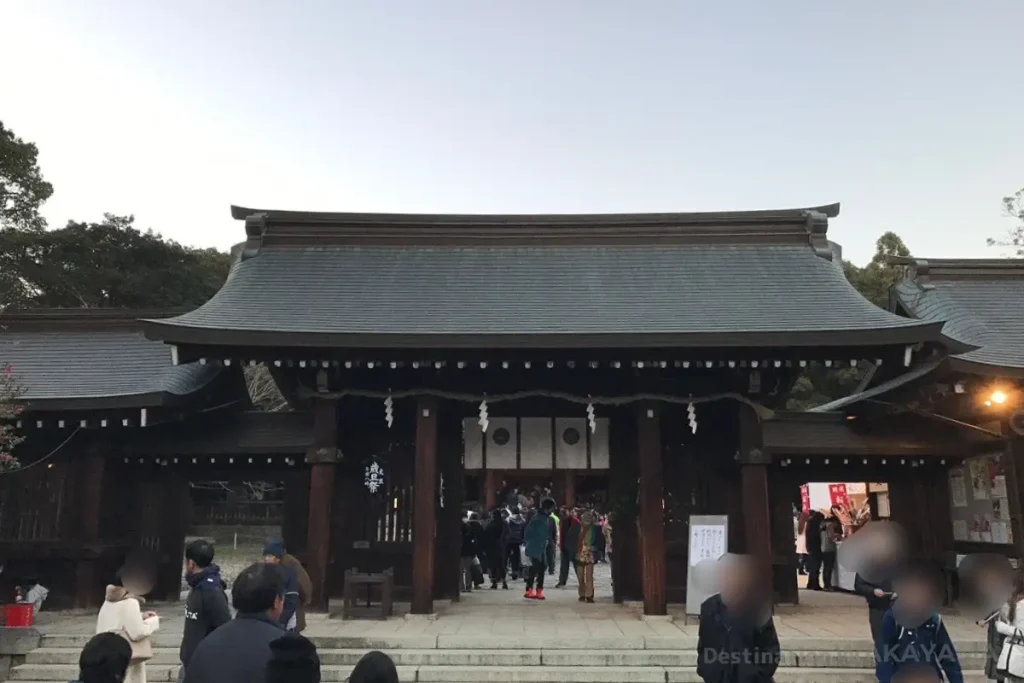
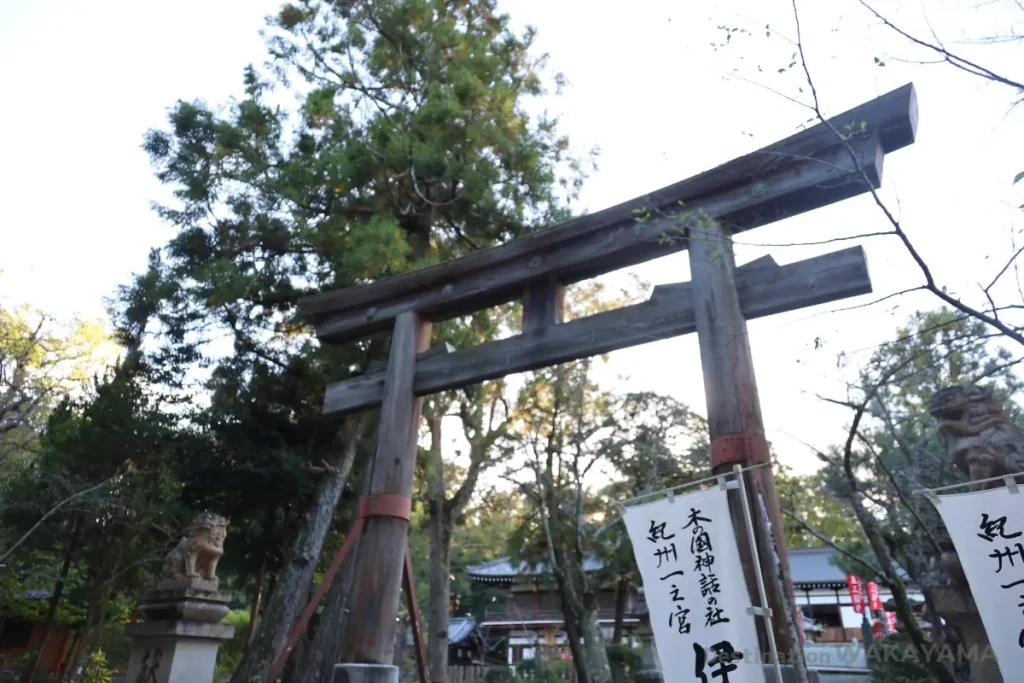
Sansha-mairi|A Power Spot Pilgrimage to Nichizen-gu, Kamayama Shrine, and Itakiso Shrine
Sansha-mairi is a long-cherished pilgrimage route visiting three historic shrines in Wakayama City.
It’s especially popular during New Year visits, but people come to these power spots year-round. All three shrines sit along the Kishigawa Line, so you can visit them all efficiently by train.
- Nichizen-gu
-
A prestigious shrine complex made up of Nichizen Shrine and Kunikakasu Shrine. It’s right by Nichizengu Station on the Kishigawa Line, so many people start their Sansha-mairi here.
- Kamayama Shrine
-
A quiet shrine dedicated to Prince Itsuse, the older brother of Emperor Jinmu. It’s about a 5-minute walk from Kamayama Station on the Kishigawa Line, and the deep forest surrounding it gives the grounds a solemn, tranquil feel.
- Itakiso Shrine
-
This shrine is dedicated to Isotakeru-no-Mikoto, the god of trees. It’s about a 5-minute walk from Itakiso Station on the Kishigawa Line, and it pairs well with a visit to Shiki-no-Sato.
Where to Stay in Wakayama City
Accommodation in Wakayama City generally falls into two categories: hotels in the city center, and coastal/resort-style lodging. Pick based on your travel style and what you want to prioritize.
City Center Hotels|Convenient Access for Sightseeing
Hotels in the city center are the best base if you’re planning to visit multiple areas.
Around JR Wakayama Station and Nankai Wakayamashi Station, you’ll find everything from business hotels to mid-size hotels, all with easy access to every area of the city.
Some notable options include:
| Hotel | Booking | Highlights |
|---|---|---|
| Daiwa Roynet Hotel Wakayama | Booking.com Expedia Agoda Hotels.com Trip.com | A castle-view hotel looking straight out at Wakayama Castle. Great for both sightseeing and business trips. |
| Candeo Hotels Nankai Wakayama | Booking.com Expedia Agoda Hotels.com Trip.com | Directly connected to Nankai Wakayamashi Station. Don’t miss the open-air bath with a view over the city. |
| Comfort Hotel Wakayama | Booking.com Expedia Agoda Hotels.com Trip.com | A short walk from JR Wakayama Station. Great value for a budget-friendly stay. |
Basing yourself at a hotel near the station makes it easy to plan sightseeing by bus or train.
Coastal & Resort Lodging|For a Location-First Stay
If you’d rather soak in the ocean views resort-style, the Wakaura and Kada areas are your best bet.
Both areas are dotted with ryokan and hotels offering hot springs and fresh seafood. If you’re making the trip to Wakayama City, treating yourself to a relaxing stay by the sea is a nice way to go.
| Property | Booking | Highlights |
|---|---|---|
| Kada Awashima Onsen Osakaya Hiina-no-yu | Expedia Agoda Hotels.com Trip.com | A long-established ryokan in Kada. Known for its hot spring views over the Kii Channel and its sea bream dishes. |
| Kyukamura Kishu Kada | Booking.com Agoda Trip.com | A resort surrounded by Kada’s natural scenery. A family favorite, with views over Tomogashima, an open-air bath, and great food. |
| Wakaura Onsen Manpa | Booking.com Expedia Agoda Hotels.com Trip.com | A hot spring ryokan overlooking Wakaura Bay. The sunset views and fresh seafood are the highlights. |
| Marina City Hotel | Booking.com Expedia Agoda Hotels.com Trip.com | A resort hotel located in Marina City. In addition to offering ocean views, it is highly recommended for its breakfast buffet featuring an abundance of ingredients from Wakayama. |
Seaside accommodations tend to fill up on weekends and holidays, so it’s worth booking early.
Wrap-Up|Make the Most of Your Wakayama City Trip
We’ve covered our top picks for sightseeing in Wakayama City, area by area.
- City Center
-
Centered on Wakayama Castle, this area lets you soak in the history and culture of the old castle town. There’s also a free zoo, making it great for families.
- Wakaura & South Area
-
Packed with variety — the tidal flats of Wakaura, the stunning views of Saikazaki, the elegant garden at Yosuien, the cherry blossoms of Kimiidera, and the seafood of Marina City.
- Kada Area
-
Enjoy the unique culture of Awashima Shrine, fresh sea bream dishes, and the Ghibli-esque scenery of Tomogashima along with the historic romance of the Miyama Battery Ruins.
- Kishigawa Line Area
-
Meet the cat stationmasters on the Kishigawa Line, enjoy seasonal flowers at Shiki-no-Sato, and take in the storied Sansha-mairi shrine pilgrimage — all with a relaxed train journey along the way.
Wakayama City works just as well for a quick half-day visit as it does for a leisurely two-day exploration — it’s a destination with real depth. If it’s your first time here, we’d recommend starting with the classic combo of Wakayama Castle and the Wakaura area.
Use this guide to plan your own Wakayama City adventure. We’re sure you’ll find a city you’ll want to come back to.

コメント